
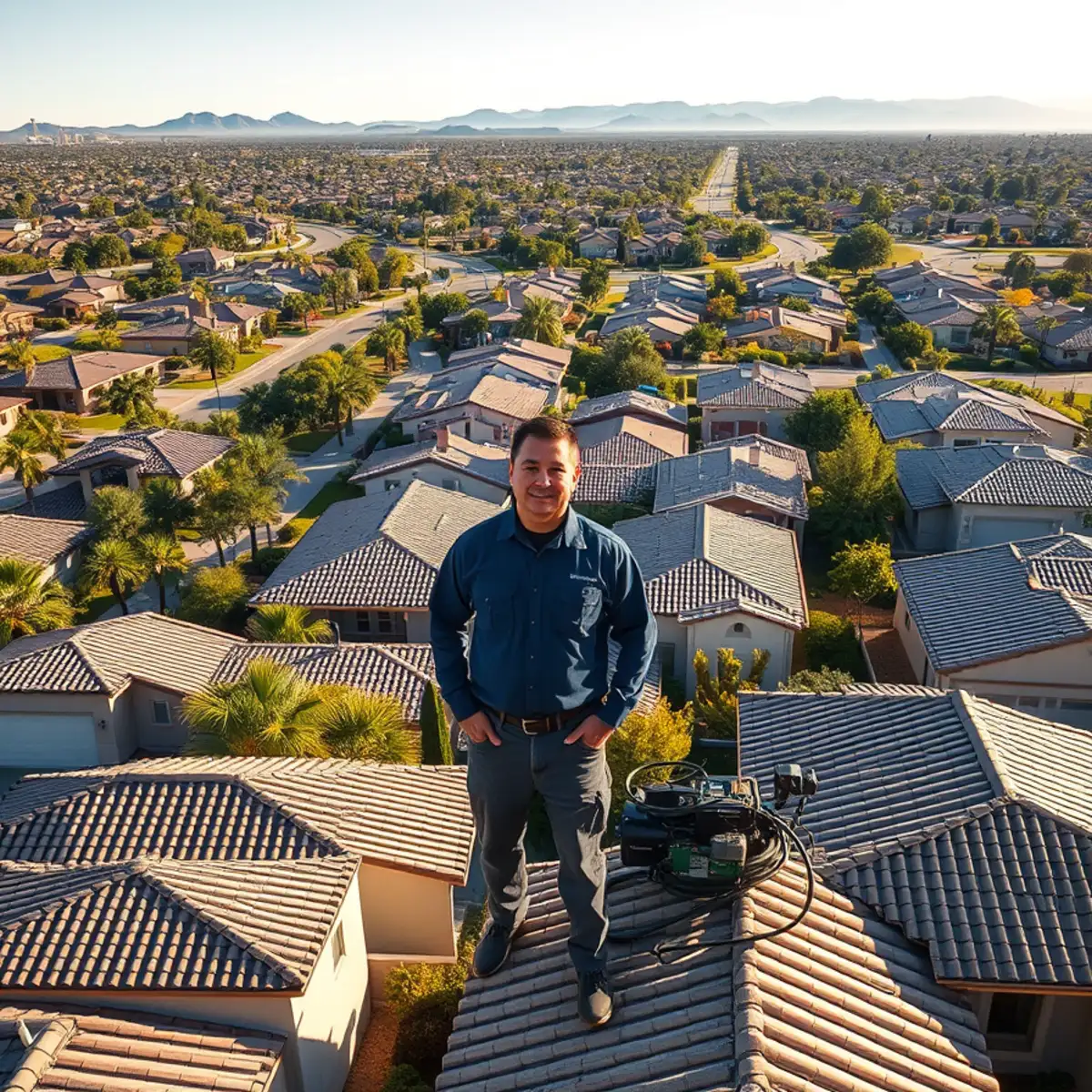
28 Irvine Neighborhoods
Water Damage Restoration in Every Irvine Neighborhood
Irvine is a master-planned city, which means its plumbing ages in cohorts. Find your village to see the specific failure profile for that build era.
- On site in 60 minutes, anywhere in Irvine
- IICRC-Certified Crews
- We bill your insurer directly for covered work
Why Village Matters Here
Your build year predicts your failure mode
Because Irvine was built in coordinated phases by a small number of builders, its housing stock moves in cohorts. Several thousand homes went up in Woodbridge between 1975 and 1985 with the same copper, run through the same slabs, fed by the same hard water. They do not fail randomly — they fail together.
That is genuinely useful information. It means we can tell you what your street is likely to be dealing with before you have a problem, and it means we know where to look when you do.
Group 1
Built 1965–1985 · Highest slab-leak risk
Copper supply lines under slab at 40 to 55 years of hard-water exposure. This is where most of our slab leak work is.
University Park, Irvine
about 13 minutes
Irvine's very first village (1965) — the oldest housing stock in the city, a mix of detached, attached and rental near UCI.
Woodbridge, Irvine
about 11 minutes
Irvine's iconic 1970s lake village — and the single highest concentration of 40-to-50-year-old copper under slab in the city.
Northwood, Irvine
about 14 minutes
Tree-lined 1970s–80s family tracts with the city's most mature canopy — eucalyptus windrows that make Santa Ana events a roof-damage season here.
Turtle Rock, Irvine
about 14 minutes
Foothill village on graded pads below the San Joaquin Hills — original 1970s copper plus genuine slope drainage that flatter Irvine villages never deal with.
Deerfield, Irvine
about 12 minutes
An early-1970s village of single-story and split-level homes where original copper and original cast-iron drains are both at end of life.
El Camino Real, Irvine
about 12 minutes
One of Irvine's earliest villages along the I-5 corridor — single-story 1970s tracts with the shortest plumbing runs and the oldest copper.
Walnut, Irvine
about 11 minutes
A quiet central Irvine pocket of 1970s single-story homes — modest square footage, aging copper, and a lot of long-tenure owners.
Rancho San Joaquin, Irvine
about 15 minutes
Golf-course-adjacent condos and townhomes from the 1970s–80s, where course irrigation and attached construction combine.
Group 2
Built 1985–2000 · Entering the window
First slab leaks appearing now, alongside original water heaters and supply lines reaching end of life.
Westpark, Irvine
about 13 minutes
Late 1980s–90s Mediterranean-styled village with unusually dense attached housing — the transition cohort between slab-leak Irvine and component-failure Irvine.
Oak Creek, Irvine
about 8 minutes
Late 1990s golf-course-adjacent village where the whole cohort of original water heaters and supply lines is aging out at once.
Northwood Point, Irvine
about 16 minutes
The premium 1990s section above Northwood — larger lots, two-story homes with attic air handlers, and a wind-exposed position at the city's north edge.
Parkside, Irvine
about 15 minutes
1990s–2000s family tracts around neighborhood parks — right at the crossover point where component failures start and slab leaks are still years away.
Lower Peters Canyon, Irvine
about 17 minutes
Foothill-adjacent Irvine below Peters Canyon Regional Park — canyon runoff and channel drainage on top of aging 1990s tract plumbing.
Irvine Business Complex, Irvine
about 14 minutes
Irvine's dense office and mid-rise district by John Wayne Airport — risers, rooftop HVAC and sprinklers in multi-tenant buildings, plus a growing residential conversion stock.
Group 3
Built 2000+ · Component failures, not pipe failures
Too new for slab leaks. Original water heaters, braided supply lines and angle stops are what fail here.
Woodbury, Irvine
about 13 minutes
2000s village organized around Woodbury Town Center, with extensive HOA-maintained landscaping and irrigation that fails at property edges.
Stonegate, Irvine
about 14 minutes
2000s family village where whole streets of original water heaters and washer hoses are reaching end of life in the same few years.
Quail Hill, Irvine
about 9 minutes
2000s hillside village wrapped in open space — builder-grade plumbing now hitting first failure, with dense attached housing that spreads it.
Turtle Ridge, Irvine
about 12 minutes
Gated 2000s hillside luxury above Bonita Canyon — premium finishes, steep terrain, and association access protocols that shape every job.
Shady Canyon, Irvine
about 13 minutes
Irvine's ultra-luxury custom-estate enclave — every home is unique, so nothing about a loss here is standardized.
Northpark, Irvine
about 16 minutes
A gated 2000s village in north Irvine — access authorization is part of the emergency response, and hard water is the main maintenance story.
Northpark Square, Irvine
about 16 minutes
A townhome community where attached construction means every loss is potentially a neighbor's loss too — and the paperwork decides how badly.
Portola Springs, Irvine
about 17 minutes
Newer canyon-edge village where the calls are warranty-period issues — window and stucco intrusion, irrigation line breaks, and construction-defect water.
Eastwood, Irvine
about 16 minutes
2010s village where hard water is the defining maintenance issue — scale on fixtures, sediment in heaters, and the first component failures arriving early.
Cypress Village, Irvine
about 10 minutes
2010s village of dense attached and detached-condo housing near the Great Park — tight envelopes that hold moisture and stacked plans that spread it.
Orchard Hills, Irvine
about 18 minutes
Upscale 2010s development on former avocado groves — high-end finishes that justify specialty drying, plus significant hillside grading.
Great Park, Irvine
about 7 minutes
Built on the former MCAS El Toro base and still under active construction — a mix of brand-new homes, warranty issues and live jobsite water events.
Irvine Spectrum, Irvine
about 4 minutes
Our own backyard: a major retail, restaurant and entertainment district ringed by dense apartments and offices — four minutes from our door.
West Irvine, Irvine
about 15 minutes
Where Irvine meets Tustin: a mix of 1990s–2000s residential tracts and light-industrial and warehouse space along the Jamboree corridor.
Local Ground Truth
What is specific to Irvine, not to Orange County generally
Four facts that shape every job we run inside the city — and that would be wrong if you swapped the city name for anywhere else on this site.
Eight zip codes, one dispatch point
92602, 92603, 92604, 92606, 92612, 92614, 92618 and 92620. We dispatch from Rockfield Boulevard in 92618, at the El Toro Y where the I-5 and I-405 meet — which is the only reason a 60-minute commitment across the whole city is a promise rather than a slogan.
Thirteen inches of rain, almost all of it in five months
November through March, frequently arriving as a handful of intense atmospheric-river events rather than steady rain. That concentration is why October drainage work matters more here than a longer wet season would suggest.
Santa Ana winds run October to March
Canyon-channeled gusts crack concrete field tile, shift ridge caps and degrade flashing across the northern villages. The damage happens in the wind and the leak appears in the next rain — sometimes months later, which is what turns a storm claim into a denied one.
San Diego Creek drains the city to Upper Newport Bay
Along with the Peters Canyon Channel and the local storm drain network. In an extreme event the constraint is drainage capacity rather than a creek jumping its banks, and a standard homeowners policy excludes surface water entirely.
Questions
Irvine water damage FAQs
Which Irvine neighborhoods get the most water damage?
The 1970s and early 1980s villages produce the most slab leaks — Woodbridge, University Park, Northwood, Deerfield, El Camino Real, Walnut, Turtle Rock and Rancho San Joaquin all have copper supply lines under slab at 40 to 55 years of hard-water exposure. Newer villages get a different profile: original water heaters, braided supply lines and angle stops all aging out together.
Why does Irvine have so many slab leaks?
Two conditions overlap. Nearly every home is slab-on-grade, and tracts built from the early 1970s through the late 1980s ran copper through or beneath that concrete. Meanwhile Orange County water is hard and mineral-heavy, scaling the pipe from inside, while alkaline soil around the slab attacks it from outside. The result is pinhole corrosion.
Do you serve every Irvine neighborhood?
Yes — all 28 of them, with the same 60-minute commitment. Our base off Rockfield Boulevard in south Irvine is what makes that geographically realistic. Our closest neighborhoods are Great Park at about seven minutes and the Irvine Spectrum at about four.
Will you handle my HOA's requirements?
Yes. Most of Irvine is HOA-governed and each association has its own rules on equipment placement in common areas, staging and dumpster locations, work hours and contractor insurance. We handle those approvals as part of the job, and we produce separate scope documentation per unit when a loss crosses unit lines.
Which Irvine villages get the most slab leaks?
Woodbridge, University Park, El Camino Real, Deerfield, Northwood and Walnut — the villages built between the early 1970s and the late 1980s on slab-on-grade with copper supply lines. Those lines are now forty to fifty-five years into hard water inside and alkaline soil outside. Because Irvine was built in planned phases, the failures cluster by village rather than scattering across the city.
What do the newer Irvine villages get instead?
Component failures and envelope intrusion. Quail Hill, Cypress Village, Eastwood, Stonegate, Portola Springs, Orchard Hills and Great Park are far too new for pipe corrosion, so what fails is original braided supply lines, angle stops and water heaters — plus wind-driven rain finding a marginal window flashing or stucco joint. Different problem, different diagnosis.
24/7 live dispatch
Water damage does not wait. Neither do we.
A live dispatcher answers 24/7, gives you an arrival window, and tells you exactly what to do while you wait. Call (201) 277-9344.
- Free on-site assessment and written scope before any demolition
- Fully insured — general liability and workers' compensation