
Restoration Service
Mold Remediation in Irvine, CA
Containment, HEPA-filtered removal and moisture correction — because mold that grows back was a water problem, not a mold problem.
- On site in 60 minutes, anywhere in Irvine
- IICRC-Certified Crews
- We bill your insurer directly for covered work
Mold is not the disease. It is the symptom. Spores are already present in every building in Orange County and they are harmless until they are given water — at which point colonization can start within 24 to 48 hours on damp organic material like drywall paper, wood framing and carpet backing.
That is why remediation that only removes visible growth always fails. If the moisture source is still there, the mold comes back in the same spot within weeks. Real remediation is three jobs: contain the area, remove the contaminated material under HEPA filtration, and fix whatever put water there in the first place.
California does not license mold remediation as a standalone trade, which means anyone can print a business card. Ask for IICRC certification, ask who is doing your post-remediation verification, and be cautious of any company that both tests your air and then sells you the remediation based on its own test.
Request Mold Remediation
Tell us what happened. We respond within minutes, 24/7.
Know the Signs
How to Tell If You Have a Mold Problem
Visible growth is the obvious case. Most of what we remediate in Irvine was found by following one of these signals instead.
A persistent earthy or musty odor
The smell is microbial VOCs — literally the byproducts of active growth. If you can smell it, something is growing, even if you cannot see it.
Discoloration on drywall, especially low on a wall
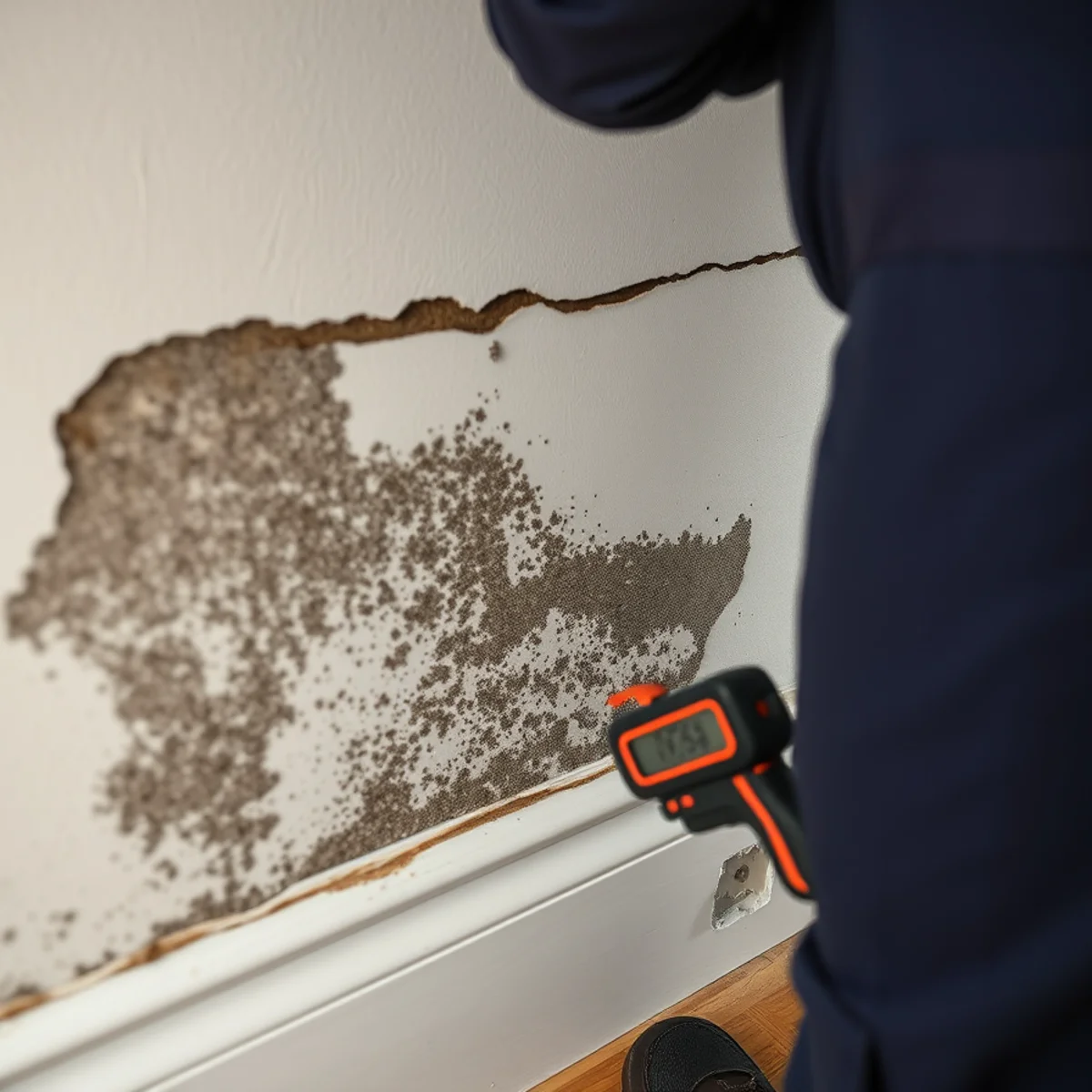
Gray, green, brown or black patches near the floor are the classic signature of a wall cavity that got wet and was never opened.
Symptoms that improve when you leave the house
Congestion, itchy eyes, headache or cough that clears within hours of leaving and returns when you get home is a strong indoor air quality signal.
Prior water damage that was 'dried out' quickly
Losses that were handled with box fans and no dehumidification are the ones we come back to three months later.
Condensation on windows or interior walls
Chronic high humidity in one room — often a bathroom with a weak exhaust fan or a closet on an exterior wall — grows mold without any leak at all.
Warped or spongy flooring, or lifting baseboard
Materials that changed shape absorbed water. Whatever is underneath them has been damp for a while.
Our Process
How Professional Mold Remediation Works
The protocol follows the IICRC S520 standard. The order matters as much as the steps.
- 1
Visit 1
Inspection and moisture investigation
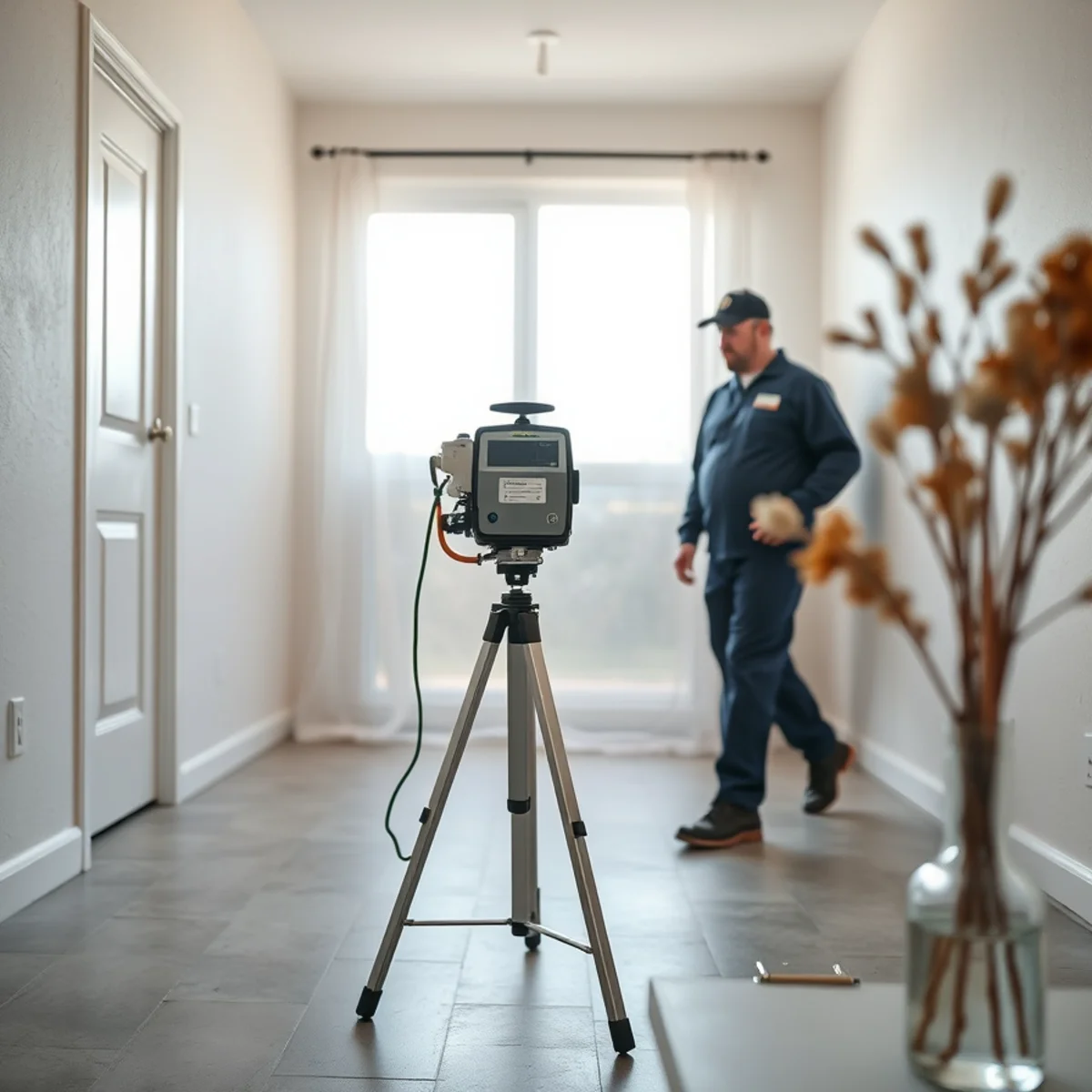
We find the water before we look at the mold. Moisture meters, thermal imaging and a hygrometer establish where water is entering and how far it has traveled. Growth is mapped, and if the extent is unclear we recommend an independent industrial hygienist rather than testing it ourselves.
- 2
Day 1
Containment and negative air
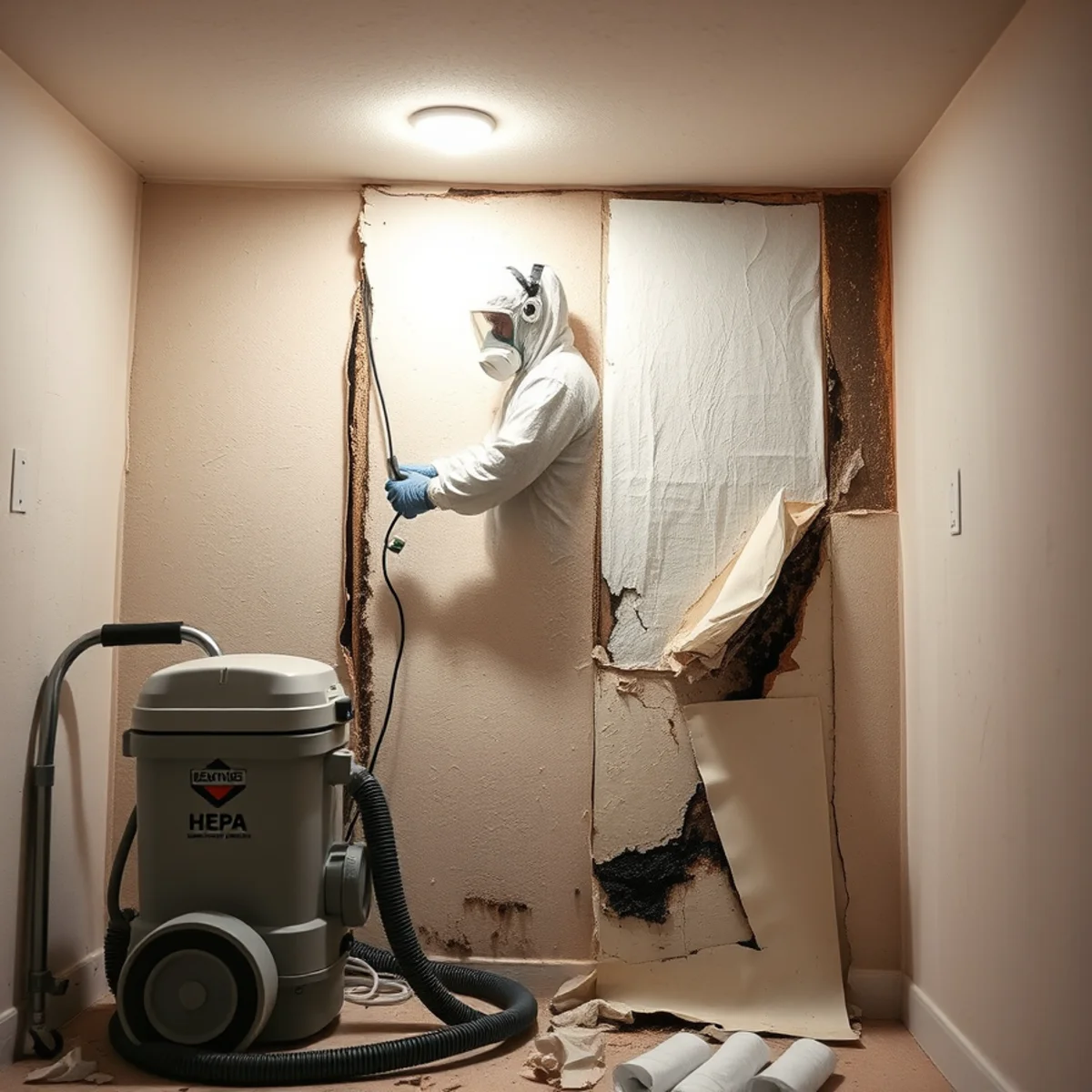
The work area is sealed in poly with a zippered entry and put under negative pressure so spores disturbed during removal cannot migrate. HVAC serving the area is shut down and registers are sealed.
- 3
Day 1
Air filtration
HEPA air scrubbers run inside containment for the entire job and for a period after, exchanging the air multiple times per hour and capturing spores down to 0.3 microns.
- 4
Days 1–3
Removal of contaminated material
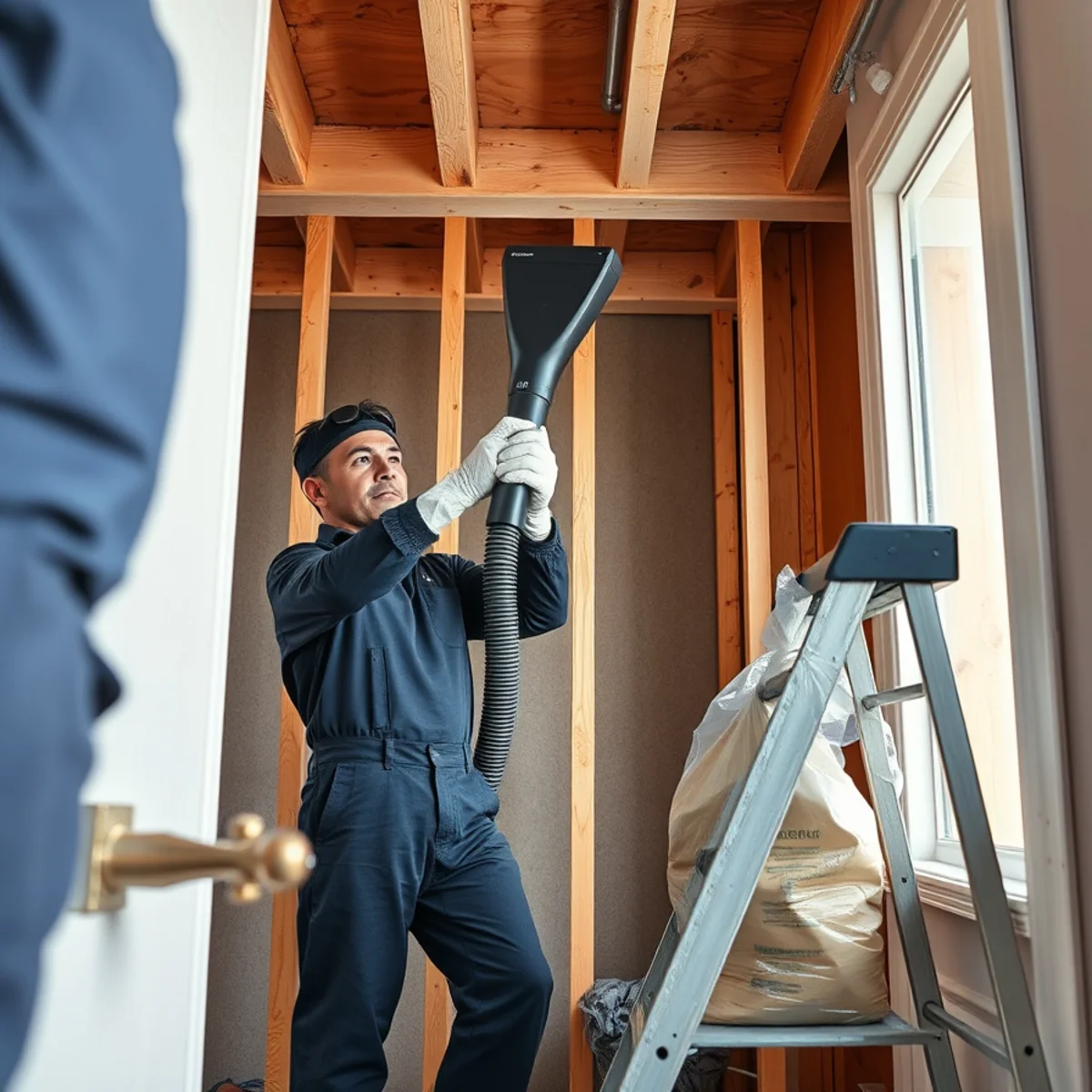
Porous materials with growth — drywall, insulation, carpet, pad, particleboard — are cut out and bagged inside containment. Semi-porous framing is HEPA vacuumed and, where growth has penetrated, abrasively cleaned rather than painted over.
- 5
Days 2–4
Cleaning and antimicrobial treatment
Every surface in the containment area, including surfaces without visible growth, is HEPA vacuumed and damp wiped. An EPA-registered antimicrobial is then applied to remaining framing and assemblies.
- 6
Days 2–5
Fix the moisture source and dry
The leak, the drainage problem, the failed exhaust fan or the condensation issue is corrected, and the assembly is dried to standard. Skipping this step guarantees the mold returns.
- 7
After completion
Verification, then rebuild
We recommend independent post-remediation verification by a third-party hygienist, not by us. Once it clears, we rebuild — insulation, drywall, texture, paint, base and flooring.
On the Job
Mold Remediation in action
What this work actually looks like in an Irvine property.
The 24-to-48 Hour Window, and Why Irvine Homes Beat It
The commonly cited figure is that mold can begin growing on wet organic material within 24 to 48 hours. That is accurate as a general rule and it is the reason we push so hard on same-day response. But the local variables matter.
Irvine's climate helps and hurts in different seasons. Summer indoor conditions — warm, with air conditioning managing humidity — are moderately favorable to growth if material stays wet. The harder period is late spring and early summer, when the marine layer pushes outdoor humidity up and a house that has been opened to 'air out' after a leak is actually taking on moisture.
The bigger factor is construction. Newer villages such as Woodbury, Stonegate, Eastwood and Cypress Village are built to tighter envelope standards than the 1970s tracts. Tight is good for energy and bad after a leak: there is no incidental air exchange to carry moisture away, so a wet wall cavity in a 2010s home stays wet longer than the same cavity in a 1975 Woodbridge home.
Standing water right now? Call us before you do anything else.
We are on site within 60 minutes anywhere in Irvine, 24 hours a day.
Black Mold, Testing, and What Is Actually Worth Paying For
Stachybotrys chartarum — the species behind the 'black mold' headlines — is real, and it does prefer chronically wet cellulose material like the paper facing on drywall. But color is not a reliable identifier. Plenty of dark growth is Cladosporium or Aspergillus, and plenty of Stachybotrys is not dramatically black. More importantly, the remediation protocol is the same either way: contain, remove, correct the moisture.
That is why we generally do not recommend paying for species identification before remediation. It rarely changes the scope of work. What is worth paying for is an independent industrial hygienist in two situations: when the extent of contamination is genuinely unclear and you need a scope you can trust, and for post-remediation verification when you want documented proof the work succeeded — particularly in a sale, a tenant dispute, or an HOA claim.
We deliberately do not sell air testing alongside our own remediation. A company that tests, interprets its own results, sells you the remediation and then clears its own work has an obvious conflict of interest, and it is the most common complaint pattern in this industry.
Under 10 square feet of growth
Often a DIY-scale job on hard surfaces, provided you find and fix the moisture source. EPA guidance says the same.
10 to 100 square feet
Professional containment strongly recommended. This is the most common residential remediation size.
Over 100 square feet
Full containment, negative air and independent verification. Frequently involves multiple rooms or a wall cavity run.
Any HVAC involvement
Growth inside ductwork or an air handler distributes spores building-wide and always needs professional handling.
What You Get
What mold remediation includes
No vague scopes. This is what is actually on the invoice and what you receive at the end of the job.
A moisture investigation before a mould assessment
We find the water first. Meters, thermal imaging and a hygrometer establish where it is entering and how far it has travelled, because growth that returns was a water problem, not a mould problem.
Containment with negative pressure and HEPA scrubbing
The work area sealed in poly with a zippered entry, put under negative pressure, HVAC shut down and registers sealed, with scrubbers running for the duration.
Removal of contaminated porous materials
Drywall, insulation, carpet, pad and particleboard cut out and bagged inside containment. Semi-porous framing is HEPA vacuumed and abrasively cleaned rather than painted over.
Antimicrobial on everything that stays
Every surface inside containment HEPA vacuumed and damp wiped, including surfaces without visible growth, then treated on framing, slab and remaining assemblies.
The moisture source corrected
The slab leak, the shower pan, the roof detail, the failed exhaust fan. Any estimate that does not include this is not a complete estimate.
Independent post-remediation verification recommended
We will not clear our own work. We recommend a third-party industrial hygienist, and we will tell you plainly why a company that tests, sells and then clears its own remediation has a conflict.
Why Water Damage Irvine
Why Irvine calls us for mold remediation
Plenty of companies list this service. These are the things that actually change the outcome on this particular kind of job.
We do not sell you the test and the cure
No air testing bundled with our own remediation. That conflict is the most common complaint pattern in this industry and we have removed it from the equation.
We know why newer Irvine homes are worse
Tight modern envelopes have no incidental air exchange, so a wet cavity in a 2015 Woodbury home stays wet longer than the same cavity in a 1975 Woodbridge home. Growth starts sooner, not later.
Species identification rarely changes the scope
The protocol is the same whether it is Stachybotrys, Cladosporium or Aspergillus. We will tell you that rather than charging you to find out.
We explain the insurance cap before you commit
Most California policies cap mould between $5,000 and $10,000 and only cover it when it followed a covered sudden loss. Knowing that up front changes how people sequence the work.
Honest Pricing
What Mold Remediation Costs in Orange County
Mold remediation is usually priced by affected area and complexity rather than by a flat rate. A contained single-wall job in a bathroom commonly runs in the low four figures. A multi-room remediation with HVAC involvement and significant drywall removal runs into five figures before rebuild.
The variable that surprises people is that the mold removal itself is often the smaller half of the total. The moisture repair — a slab leak, a failed shower pan, a roof detail — and the rebuild that follows usually cost more than the remediation. Any estimate that does not include correcting the water source is not a complete estimate.
Square footage of growth
The primary driver, measured across all affected surfaces including inside wall cavities, not just what is visible.
Containment complexity
Number of separate containment zones, ceiling height, and whether occupants stay in the building during the work.
Material type
Growth on tile or sealed concrete cleans. Growth on drywall, insulation and carpet means removal and replacement.
HVAC contamination
Duct cleaning or replacement is a significant separate cost and is unavoidable once spores are in the system.
The underlying water problem
A slab leak repair, a re-pipe, a shower pan replacement or a roof repair are separate scopes with their own costs.
Third-party verification
Independent hygienist testing typically adds several hundred dollars and is worth it on larger jobs.
A note on estimates: Insurance treats mold carefully. Most California policies cover mold only when it results from a covered sudden water loss, and many cap mold coverage at $5,000 to $10,000. Mold from a long-term leak or from humidity is usually excluded outright.
Local Coverage
Mold Remediation across Irvine and Orange County
Same crews, same equipment, same 60-minute commitment across Irvine. Pick your neighborhood or city for the local detail.
Irvine Neighborhoods
Nearby Cities
Questions
Mold Remediation — Frequently Asked
How fast does mold grow after water damage?
Colonization can begin within 24 to 48 hours on wet organic material — drywall paper, wood, carpet backing, insulation. Visible growth typically appears somewhere between day three and day ten. This is the entire reason emergency response time matters: a loss dried within the first day rarely becomes a mold job.
Do I need mold testing before remediation?
Usually not. The remediation protocol is the same regardless of species, so identification rarely changes the scope. Testing is worth it when the extent of contamination is unclear and you need a defensible scope, or afterward as post-remediation verification. When you do test, use an independent hygienist rather than the company doing the removal.
Can I stay in my house during mold remediation?
In most cases yes. Containment and negative air are designed to keep the work isolated from the rest of the home. We recommend relocating if the affected area includes a bedroom you need, if the HVAC has to be shut down for days in hot weather, or if anyone in the household is immunocompromised, asthmatic or elderly.
Will my insurance cover mold remediation?
It depends entirely on the cause. Mold that resulted from a covered sudden water loss — a burst pipe, a failed water heater — is often covered, though many California policies cap mold at $5,000 to $10,000. Mold from a long-term leak, from chronic humidity or from deferred maintenance is generally excluded. Reporting the original water loss promptly is what preserves the coverage.
How do I know the mold is really gone?
Independent post-remediation verification. A third-party industrial hygienist inspects the containment area and samples the air before the rebuild starts. We will not clear our own work, and neither should any contractor you hire.
Local Proof
What customers say
Read verified customer reviews on our Google Business Profile.
“Our water heater went at 4 a.m. and the garage was under an inch of water. A real person answered, told me exactly which valve to close, and a crew was here before 5. They stopped it reaching the hallway.”
Water Heater Leak Cleanup
“We had a warm patch on the kitchen floor for weeks and assumed it was nothing. They found the slab leak in about twenty minutes without opening a single tile, and the report went straight to our adjuster.”
Slab Leak Detection
“Another company told us the whole plaster ceiling had to come out. These guys dried it in place over six days and the room looks exactly like it did. On a 1912 house that matters.”
Structural Drying
Testimonials shown are illustrative placeholders pending verified customer reviews and are not marked up as structured review data. More about our reviews
Related services
Structural Drying & Dehumidification
Air movers plus industrial dehumidifiers, with daily moisture readings — equipment leaves when the material hits dry standard, not when it feels dry.
Read moreLeak Detection & Repair Coordination
Thermal imaging, acoustic listening and moisture mapping to pinpoint a leak before anyone opens a wall or a slab.
Read moreFlood Cleanup
Storm runoff, channel overflow and interior floods — pumped out, sanitized, dried and documented for your claim.
Read more
Read next
How Fast Does Mold Grow After a Leak? Inside the 24–48 Hour Window
Spores are already in every building in Orange County. What they need is water, and the clock starts the moment they get it.
Read moreBlack Mold vs. Mildew: How to Tell the Difference and When to Call a Pro
The useful distinction is not species. It is whether what you are looking at is a surface film or the visible edge of something growing inside the material.
Read more
24/7 live dispatch
Mold Remediation in Irvine, CA — 60 minutes away
Call (201) 277-9344 and a live dispatcher will give you an arrival window on that call. Free on-site assessment and written scope before any demolition.
- Free on-site assessment and written scope before any demolition
- Fully insured — general liability and workers' compensation