
Restoration Service
Leak Detection Services in Irvine, CA
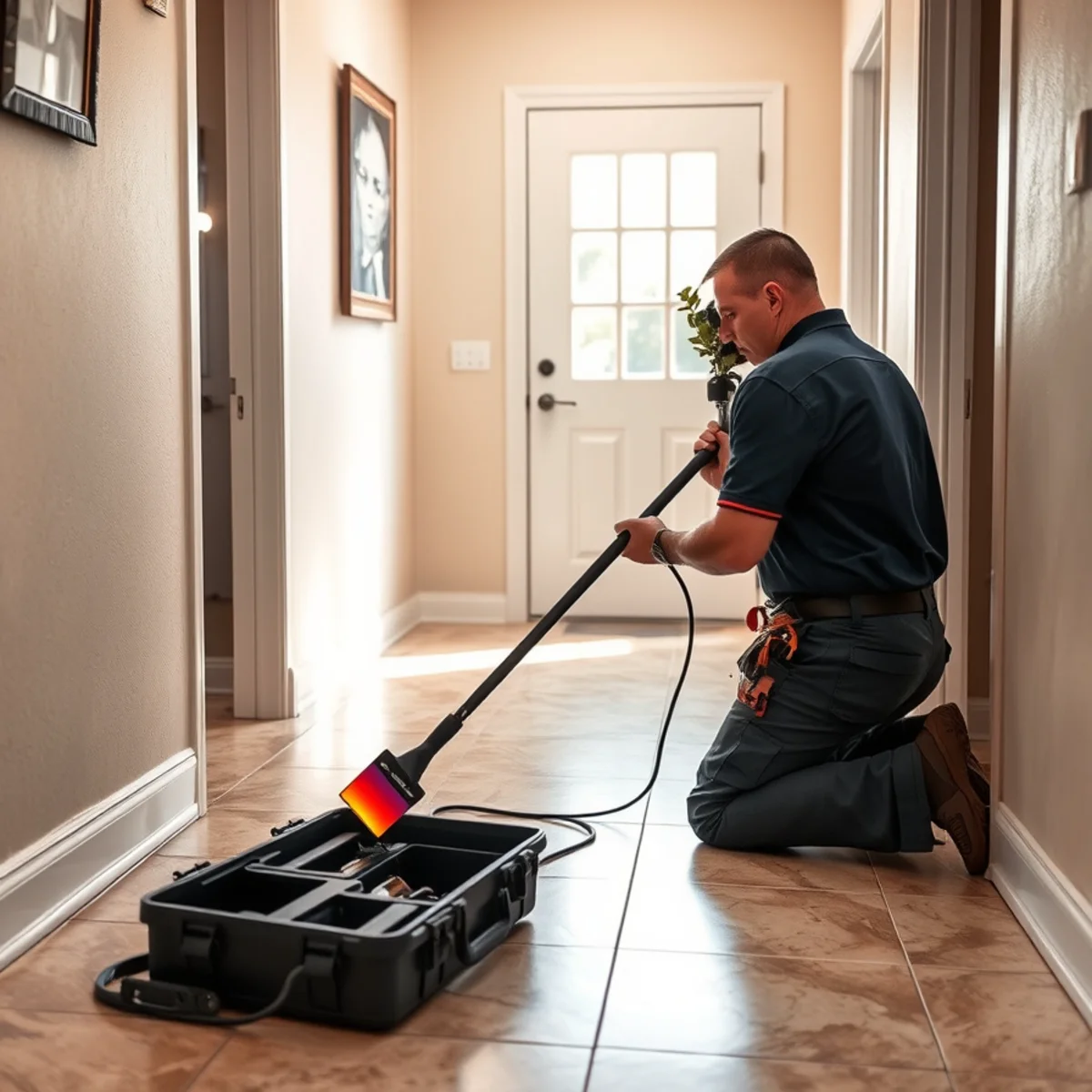
Thermal imaging, acoustic listening and moisture mapping to pinpoint a leak before anyone opens a wall or a slab.
- On site in 60 minutes, anywhere in Irvine
- IICRC-Certified Crews
- We bill your insurer directly for covered work
The expensive part of a hidden leak is not the pipe. It is the weeks it ran before anyone noticed, and the square footage of floor someone opens up guessing where it is.
Non-invasive detection changes both. Thermal imaging shows temperature differentials through tile and drywall. Acoustic equipment listens for the specific frequency of pressurized water escaping a line. A tracer gas test can confirm a suspected point when acoustics are ambiguous. Between them we can usually mark a leak within a foot or two before anyone picks up a jackhammer.
Our scope is detection, documentation and the restoration that follows. We do not hold a plumbing license and we do not pretend to — we locate the leak, document it for your insurer, coordinate a licensed plumber for the repair, and then handle the drying and rebuild.
Request Leak Detection
Tell us what happened. We respond within minutes, 24/7.
Know the Signs
Symptoms of a Hidden Leak
Hidden leaks announce themselves indirectly. Any one of these is worth a detection call before it becomes a restoration call.
A warm spot on the floor
The most reliable single indicator of a hot-water slab leak. Walk your house barefoot; the difference is usually obvious once you are looking for it.
Your water bill jumped without explanation
Irvine Ranch Water District bills are steady enough month to month that a sustained jump with no change in household use is a genuine signal.
You can hear water running with everything off
Turn off every fixture, stand still in a hallway at night, and listen. A faint continuous hiss or rush means a line is open somewhere.
The water meter moves with the house shut off
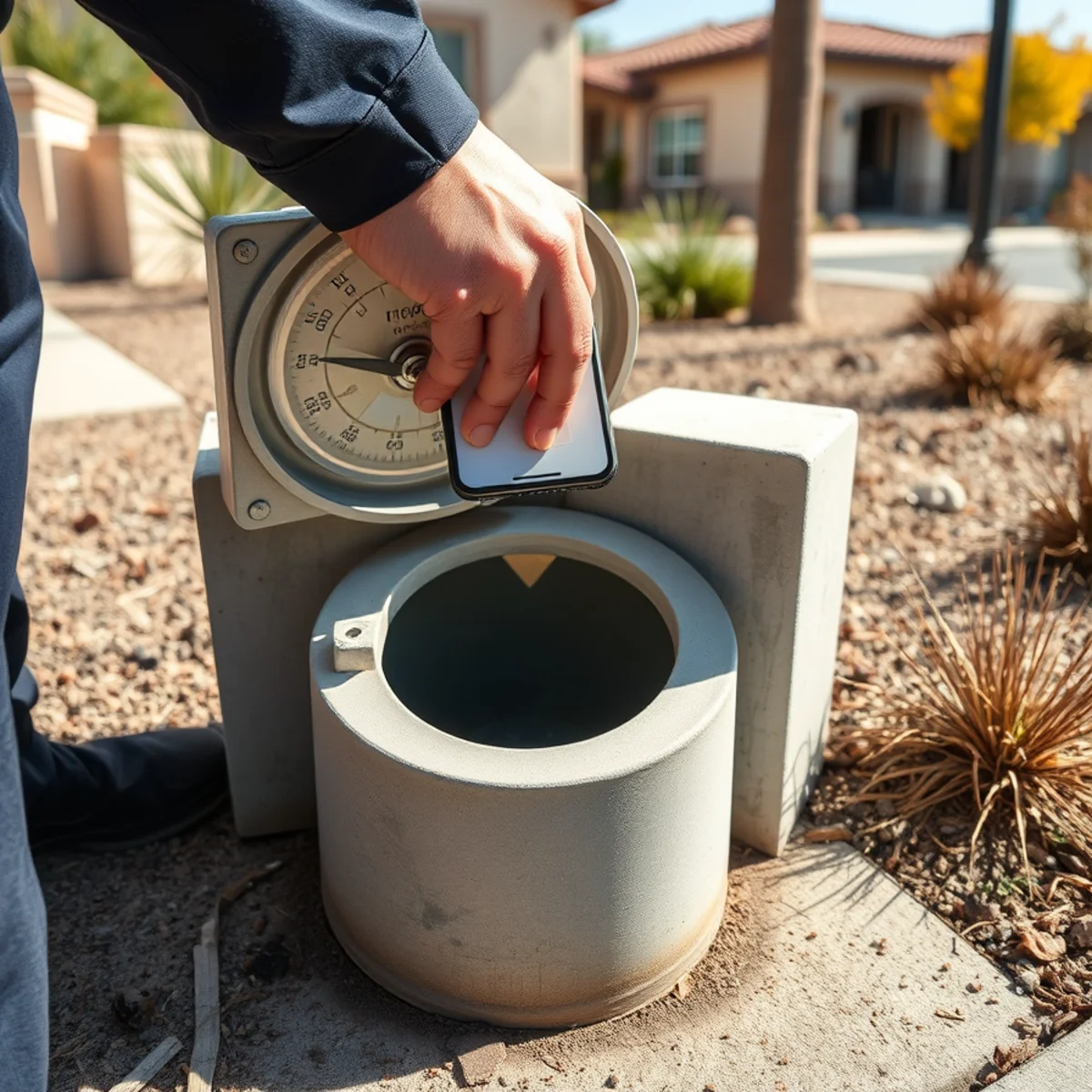
Close every tap, note the meter's low-flow indicator, wait fifteen minutes. Movement means water is leaving the system somewhere.
Damp flooring in a room with no plumbing
Water travels along the top of the slab. A wet spot in a bedroom often originates at a bathroom two rooms away.
A patch of lawn that is greener or soggier than the rest
An irrigation line or the water service between the meter and the house. Common in older Irvine tracts with original galvanized or poly service lines.
Low water pressure that developed gradually
Either scale buildup narrowing the line or water escaping before it reaches your fixtures.
Our Process
How We Locate a Leak Without Tearing Up Your Home
Detection is a process of elimination that narrows from the whole house down to a marked square foot.
- 1
Step 1
Confirm there is a leak at all
A meter test with the house isolated tells us whether water is leaving the supply system. Then we isolate hot from cold at the water heater to determine which side is losing.
- 2
Step 2
Thermal imaging sweep
An infrared camera reads surface temperature. A hot-water slab leak shows as a bright plume through tile; a cold-water leak often shows as a cool, evaporatively-chilled area. We sweep floors, walls and ceilings systematically.
- 3
Step 3
Moisture mapping
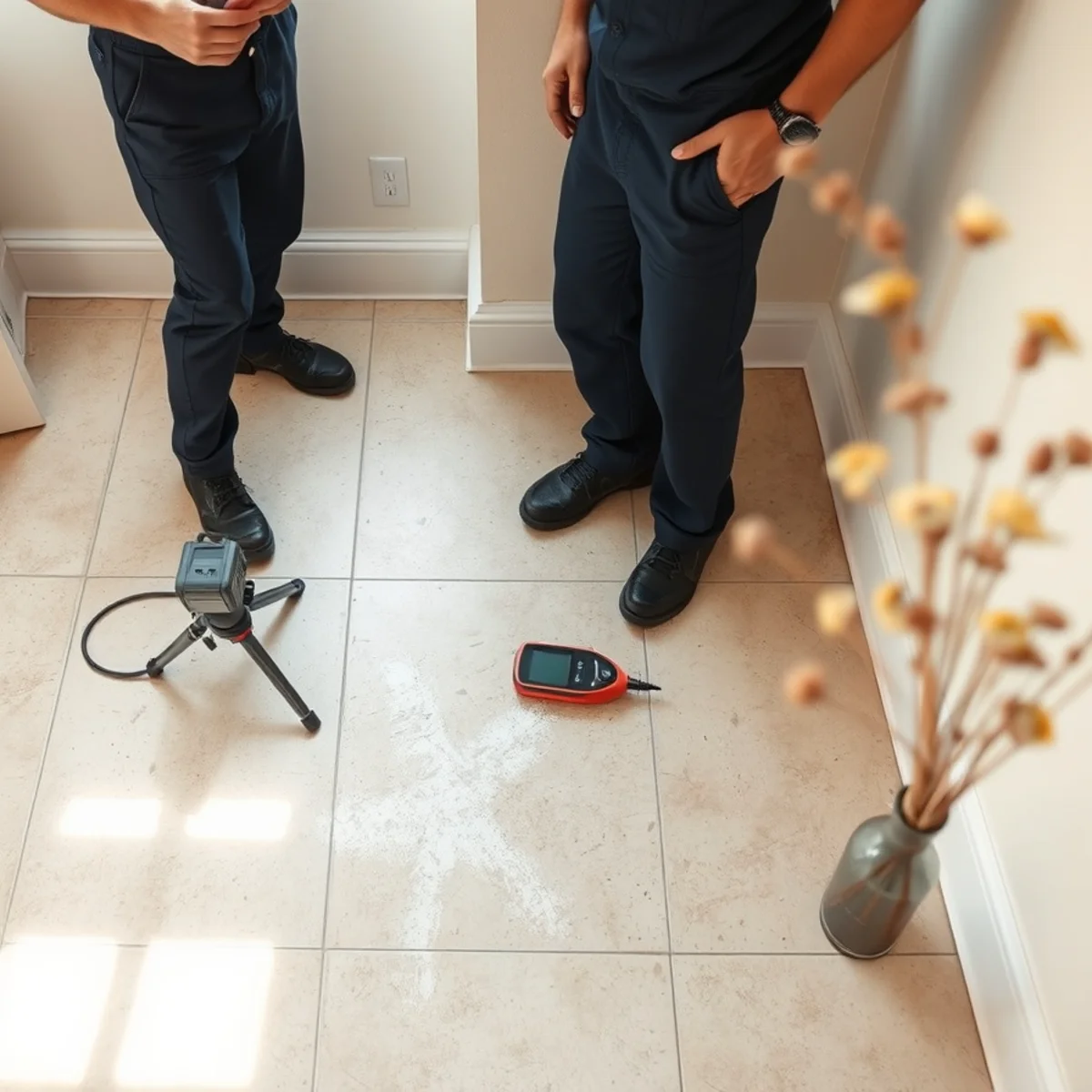
Pin and pinless moisture meters confirm what thermal suggests and define the boundary of the wet area, distinguishing an active leak from an old dried stain.
- 4
Step 4
Acoustic listening
Ground microphones and amplified listening discs pick up the sound of pressurized water escaping a pipe. Under concrete this is often the technique that converts a general area into a precise point.
- 5
Step 5
Tracer gas, if needed
For stubborn or very small leaks, the line is drained and charged with an inert hydrogen-nitrogen mix that migrates up through the slab to a sensitive detector at the surface.
- 6
Step 6
Mark, document and hand off
We mark the location, photograph the findings with thermal captures and moisture readings, and give you a report your insurer and your plumber can both use. Then we coordinate the licensed repair and handle drying and rebuild afterward.
On the Job
Leak Detection in action
What this work actually looks like in an Irvine property.

Why Irvine Has So Many Slab Leaks
Two conditions overlap here in a way that is unusually consistent because the city was built in planned phases.
The first is construction. Nearly every home in Irvine sits on slab-on-grade, and the tracts built from the early 1970s through the late 1980s — Woodbridge, University Park, Northwood, Deerfield, El Camino Real, Walnut, Turtle Rock and others — ran copper supply lines through or beneath that concrete. Those lines are now forty to fifty years old, which is squarely inside the failure window for copper in this environment.
The second is water chemistry. Orange County's supply is hard and mineral-rich. Scale builds on the inside of copper pipe, narrowing it and creating turbulence; where soil chemistry around the slab runs alkaline, the pipe corrodes from the outside as well. The failure mode is a pinhole — a weep small enough to run for weeks without ever showing as a puddle, quietly saturating the subgrade and wicking up into your walls.
None of this is exotic or unlucky. In the older Irvine villages it is a maintenance reality, which is why we push detection as a routine check rather than an emergency service.
Standing water right now? Call us before you do anything else.
We are on site within 60 minutes anywhere in Irvine, 24 hours a day.
Repair Options Once We Find It
Finding the leak is the easy decision. What to do about it is where homeowners need honest information, because the right answer depends heavily on the age of the plumbing and how many leaks you have already had.
A spot repair — open the slab, cut out the failed section, splice in new pipe — is the cheapest option and makes sense for a first leak in an otherwise healthy system. A reroute abandons the failed line under the slab and runs new pipe overhead through the attic and down the walls, which costs more but removes that run from under the concrete permanently. A full repipe replaces the entire supply system, usually in PEX, and is the right call once you have had two or three leaks, because the fourth is coming.
The rule of thumb we give people: your first slab leak is an incident. Your second is a pattern. If you are on your second or third in a pre-1990 Irvine home, put the spot-repair money toward a repipe instead.
Spot repair
Lowest cost, fastest. Appropriate for a first leak in a system with no other history.
Reroute
Mid cost. Abandons one problem run overhead. Good when a single line has failed but the rest is sound.
Full repipe
Highest up-front cost, ends the problem. The right call after repeat failures in a pre-1990 home.
Epoxy lining
Marketed heavily. We would ask hard questions about warranty and about long-term performance under a slab before choosing it.
What You Get
What leak detection includes
No vague scopes. This is what is actually on the invoice and what you receive at the end of the job.
A meter test to confirm there is a leak at all
The house isolated at the meter, then hot and cold separated at the water heater. Sometimes a warm floor really is afternoon sun through a slider, and finding that out costs ten minutes.
A full thermal sweep of floors, walls and ceilings
Infrared reads surface temperature, so a hot-water slab leak shows as a bright plume through tile and a cold-water leak shows as an evaporatively chilled area.
Moisture mapping to bound the wet area
Pin and pinless meters confirm what thermal suggests and separate an active leak from an old dried stain, which is a distinction that wastes a lot of people's money.
Acoustic listening to convert an area into a point
Ground microphones and amplified discs pick up pressurised water escaping a pipe. Under concrete this is usually the step that gets you from a general area to a marked square foot.
Tracer gas when the acoustics are ambiguous
The line drained and charged with an inert hydrogen-nitrogen mix that migrates up through the slab to a surface detector. Reserved for the stubborn ones.
A documented report and a coordinated repair
Thermal captures, moisture readings and photographs your insurer and your plumber can both work from, then we coordinate the licensed repair and handle the drying and rebuild.
Why Water Damage Irvine
Why Irvine calls us for leak detection
Plenty of companies list this service. These are the things that actually change the outcome on this particular kind of job.
We do not hold a plumbing licence, deliberately
We locate, document, dry and rebuild. Keeping detection separate from repair means we have no financial incentive to find a leak that is not there.
We open concrete at one marked point, or none
Exploratory demolition to find a leak should be a last resort. Between thermal, moisture mapping, acoustics and tracer gas we usually mark it within a foot or two.
We will tell you when the answer is drainage
On a hillside pad in Turtle Rock, Laguna Hills or Brea, a damp uphill wall is frequently a silted subdrain rather than a pipe. A meter test settles it before anyone quotes slab work.
The report is written for the claim
Most California policies cover accessing the leak and the resulting damage while excluding the pipe. Documentation is what makes that portion of the claim straightforward.
Honest Pricing
What Leak Detection Costs
Non-invasive detection is priced as a service call plus equipment time, and it is a small fraction of what an exploratory demolition costs. The comparison worth making is not detection versus nothing — it is detection versus opening four sections of tile floor to find one pipe.
Where detection genuinely pays for itself is on the insurance side. Carriers frequently cover the cost of accessing a leak and the resulting water damage, while excluding the pipe repair itself. A documented detection report with thermal imagery and moisture readings is what makes that access-and-damage claim straightforward.
Property size and number of zones
A single-story tract home is a shorter job than a two-story home with three bathrooms and a detached casita.
Which methods are needed
Thermal plus moisture mapping resolves most leaks. Acoustic and tracer gas add time and equipment on harder ones.
Accessibility
Furniture, area rugs, stored contents in garages and finished built-ins all slow a sweep.
Slab versus wall versus underground
Yard and service-line leaks between the meter and the house require different equipment than interior slab work.
After-hours dispatch
Available 24/7. The rate is stated when you call.
Report depth
A basic mark-and-go is cheaper than a full documented report package, though we recommend the report on anything headed to a claim.
A note on estimates: If the detection finds nothing because there is no leak — sometimes a warm floor really is just afternoon sun through a slider — we tell you that. We would rather send you away with a clean bill than sell you a repair you do not need.
Local Coverage
Leak Detection & Repair Coordination across Irvine and Orange County
Same crews, same equipment, same 60-minute commitment across Irvine. Pick your neighborhood or city for the local detail.
Irvine Neighborhoods
Nearby Cities
Questions
Leak Detection — Frequently Asked
Can you find a leak without breaking my floor?
In the large majority of cases, yes. Thermal imaging, moisture mapping, acoustic listening and tracer gas are all non-invasive, and between them we usually mark the leak within a foot or two. Concrete only gets opened at the confirmed point, by the licensed plumber doing the repair.
How do I know if I have a slab leak or a surface leak?
Run a meter test with every fixture off. If the meter still moves, water is escaping the pressurized supply system, which points to a slab or wall leak rather than a fixture. A warm floor spot indicates the hot line specifically. Either way we can confirm it non-invasively before anyone commits to a repair approach.
Do you do the plumbing repair too?
No — we locate, document, dry and rebuild. The pipe repair itself is done by a licensed plumbing contractor, and we coordinate that so the sequencing works and nobody is waiting on anybody. Keeping detection and repair separate also means we have no incentive to find a leak that is not there.
Will insurance pay for leak detection?
Frequently, yes. Most California policies cover the cost of accessing the leak and the water damage it caused, while excluding the failed pipe itself. That is exactly why the documentation matters — a thermal capture and a moisture log make the access-and-damage portion of the claim clean.
How much of my house has to be accessible for leak detection?
Enough that we can get a meter and a thermal camera to the floors and walls. Area rugs come up, furniture moves off the suspect zone, and stored contents in a garage need clearing. Two-storey homes with several bathrooms take longer than a single-storey tract home, and a detached casita or a long irrigation run adds time. We will tell you what to move when you book.
Local Proof
What customers say
Read verified customer reviews on our Google Business Profile.
“Our water heater went at 4 a.m. and the garage was under an inch of water. A real person answered, told me exactly which valve to close, and a crew was here before 5. They stopped it reaching the hallway.”
Water Heater Leak Cleanup
“We had a warm patch on the kitchen floor for weeks and assumed it was nothing. They found the slab leak in about twenty minutes without opening a single tile, and the report went straight to our adjuster.”
Slab Leak Detection
“Another company told us the whole plaster ceiling had to come out. These guys dried it in place over six days and the room looks exactly like it did. On a 1912 house that matters.”
Structural Drying
Testimonials shown are illustrative placeholders pending verified customer reviews and are not marked up as structured review data. More about our reviews
Related services
Slab Leak Water Damage Restoration
Irvine's signature water loss. We locate it, document it for your claim, dry the slab properly, and rebuild what came out.
Read moreWater Damage Restoration
Extraction, structural drying, mold prevention and full rebuild — one crew, one contract, billed straight to your insurer.
Read moreMold Remediation
Containment, HEPA-filtered removal and moisture correction — because mold that grows back was a water problem, not a mold problem.
Read more
Read next
Hidden Leak Symptoms: Warm Floor Spots, High Water Bills, and the Sound of Running Water
A pinhole under a slab makes no puddle. It announces itself indirectly, and every one of these signs is worth ten minutes of your attention.
Read moreHow Pros Find Slab Leaks Without Tearing Up Your Whole Floor
Exploratory demolition to find a leak should be a last resort. Here is the sequence that narrows a whole house down to a marked square foot.
Read more
24/7 live dispatch
Leak Detection & Repair Coordination in Irvine, CA — 60 minutes away
Call (201) 277-9344 and a live dispatcher will give you an arrival window on that call. Free on-site assessment and written scope before any demolition.
- Free on-site assessment and written scope before any demolition
- Fully insured — general liability and workers' compensation