
Restoration Service
Water Damage Restoration in Irvine, CA
Extraction, structural drying, mold prevention and full rebuild — one crew, one contract, billed straight to your insurer.
- On site in 60 minutes, anywhere in Irvine
- IICRC-Certified Crews
- We bill your insurer directly for covered work
A failed supply line pushes four to eight gallons a minute onto your floor. In an Irvine slab-on-grade home that water does not sit politely in the middle of the room — it runs the grout lines, wicks up drywall behind the baseboard, and slides under the tile into the next room before you have found the shut-off. What you do in the first hour usually decides whether this is a three-day dry-out or a six-week rebuild.
This page is the same playbook we give homeowners who call us in a panic. What to do right now. What happens after we pull up. What it is likely to cost. How the insurance side actually works. And why homes here — built on slab, plumbed in copper, fed by hard Orange County water — fail in ways a generic national-franchise checklist does not anticipate.
If water is moving across your floor while you read this, stop and call (201) 277-9344. A live dispatcher answers, gives you an arrival window, and tells you exactly what to do while you wait.
Request Water Damage Restoration
Tell us what happened. We respond within minutes, 24/7.
Know the Signs
Signs You Have Water Damage — Including the Ones You Cannot See
Standing water is obvious. The damage that costs people money is the water that already left the room. These are the signals our techs are trained to chase down with a moisture meter before anybody opens a wall.
A warm patch on the floor
A tile or laminate area that is noticeably warmer than the floor around it, usually with no appliance nearby, is the classic hot-water slab leak signature. In Irvine's pre-1990 tracts this is the single most common hidden loss we get called to.
Baseboards that feel soft or look swollen
Drywall wicks upward. If the paper face at the bottom of a wall is bubbling or the baseboard has pulled away from the wall by a hair, the cavity behind it is holding water.
A water bill that jumped with no lifestyle change
A pinhole leak under the slab can run continuously for weeks. Irvine Ranch Water District bills are consistent enough that a sudden 30–40% jump is a real signal worth chasing.
A musty smell that comes and goes
Odor that strengthens when the HVAC kicks on means the air handler is pulling across something damp. Smell almost always precedes visible mold by days.
Ceiling stains — especially rings
A defined brown ring means water arrived, sat, and evaporated more than once. A soft or sagging patch means it is still arriving and the assembly is holding weight.
Running-water sound with every fixture off
Stand in a quiet hallway at night. If you can hear water moving, something is open inside the wall or under the slab.
Grout, tile or hardwood that has begun to lift
Cupped hardwood planks and grout lines that suddenly darken along a straight run are moisture migrating through the subfloor, not a finish problem.
Our Process
Our Water Damage Restoration Process, Hour by Hour
Every competitor page lists services. Almost none tells you what actually happens or how long it takes. Here is the real sequence, with the real durations, so you can plan your week.
- 1
First 60 minutes
Live dispatch and arrival
You reach a person, not an answering service. We confirm the address, the water source if you know it, and whether power is off. You get a named point of contact and an arrival window — 60 minutes or less anywhere in Irvine. While you wait: shut the main valve, move small valuables, photograph everything, and leave household fans off.
- 2
Hours 1–3
Assessment, mapping and extraction
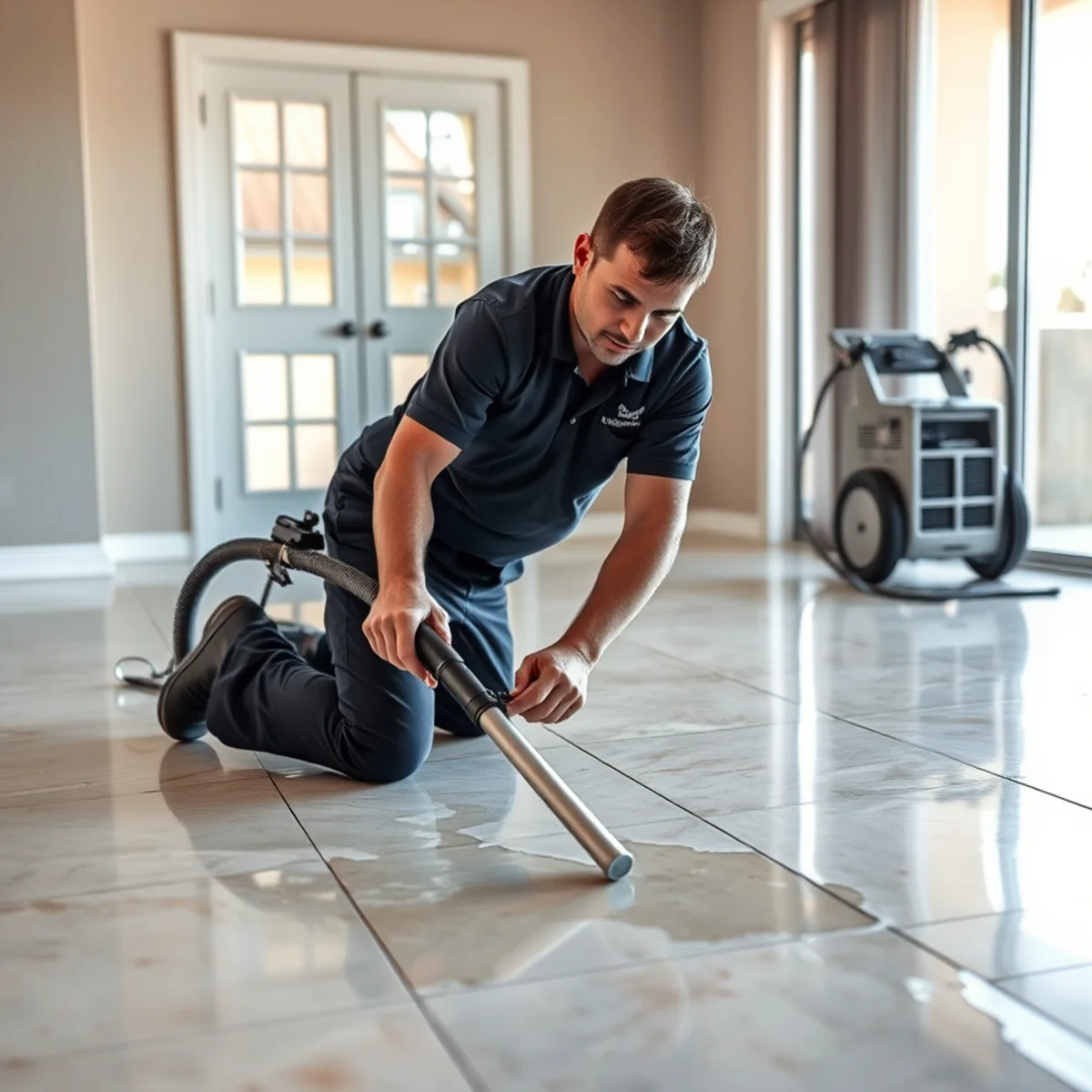
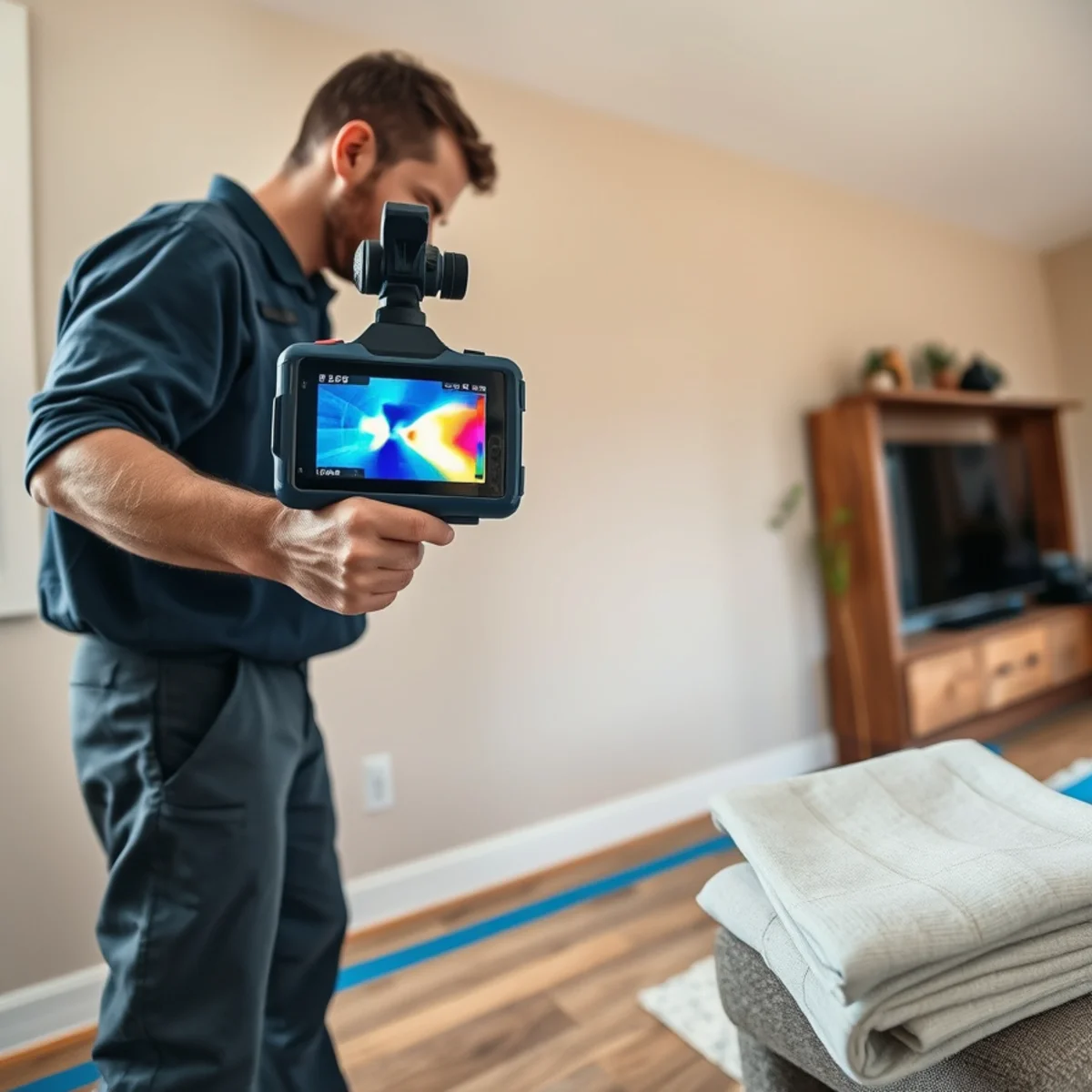
We walk the property, classify the water (Category 1, 2 or 3), then map the real footprint with moisture meters and a thermal camera — which is almost always larger than the wet area you can see. Containment goes up if it is needed. Truck-mounted extraction and submersible pumps start pulling standing water immediately, at hundreds of gallons an hour.
- 3
Days 1–3
Structural drying and dehumidification
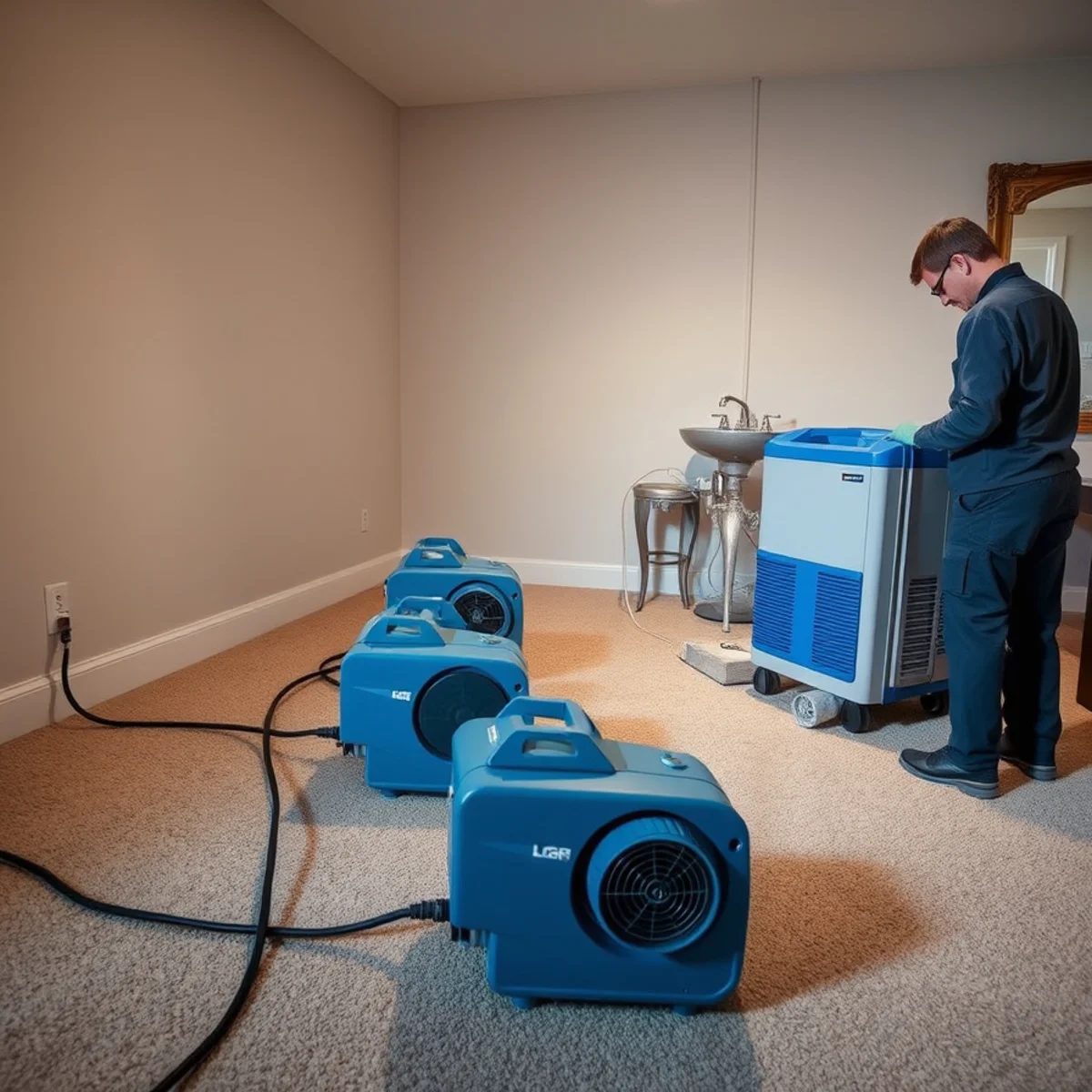
Air movers go in to break the boundary layer across wet surfaces; industrial refrigerant or desiccant dehumidifiers pull the released vapor out of the air. We take moisture readings every day at the same marked points and adjust equipment until materials hit dry standard — not until they feel dry to the touch.
- 4
Days 2–4
Cleaning, antimicrobial and air scrubbing
Affected surfaces are cleaned and disinfected, then treated with an antimicrobial to deny mold a foothold. HEPA air scrubbers run through the drying window. For sewage or black water we run negative air inside full containment so nothing crosses into clean rooms.
- 5
Days 5–14+
Repair and rebuild
Unsalvageable drywall, insulation, cabinet toe-kicks and flooring come out. Then we put it back: drywall, texture, paint, base, flooring, trim and cabinetry. One company from the first extraction to the final coat of paint, so there is no gap between the mitigation invoice and the repair invoice for your adjuster to argue about.
On the Job
Water Damage Restoration in action
What this work actually looks like in an Irvine property.
Why Irvine Homes Flood Differently
Irvine is a master-planned city, which means the housing stock moves in cohorts. Woodbridge, University Park, Northwood, Deerfield and El Camino Real all went up in a tight window in the 1970s and early 1980s, nearly all on slab-on-grade foundations with copper supply lines run through or under the concrete. Those pipes are now 40 to 50 years old.
Copper does not fail on a schedule, but it fails on a curve — and Orange County's water pushes that curve forward. The supply here is hard and mineral-heavy, and where soil chemistry around the slab runs alkaline, the outside of the pipe corrodes while scale builds on the inside. The result is the pinhole leak: a weep too small to trip anything, running under a foundation for weeks.
The newer villages have the opposite problem. Woodbury, Stonegate, Portola Springs, Eastwood, Cypress Village and Great Park are full of builder-grade angle stops, braided supply lines, water heaters and appliance connections that are all hitting their first replacement window at roughly the same time — because they were all installed at roughly the same time.
Slab leaks
Hot-water lines under concrete in pre-1990 tracts. Warm floor spots, high bills, no visible source.
Water heater and appliance failures
Garage water heaters, washing machine hoses, dishwasher supply lines, refrigerator ice-maker lines. Often fail while the house is empty.
HVAC condensate overflow
Irvine air conditioners run hard from June to October and produce gallons of condensate daily. A clogged line or rusted drain pan drops it into a ceiling.
Storm and roof intrusion
Most of Irvine's ~14 inches of annual rain arrives between November and March, often as concentrated atmospheric-river events that find every failed flashing at once.
Multi-unit migration
In attached condos and townhomes, water from an upstairs unit becomes three owners' problem and an HOA question within the hour.
Standing water right now? Call us before you do anything else.
We are on site within 60 minutes anywhere in Irvine, 24 hours a day.
Water Categories: Why the Type of Water Changes Everything
The IICRC S500 standard sorts water into three categories, and the category dictates what can be dried in place versus what has to be removed and thrown away. This is the single biggest driver of both cost and timeline, so it is worth understanding before an estimate lands in front of you.
The important part most homeowners miss: category degrades with time. Clean water sitting on a warm floor for 48 hours is no longer clean water. It has picked up soil, gypsum and organics from everything it touched, and it now supports microbial growth. Waiting does not just cost you drying days — it can move your loss up a category and take your carpet pad, drywall and insulation with it.
Category 1 — Clean water
Broken supply lines, tub or sink overflows, appliance supply failures, rain before it touches anything contaminated. Low risk. Extract, dry, monitor. No special containment.
Category 2 — Gray water
Washing machine or dishwasher discharge, urine-only toilet overflow, sump failures. Bacteria and nutrients present. Extract, pull affected porous materials, apply antimicrobial, contain if the area is large.
Category 3 — Black water
Sewage backup, toilet overflow with solids, outdoor floodwater, or any water that has been standing long enough to grow biology. Full containment with negative air and HEPA scrubbing, porous materials removed and disposed of, antimicrobial treatment, technicians in proper PPE.
How We Handle Your Insurance Claim
Most homeowner policies in California cover water damage that is sudden and accidental — a burst supply line, a failed water heater, a hose that let go behind the washer. What they generally do not cover is damage that accumulated slowly, which is exactly why a slab leak that ran for six weeks gets fought over and a slab leak reported the day you noticed the warm floor usually does not.
We document the loss before we touch anything: photos, video, moisture readings at mapped points, and a line-item scope written in the format adjusters expect. We talk to your adjuster directly so you are not relaying technical questions between two parties. And we bill the carrier directly for covered work, so you are not fronting the whole job and waiting to be made whole.
Photograph before you clean
Wide shots of each room, then close-ups of the source and every wet material. Video with narration is even better.
Keep the damaged items
Do not haul anything to the curb until the adjuster has seen it or we have documented it for you.
Save every receipt
The emergency plumber, the hotel, the fans you bought at midnight. Reasonable emergency expenses are usually reimbursable.
Have your policy number ready
Give us your carrier, policy number and adjuster contact at the initial assessment and we take it from there.
What You Get
What water damage restoration includes
No vague scopes. This is what is actually on the invoice and what you receive at the end of the job.
A documented moisture map before anything is touched
Thermal imaging and meter readings that define the real wet footprint, marked on the floor so you can see it. This is the boundary everything else is scoped from, and it is routinely two to three times the area you would draw by eye.
Truck-mounted extraction and deep carpet passes
Standing water pumped or vacuumed out, then weighted extraction heads worked through carpet and pad. Every gallon removed mechanically is a gallon that does not have to evaporate out of your drywall over three days.
A sized drying plan, not a pile of fans
Air movers positioned by count and angle, dehumidification sized to the cubic volume of the drying chamber, and specialty equipment where a material is worth saving: floor mats for hardwood, cavity systems for wall assemblies, desiccant for slab.
Daily moisture readings at marked points
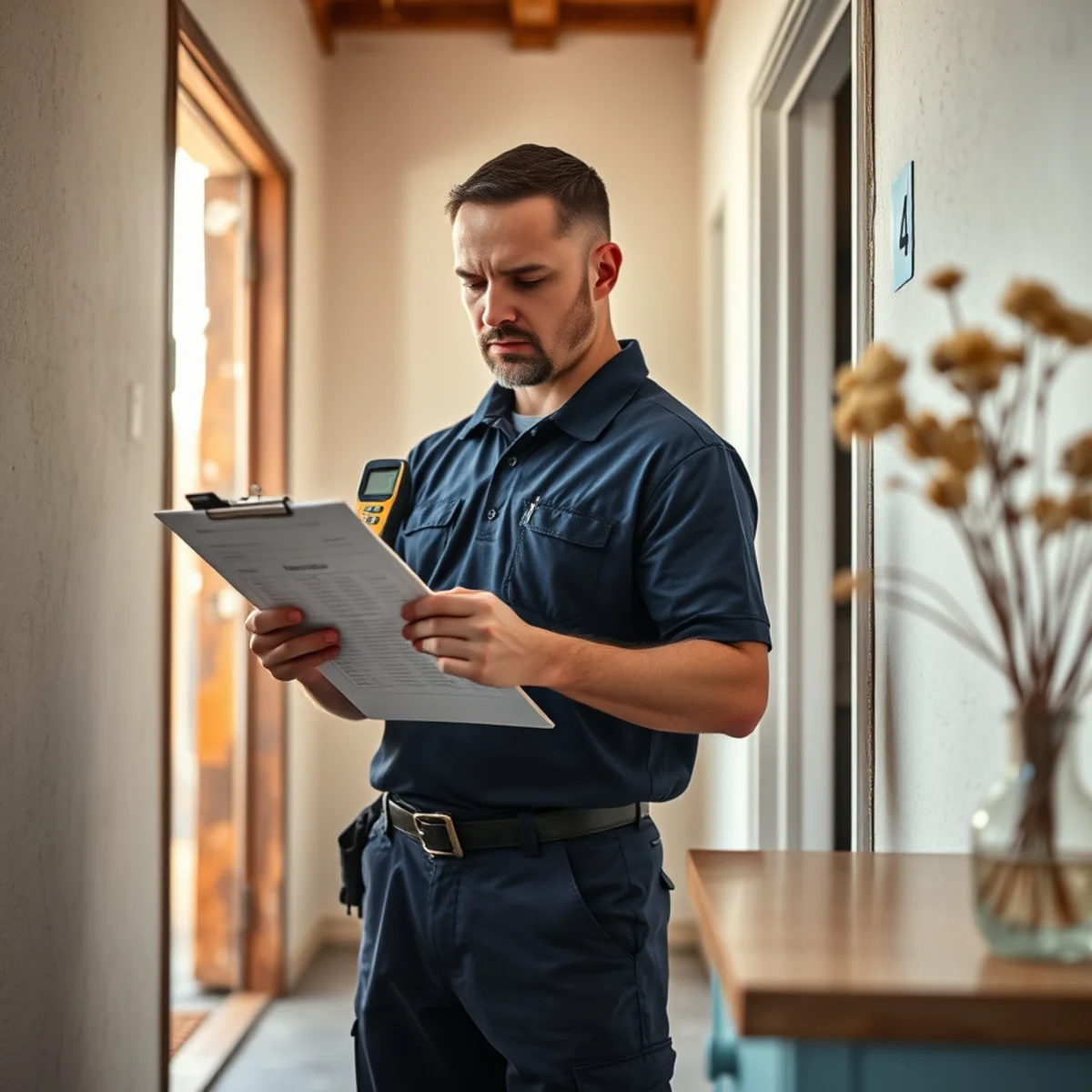
Same meter, same locations, every day, logged with date and value against a dry standard taken from unaffected material in your own home. You get the complete log at the end and so does your adjuster.
A line-item scope split into mitigation and rebuild
Written before any demolition, in the format carriers expect, as two documents rather than one. That separation is what keeps the coverage conversation clean.
The rebuild, by the same company
Insulation, drywall, texture matched to what was there, paint, baseboard, flooring and cabinetry, then a walkthrough and a punch list. No handoff, no second contract, no gap.
Why Water Damage Irvine
Why Irvine calls us for water damage restoration
Plenty of companies list this service. These are the things that actually change the outcome on this particular kind of job.
Sixty minutes, and the geography to back it
Our crews and equipment are based off Rockfield Boulevard in south Irvine, minutes from where the I-5 and I-405 come together. That is why the commitment is realistic here and not for a franchise dispatching from Anaheim or Riverside County.
IICRC-certified in the two things that matter
Water Damage Restoration Technician and Applied Structural Drying. The second one is the credential for the drying phase specifically, and it is the one most companies do not mention.
One company from extraction to the final coat
Most of this industry dries your home and hands you to a general contractor. Two contracts, two schedules, two scopes for your adjuster to reconcile, and each contractor pointing at the other when something falls between them.
We measure instead of guessing
Equipment leaves when the readings hit dry standard, not when a material stops feeling wet. If a company cannot produce a moisture log at the end of a job, they were guessing and you have no proof the structure is dry.
Honest Pricing
What Water Damage Restoration Costs in Irvine
None of the national franchise pages ranking for this search will tell you a number, so here is ours. Mitigation — the extraction and drying phase — generally runs about $3.00 to $7.50 per affected square foot depending on water category. Repair and rebuild, if you need it, is a different line item and a different order of magnitude, commonly $20 to $37 per square foot for finished space in this market.
In practice, a single-room clean-water loss caught quickly tends to land in the low four figures. A multi-room event that soaked cabinetry and required rebuild runs well into five figures. Irvine skews toward the higher end of published national ranges for one reason: the finishes. Engineered hardwood, custom cabinetry and stone are common here and they are expensive to put back.
You get a written scope and an estimate after the initial assessment, before any demolition starts. If the number changes because we found more water than the walls showed, you hear about it before we proceed, not on the invoice.
Water category
Category 3 costs roughly double Category 1 for the same footprint — containment, PPE, disposal and mandatory removal of porous materials.
Affected square footage
Not the size of the puddle. The size of the wet zone the moisture meter finds, which routinely runs two to three times larger.
How long the water sat
The clock is the biggest cost lever you personally control. Materials that could have been dried in place become materials that must be removed.
Materials involved
Tile over slab dries fast and cheap. Engineered hardwood, carpet pad, insulated wall cavities and MDF cabinet boxes are slow, expensive or unsalvageable.
Whether rebuild is needed
Mitigation-only jobs end when materials hit dry standard. Once drywall and flooring come out, you are into a construction budget.
Access and equipment days
Second-floor units, tight HOA staging, and long dry-downs on dense materials all add equipment-day charges.
A note on estimates: We do not quote a firm price over the phone, and you should be skeptical of anyone who does before seeing the moisture map. What we will do on the phone is tell you honestly whether what you are describing sounds like a $2,000 problem or a $20,000 problem.
Local Coverage
Water Damage Restoration across Irvine and Orange County
Same crews, same equipment, same 60-minute commitment across Irvine. Pick your neighborhood or city for the local detail.
Irvine Neighborhoods
Nearby Cities
Questions
Water Damage Restoration — Frequently Asked
How fast can you get to my Irvine home?
We commit to being on site within 60 minutes anywhere in Irvine, 24 hours a day. Our crews and equipment are based off Rockfield Boulevard in south Irvine, minutes from the I-5 and I-405 interchange, so we are not dispatching from Los Angeles or the Inland Empire and hoping traffic cooperates.
How much does water damage restoration cost in Irvine?
Mitigation typically runs about $3.00 to $7.50 per affected square foot depending on water category, and rebuild work commonly runs $20 to $37 per square foot in this market. Most single-room clean-water losses land in the low four figures; multi-room losses that require rebuild go well into five figures. You get a written line-item scope after the on-site assessment and before any demolition.
Will my insurance cover this?
Usually, if it was sudden and accidental — a burst supply line, a failed water heater, an appliance hose. Gradual damage from a leak that ran for months is where carriers push back, which is why reporting quickly matters. We document everything, write the scope in the format adjusters expect, speak with your adjuster directly, and bill the carrier for covered work.
What is a slab leak and how do I know if I have one?
It is a leak in the water lines running through or under your concrete foundation. Warning signs: a warm spot on the floor with no appliance nearby, a water bill that jumped without explanation, the sound of running water when everything is off, and damp or lifting flooring in a room with no plumbing fixtures. Irvine homes built before about 1990 are the higher-risk group because of copper lines, hard water and alkaline soil around the slab.
How long does the drying take?
Most residential dry-downs run two to four days. It depends on the water category, what materials got wet, and how quickly we started. We read moisture at the same marked points daily and the equipment does not come out until those materials reach dry standard — not when they stop feeling wet.
Can you work with my HOA or property manager?
Yes, and in Irvine that is most jobs. We routinely handle HOA approval for equipment placement in common areas, dumpster and staging locations, access windows, and the certificates of insurance management companies require before anyone starts work.
Local Proof
What customers say
Read verified customer reviews on our Google Business Profile.
“Our water heater went at 4 a.m. and the garage was under an inch of water. A real person answered, told me exactly which valve to close, and a crew was here before 5. They stopped it reaching the hallway.”
Water Heater Leak Cleanup
“We had a warm patch on the kitchen floor for weeks and assumed it was nothing. They found the slab leak in about twenty minutes without opening a single tile, and the report went straight to our adjuster.”
Slab Leak Detection
“Another company told us the whole plaster ceiling had to come out. These guys dried it in place over six days and the room looks exactly like it did. On a 1912 house that matters.”
Structural Drying
Testimonials shown are illustrative placeholders pending verified customer reviews and are not marked up as structured review data. More about our reviews
Related services
Water Extraction & Removal
Truck-mounted vacuums and submersible pumps pull hundreds of gallons an hour — including the water already inside your walls and pad.
Read moreStructural Drying & Dehumidification
Air movers plus industrial dehumidifiers, with daily moisture readings — equipment leaves when the material hits dry standard, not when it feels dry.
Read moreMold Remediation
Containment, HEPA-filtered removal and moisture correction — because mold that grows back was a water problem, not a mold problem.
Read more
Read next
How Much Does Water Damage Restoration Cost in Irvine? (2026 Price Guide)
Most companies ranking for this search will not give you a number. Here are ours, with the reasons Irvine sits above published national ranges.
Read moreDoes Homeowners Insurance Cover Water Damage in California? What's In and What's Out
Most water damage disputes come down to one word: sudden. Here is what that means in practice and how to stay on the right side of it.
Read more
24/7 live dispatch
Water Damage Restoration in Irvine, CA — 60 minutes away
Call (201) 277-9344 and a live dispatcher will give you an arrival window on that call. Free on-site assessment and written scope before any demolition.
- Free on-site assessment and written scope before any demolition
- Fully insured — general liability and workers' compensation