
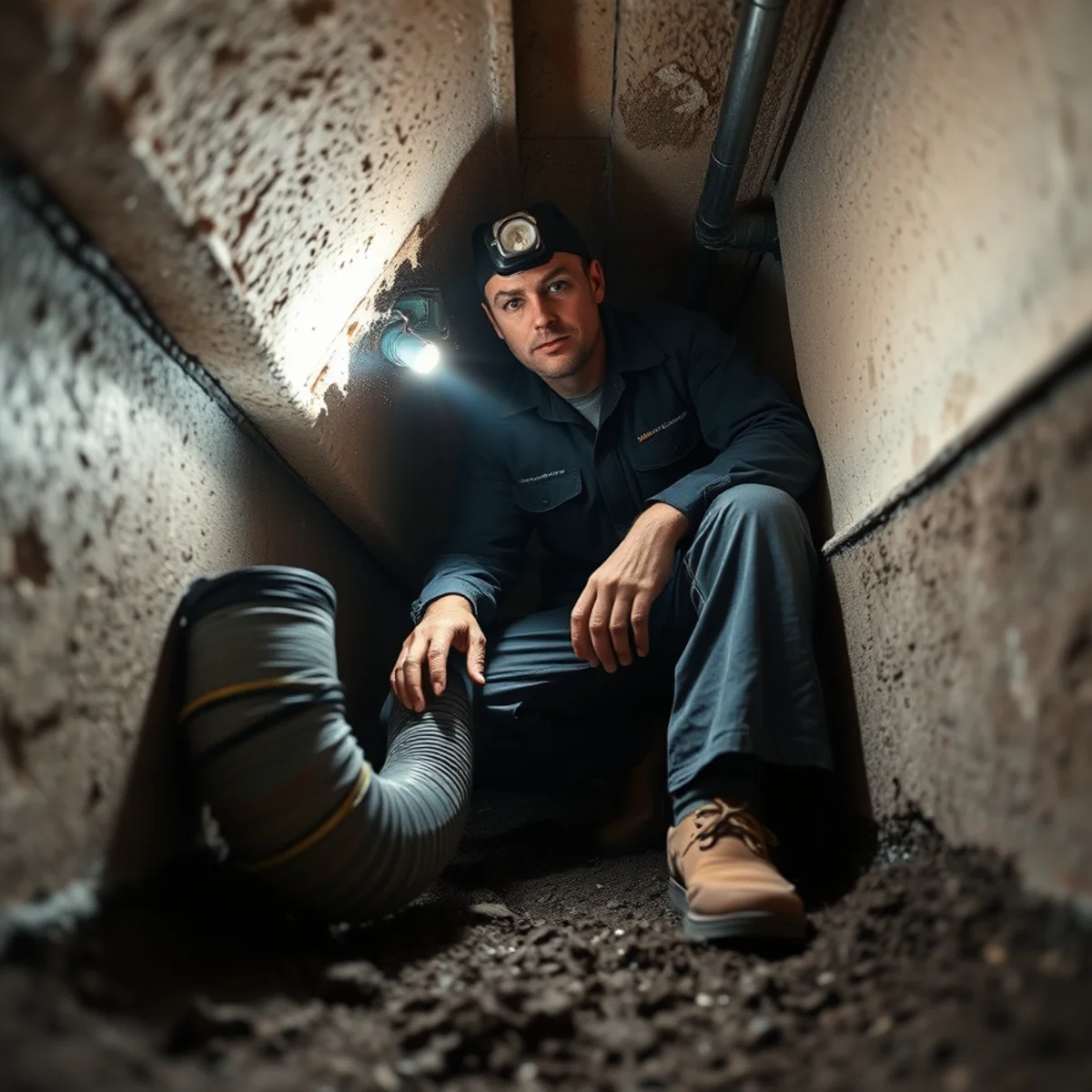
24/7 Emergency Service
Flooded Basement & Crawl Space Cleanup in Irvine, CA
Below-grade and sub-area water pumped out, sanitized and dried — including the garages and sunken rooms that stand in for basements here.
- On site in 60 minutes, anywhere in Irvine
- IICRC-Certified Crews
- We bill your insurer directly for covered work
Irvine is a slab-on-grade city. Genuine basements are rare enough that most homeowners searching this term are actually dealing with one of four things: a flooded garage, a sunken living room or step-down entry that collected water, a raised-foundation crawl space in an older adjacent city, or a below-grade parking and storage level in a condo or commercial building.
All four behave the same way and all four are worse than a normal room, because water at the lowest point of a structure has nowhere to drain and no natural airflow to help it dry. Left alone, a wet sub-area becomes a humidity source that feeds the whole building above it.
We handle all of it: pump-out, debris and contamination removal, sanitizing, dedicated sub-area drying, and the vapor barrier and insulation work that keeps it from recurring.
Request Basement & Crawl Space
Tell us what happened. We respond within minutes, 24/7.
Know the Signs
Signs of a Water Problem Below Your Living Space
Sub-area water is out of sight, so it tends to be diagnosed from the floor above.
Musty odor concentrated near floor vents or a hallway
Air from a damp crawl space is pulled up through the floor assembly by stack effect and by leaky ductwork.
Cold, damp or springy flooring over a crawl space
Wet subfloor from beneath. Common in older Costa Mesa, Santa Ana, Orange and Tustin homes with raised foundations.
Efflorescence on garage or foundation walls
The chalky white mineral bloom is water moving through concrete and leaving salts behind. It means moisture is coming through the wall.
Rust at the base of the water heater or garage appliances
The garage slab has been wet more than once, even if it is dry the day you look.
Standing water at the low point of a subterranean garage
In condo and commercial buildings, a failed sump or a blocked trench drain shows up here first.
Higher humidity on the ground floor than upstairs
Backwards from normal stratification. It means moisture is entering from below.
Our Process
How We Handle Below-Grade Water
Confined, poorly ventilated spaces need a different sequence than an open room, and safety comes before extraction.
- 1
On arrival
Confined-space safety check
Crawl spaces and subterranean levels can hold low oxygen, sewer gas or combustion byproducts. We check air quality and shut down electrical to the area before anyone goes in.
- 2
Hour 1
Pump out and extract
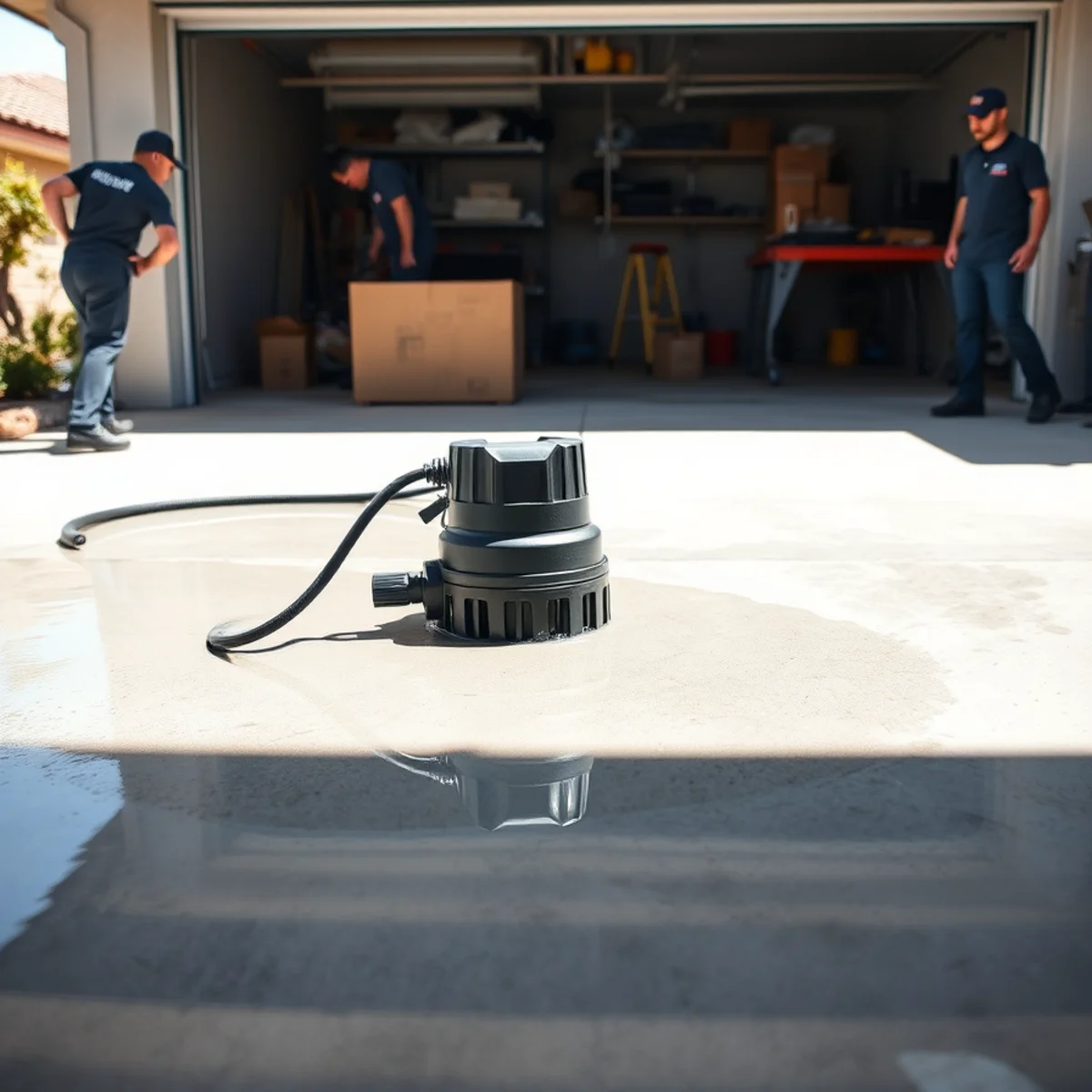
Submersible pumps for depth, then truck-mounted extraction for the remainder. Discharge goes to an approved location, never to a storm drain when the water is contaminated.
- 3
Day 1
Remove contaminated material and debris
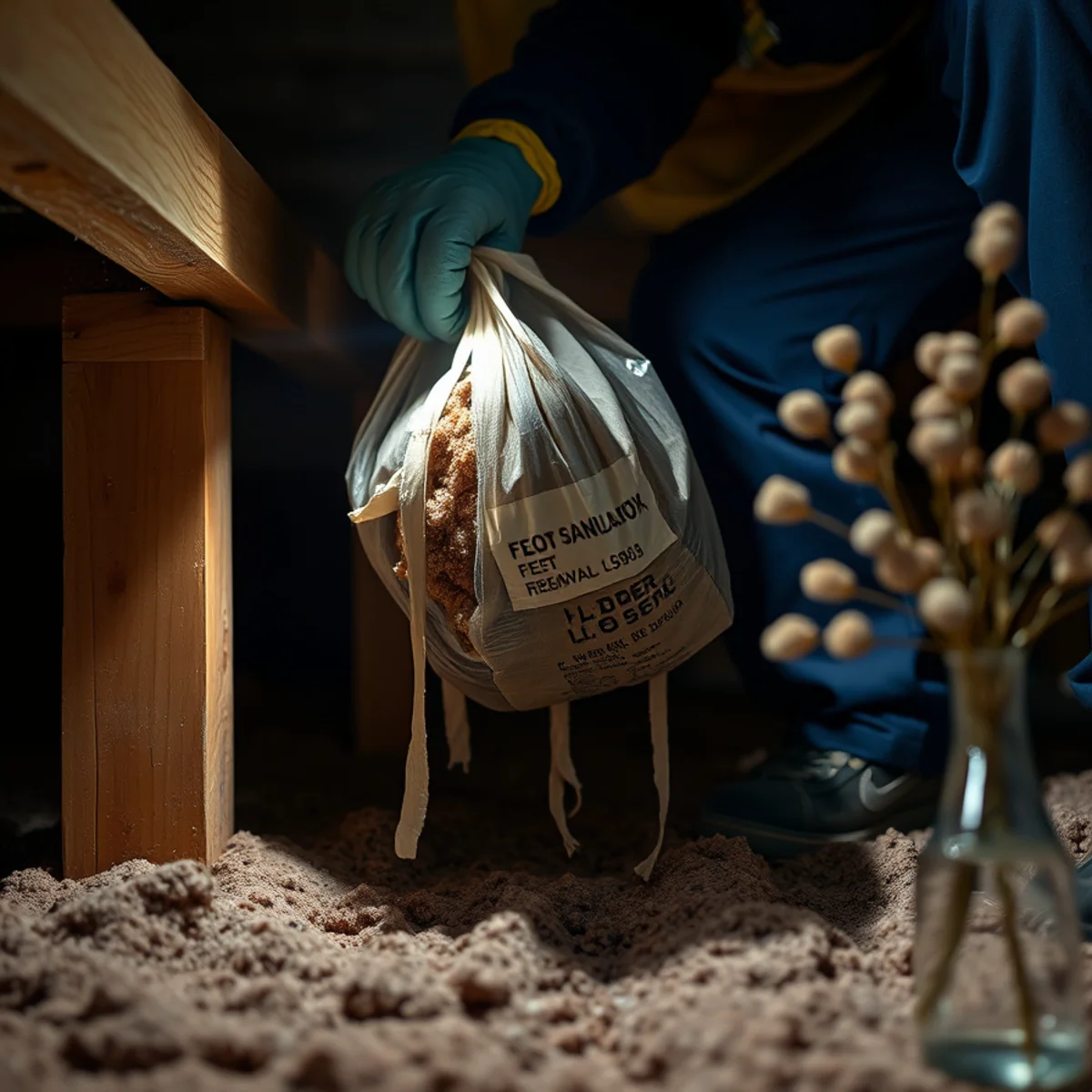
Saturated vapor barrier, wet fiberglass batt insulation between floor joists, cardboard-stored contents and any organic debris come out. Wet insulation in a crawl space is a mold factory and it does not dry in place.
- 4
Day 1
Clean and sanitize
Soil, slab, foundation walls and framing get cleaned and treated with an EPA-registered antimicrobial. Where standing water was present for days, exposed joists are HEPA vacuumed as well.
- 5
Days 1–5
Dedicated sub-area drying
Ducted air movers force air into the space and low-grain refrigerant or desiccant dehumidifiers pull the moisture out. Concrete and soil release water slowly, so these dry-downs run longer than a typical room.
- 6
Final phase
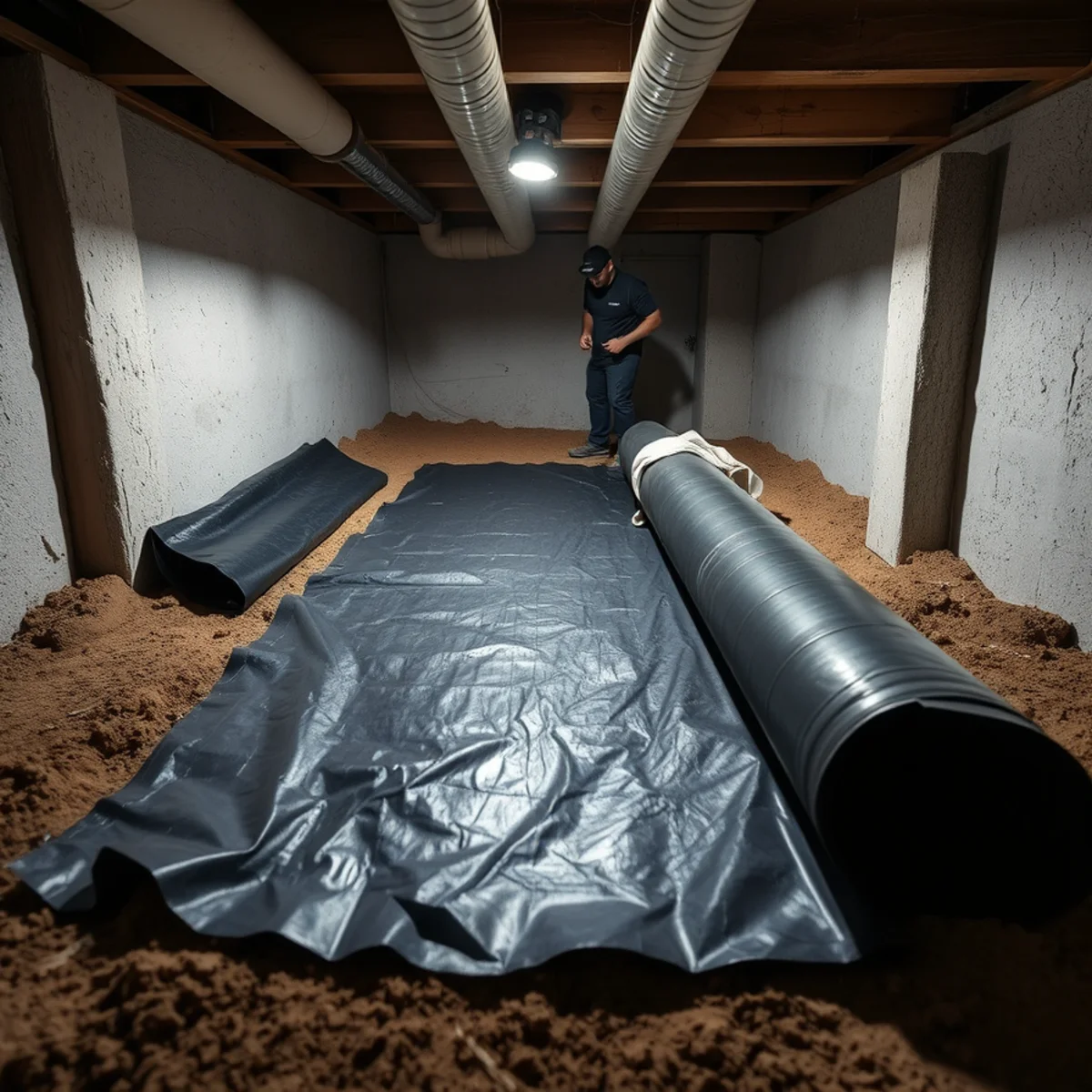
Rebuild the moisture defenses
New vapor barrier over the soil, replacement insulation where it was removed, and repairs to the drainage or grading that let water in. We treat the cause as part of the job, not as a separate proposal.
On the Job
Basement & Crawl Space in action
What this work actually looks like in an Irvine property.
The Irvine Garage Flood
The single most common version of this job in Irvine is the garage. Garage slabs in local tract housing typically sit an inch or two below the interior finished floor, so when anything lets go the garage takes the water first — and the garage is where the water heater lives, along with the washer and dryer in many floor plans, plus everything the household stores in cardboard on the floor.
The failure modes are consistent. Water heaters reach end of life at roughly eight to twelve years and they generally do not leak politely; they split. Washing machine supply hoses fail. And in a hard winter storm, a driveway pitched toward the garage door sends street runoff under the threshold.
The complication specific to garages is what is stored there. Cardboard boxes wick water and collapse, particleboard shelving swells, and drywall garage walls — usually fire-rated Type X, which is dense and slow to dry — hold moisture at the base long after the floor looks dry. Garage drywall is one of the assemblies we most often find still wet at day three.
Water heater failure
The most common single cause. Also the most preventable — replace at ten years rather than waiting for the split.
Washer supply hose
Constant pressure, five-to-eight-year service life, catastrophic when it lets go in an empty house.
Storm runoff under the door
Driveways pitched toward the house. A threshold seal or a trench drain solves it permanently.
Interior water reaching the garage
Because it is the low point, a kitchen or laundry loss inside the house often ends up here.
Standing water right now? Call us before you do anything else.
We are on site within 60 minutes anywhere in Irvine, 24 hours a day.
Crawl Spaces in Older Orange County Homes
Once you leave Irvine's newer tracts, raised foundations become common. Older parts of Costa Mesa, Santa Ana, Orange, Tustin, Fullerton and Huntington Beach have plenty of 1920s–1950s homes with real crawl spaces, and those need a different approach.
The recurring problems are consistent: a vapor barrier that was never installed or has been torn up by decades of trades crawling through it, fiberglass batt insulation between the floor joists that has fallen or absorbed water, plumbing leaks that ran for months because nobody goes down there, and exterior grade that has risen over the years until soil sits above the foundation vents.
Drying a crawl space properly means ducted air and serious dehumidification, not a fan pointed at an access hatch. And the job is not finished until the vapor barrier is replaced and the reason water got in is corrected — otherwise you are drying the same space again next winter.
What You Get
What basement & crawl space includes
No vague scopes. This is what is actually on the invoice and what you receive at the end of the job.
A confined-space safety check first
Crawl spaces and subterranean levels can hold low oxygen, sewer gas or combustion byproducts. Air quality is checked and electrical shut down before anyone goes in.
Pump-out to an approved discharge point
Submersible pumps for depth, then truck-mounted extraction for the remainder. Contaminated water never goes to a storm drain.
Wet insulation and torn vapour barrier removed
Saturated fibreglass between floor joists does not dry in place, holds water against framing and has already lost its R-value. It comes out.
Soil, slab and framing cleaned and treated
Foundation walls, joists and exposed soil all cleaned and given an EPA-registered antimicrobial, with joists HEPA vacuumed where water stood for days.
Ducted sub-area drying, not a fan at a hatch
Ducted air movers forcing air into the space and low-grain or desiccant dehumidification pulling moisture out. Soil and concrete release water slowly, so these run longer than a room.
The moisture defences rebuilt
New vapour barrier over the soil, replacement insulation, and correction of the drainage or grading that let water in. We treat the cause as part of the job.
Why Water Damage Irvine
Why Irvine calls us for basement & crawl space
Plenty of companies list this service. These are the things that actually change the outcome on this particular kind of job.
We know Irvine does not really have basements
This city is slab-on-grade. The equivalent spaces are garages, sunken living rooms, subterranean condo parking and crawl spaces in older adjacent cities, and each one behaves differently.
The garage is the job we run most
Garage slabs sit slightly below the interior floor, so they take the water first and then send it at the threshold. Getting there before it crosses is frequently the whole difference in cost.
Fire-rated garage drywall gets opened properly
Type X board is denser and slower than standard drywall and frequently will not dry from the room side. We remove base and vent the cavity rather than assuming.
We tell you which side of coverage you are on
Water from a plumbing failure is usually covered. Groundwater seepage and storm runoff usually are not without a flood policy. You hear that at the assessment.
Honest Pricing
What Sub-Area Water Cleanup Costs
Below-grade work usually prices above an equivalent square footage of open living space. Access is harder, the drying takes longer because concrete and soil release moisture slowly, and outdoor-origin water is Category 3 by default, which brings contamination protocols with it.
A single flooded two-car garage from a failed water heater, caught quickly, commonly runs in the low-to-mid four figures for mitigation. A crawl space that has been wet for months with insulation removal, vapor barrier replacement and extended drying runs considerably higher.
Access and headroom
An eighteen-inch crawl space is slow, physically difficult work. Labor hours climb accordingly.
Water source and category
A clean supply-line break is straightforward. Groundwater, storm runoff or a sewer lateral failure means full Category 3 protocol.
Volume of removal
Wet insulation, torn vapor barrier and ruined stored contents all have to come out and be disposed of.
Extended drying time
Soil and concrete are the slowest materials we dry. Expect more equipment days than an above-grade room of the same size.
Structural exposure
Long-term crawl space moisture can bring wood rot, fungal decay and subterranean termite activity into the scope.
Prevention work
New vapor barrier, drainage correction, threshold seals or a sump. Optional, but the reason you do not repeat this job.
A note on estimates: Insurance coverage below grade is where people get surprised. Water from a plumbing failure is typically covered; groundwater seepage and storm runoff are typically not, without a flood policy. We identify which one you have at the assessment.
Local Coverage
Flooded Basement & Crawl Space Cleanup across Irvine and Orange County
Same crews, same equipment, same 60-minute commitment across Irvine. Pick your neighborhood or city for the local detail.
Irvine Neighborhoods
Nearby Cities
Questions
Basement & Crawl Space — Frequently Asked
Do homes in Irvine even have basements?
Very few. Irvine is almost entirely slab-on-grade, so the equivalent spaces are garages, sunken living rooms and step-down entries, subterranean parking in condo and commercial buildings, and crawl spaces in older homes in adjacent cities. The cleanup approach is the same for all of them.
How long does it take to dry a crawl space?
Typically four to seven days, longer than an above-grade room. Soil and concrete release moisture slowly, airflow is restricted, and there is usually no natural ventilation helping. We use ducted air movers and low-grain or desiccant dehumidification, and we meter until the readings hold.
Can I just let a crawl space dry out on its own?
In this climate, generally not — and while it slowly tries, it is acting as a humidity source for the living space above. Wet insulation will not dry in place at all, and standing water on soil supports microbial growth within days. Uncontrolled drying is how crawl space moisture turns into a whole-house mold problem.
Will my insurance cover a flooded garage?
If the water came from a plumbing failure — a water heater, a supply line, a washer hose — usually yes, as sudden and accidental damage. If it came in under the garage door during a storm, that is surface water and standard homeowners policies exclude it without separate flood coverage. Photograph the water line and the entry point either way.
Do I need to replace everything stored in a flooded garage?
Not everything. Hard, non-porous items clean up: tools, metal shelving, sealed plastic bins, glass and dishware. What does not survive is anything absorbent that sat in the water — cardboard cartons and their contents, particleboard shelving, mattresses, upholstered furniture and paper goods. Photograph and inventory everything before it leaves, because that record is your contents claim.
Local Proof
What customers say
Read verified customer reviews on our Google Business Profile.
“Our water heater went at 4 a.m. and the garage was under an inch of water. A real person answered, told me exactly which valve to close, and a crew was here before 5. They stopped it reaching the hallway.”
Water Heater Leak Cleanup
“We had a warm patch on the kitchen floor for weeks and assumed it was nothing. They found the slab leak in about twenty minutes without opening a single tile, and the report went straight to our adjuster.”
Slab Leak Detection
“Another company told us the whole plaster ceiling had to come out. These guys dried it in place over six days and the room looks exactly like it did. On a 1912 house that matters.”
Structural Drying
Testimonials shown are illustrative placeholders pending verified customer reviews and are not marked up as structured review data. More about our reviews
Related services
Flood Cleanup
Storm runoff, channel overflow and interior floods — pumped out, sanitized, dried and documented for your claim.
Read moreWater Heater Leak Cleanup
Forty to eighty gallons on the garage slab, plus everything it reaches. Extracted, dried and documented — usually the same day.
Read moreMold Remediation
Containment, HEPA-filtered removal and moisture correction — because mold that grows back was a water problem, not a mold problem.
Read more
Read next
Water Heater Flooded the Garage: Emergency Steps Before Help Arrives
A tank holds forty to eighty gallons and it does not stop there — the supply keeps feeding it. Here is the shut-off order, and how to keep it out of the hallway.
Read moreGutters, Downspouts, and Yard Drainage: A Pre-Rainy-Season Checklist for OC Homes
Most storm intrusion we respond to has nothing wrong with the building. It is about where water goes once it lands.
Read more
24/7 live dispatch
Flooded Basement & Crawl Space Cleanup in Irvine, CA — 60 minutes away
Call (201) 277-9344 and a live dispatcher will give you an arrival window on that call. Free on-site assessment and written scope before any demolition.
- Free on-site assessment and written scope before any demolition
- Fully insured — general liability and workers' compensation