
Restoration Service
Structural Drying & Dehumidification in Irvine, CA
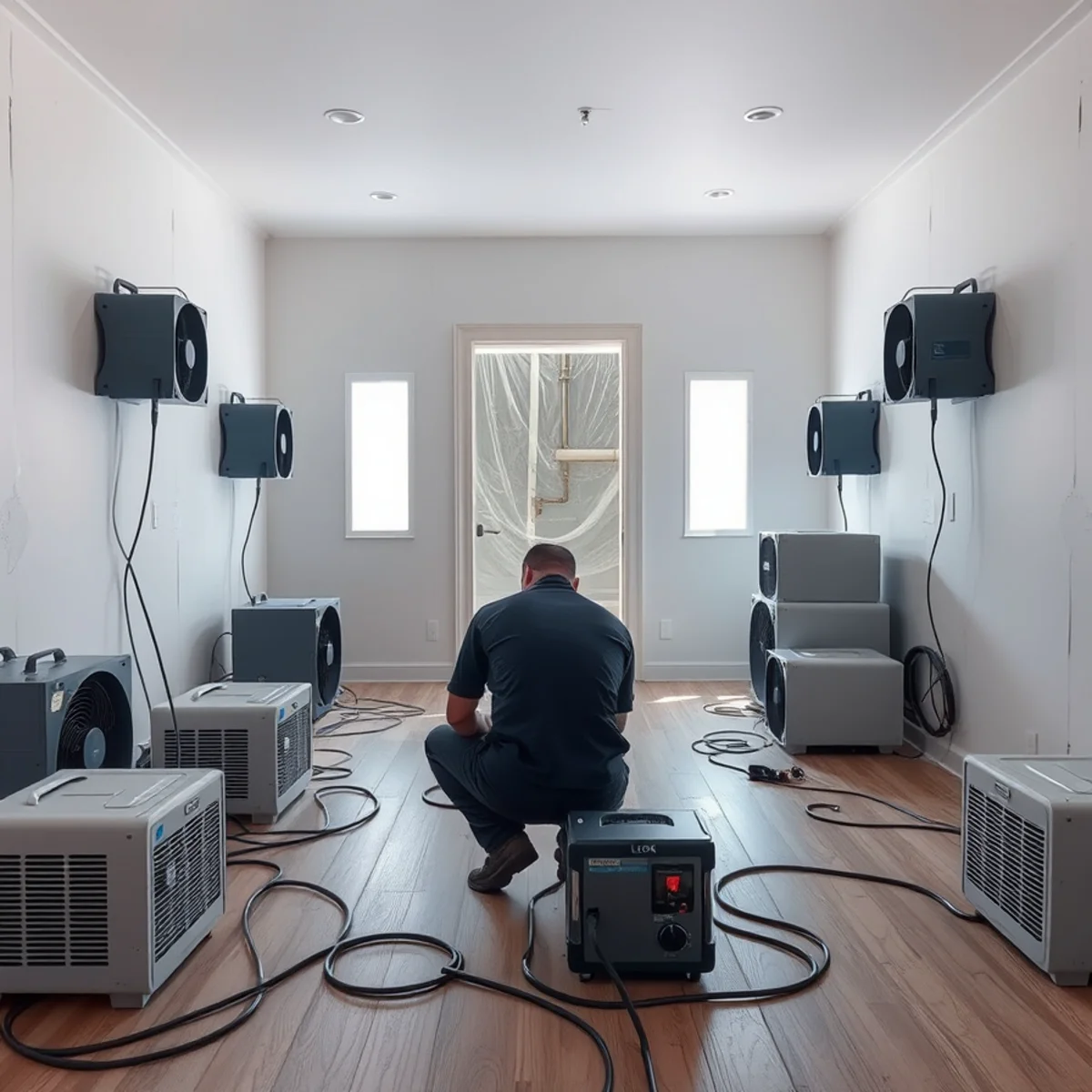
Air movers plus industrial dehumidifiers, with daily moisture readings — equipment leaves when the material hits dry standard, not when it feels dry.
- On site in 60 minutes, anywhere in Irvine
- IICRC-Certified Crews
- We bill your insurer directly for covered work
Extraction removes the water you can reach. Drying removes the water you cannot — the moisture that has already soaked into gypsum, framing, subfloor, insulation and concrete. It is the least dramatic phase of a restoration and the one that decides whether you get mold in three weeks.
Structural drying is a controlled process, not a matter of pointing fans at a wet floor. You need airflow across the surface to break the boundary layer, a dehumidifier sized to the load to capture the vapor that airflow releases, and daily measurement to prove the materials are actually giving up water rather than just feeling dry on top.
Our technicians hold IICRC Applied Structural Drying certification, which is the specific credential for this phase. We document readings daily and we do not pull equipment early.
Request Structural Drying
Tell us what happened. We respond within minutes, 24/7.
Know the Signs
Signs a Property Was Never Properly Dried
We get called to a lot of homes where someone already 'dried it out.' These are the tells that the moisture is still in the building.
A musty smell that returns on humid days
Dry materials do not smell. Odor that comes and goes with weather or with the HVAC running means something in the assembly is still holding moisture.
Paint or texture bubbling weeks later
Gypsum that dried unevenly releases moisture through the paint film long after the visible water is gone.
Baseboards that separated from the wall
Wood swelled while wet and shrank as it dried. The gap is evidence the assembly went through a full wet cycle without controlled drying.
Hardwood that cupped and never flattened
Planks dried from the top while the bottom stayed wet. Once the cup sets, sanding is the only fix — and only if the subfloor is genuinely dry.
Visible mold at the bottom of a wall
Growth in the lower six inches of drywall is the signature of a wall cavity that was never opened or never had airflow.
A stain on the ceiling that keeps coming back
Tannins and salts migrate with residual moisture. If the stain returns after being sealed and painted, the cavity above it is still wet.
Our Process
How Controlled Structural Drying Works
Every drying plan starts with the same question: how much water is in these materials, and what will it take to move it out in the fewest days?
- 1
Day 0
Establish the drying goal
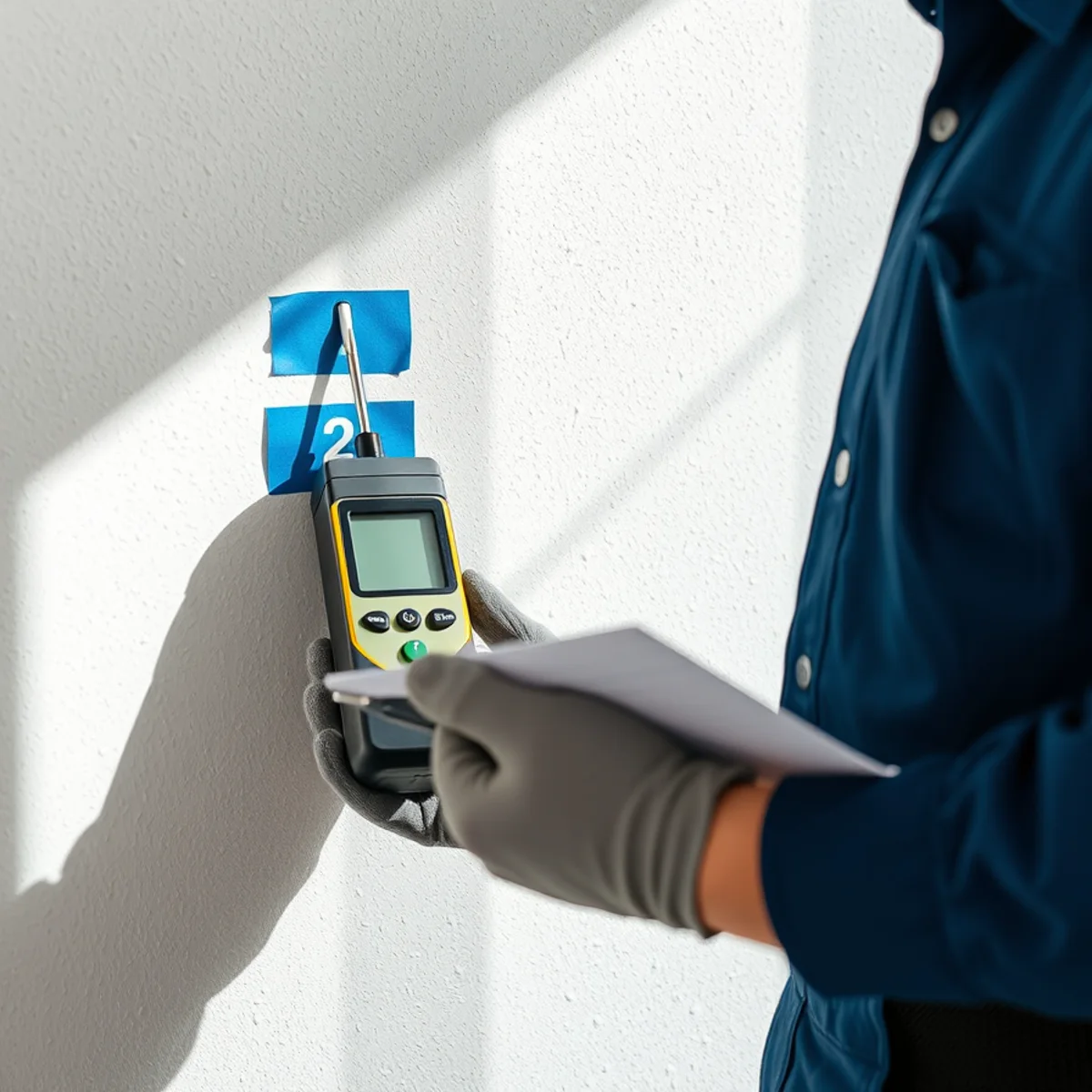
We take moisture readings from unaffected material of the same type elsewhere in the house to establish your home's dry standard. That is the target. Without it, 'dry' is just an opinion.
- 2
Day 0
Open the assembly where needed
Base removal, small cavity vents, drilled weep holes, or removing a section of drywall. Insulation that has been saturated is removed — wet fiberglass and cellulose will not dry in place on any realistic schedule.
- 3
Day 0
Place air movers
Air movers go in at a calculated count and angle to sweep the wet surfaces, not to blow across the room. Placement matters more than quantity.
- 4
Day 0
Size and set dehumidification
Refrigerant dehumidifiers for typical residential loads; low-grain refrigerant or desiccant units for dense materials, hardwood, plaster and concrete. Undersized dehumidification just moves the water to another wall.
- 5
Days 1–4
Daily monitoring and adjustment
Same marked points, same meter, every day: material moisture content, plus temperature and relative humidity inside and outside the drying chamber. If a reading stalls, the equipment plan changes that day.
- 6
Final day
Verification and demobilization
Equipment comes out when every mapped point reaches dry standard. You get the full reading log — which is also what your adjuster wants to see before approving repairs.
On the Job
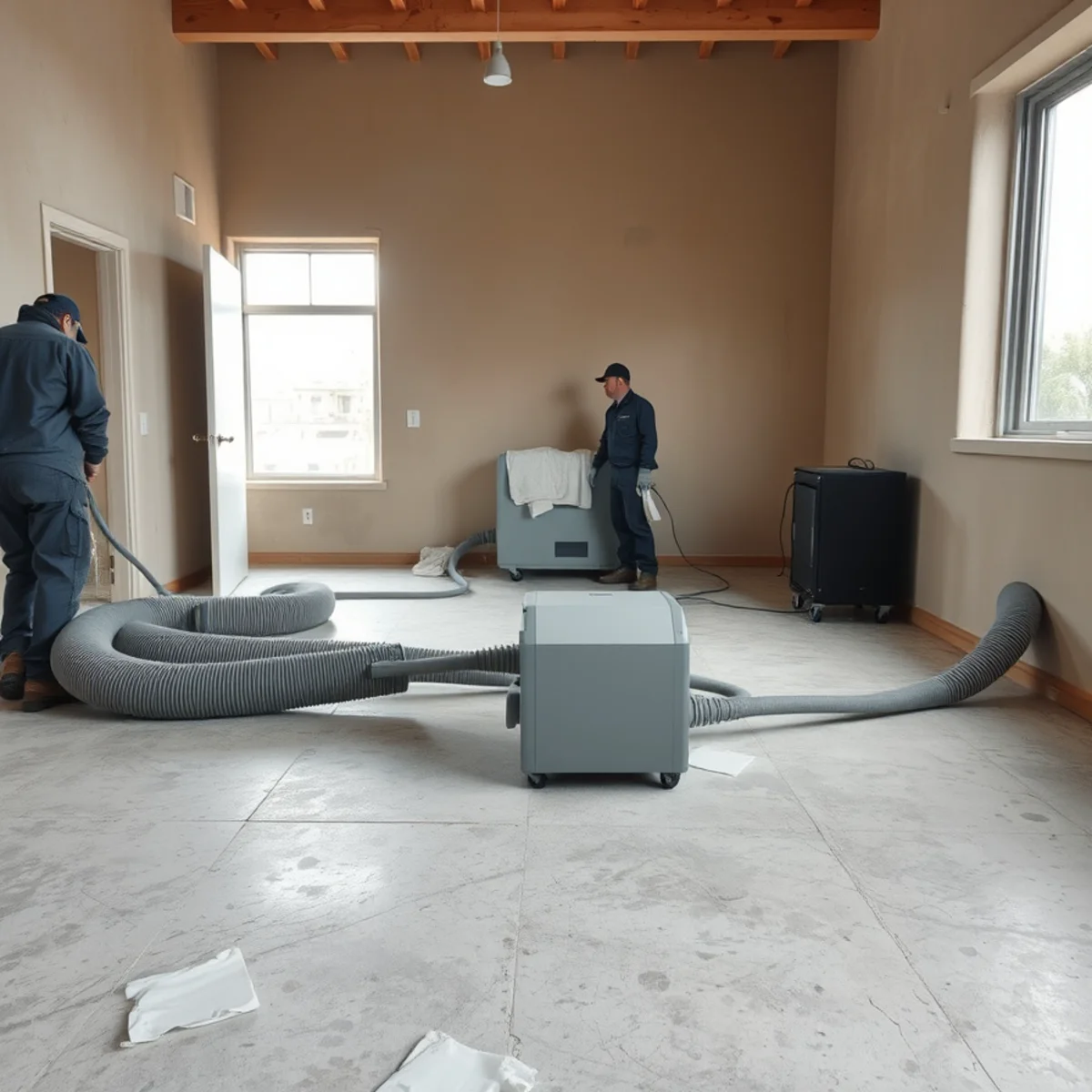
Structural Drying in action
What this work actually looks like in an Irvine property.
Why Household Fans Make It Worse
The instinct after a leak is to open the windows and set up every box fan in the house. In Irvine that is often actively counterproductive, and it is worth understanding why.
A fan moves air, which speeds evaporation. Evaporation moves water out of the material and into the air of your house. If there is no dehumidifier capturing that vapor, it simply travels — into the cool drywall of the next room, into closets, into the ceiling assembly — and condenses somewhere you were not watching. You have not removed water. You have redistributed it into places that are harder to find and slower to dry.
Opening windows compounds it on a mild coastal-influenced day. Marine-layer mornings here can bring outdoor humidity well above the level you are trying to hold indoors, so the open window is importing moisture. Controlled drying means a closed system with measured intake, not an open house with fans in it.
Standing water right now? Call us before you do anything else.
We are on site within 60 minutes anywhere in Irvine, 24 hours a day.
Drying the Materials Irvine Homes Are Actually Built From
Most Irvine housing stock is stucco over wood frame on a concrete slab, with drywall interiors and a mix of tile, engineered hardwood, luxury vinyl plank and carpet. Each of those behaves differently under a drying plan.
Concrete slab is the slow one. It holds moisture deep and releases it grudgingly, which is why slab leaks and long-standing floods need low-grain or desiccant dehumidification rather than a standard unit. Engineered hardwood is the fragile one — the wear layer is thin, and once the core delaminates, no amount of drying brings it back. Luxury vinyl plank is deceptive: the plank itself is waterproof, so the surface looks fine while water sits trapped underneath against the slab.
Newer villages like Woodbury, Stonegate and Cypress Village add another wrinkle: tighter building envelopes. A well-sealed home does not self-ventilate, so moisture released during drying has nowhere to go unless the dehumidification is sized for it.
Drywall
Dries well if opened early. Below about twelve inches of wicking, base removal and cavity airflow usually saves it.
Concrete slab
Needs low-grain refrigerant or desiccant drying and patience. Often the longest item on the schedule.
Engineered hardwood
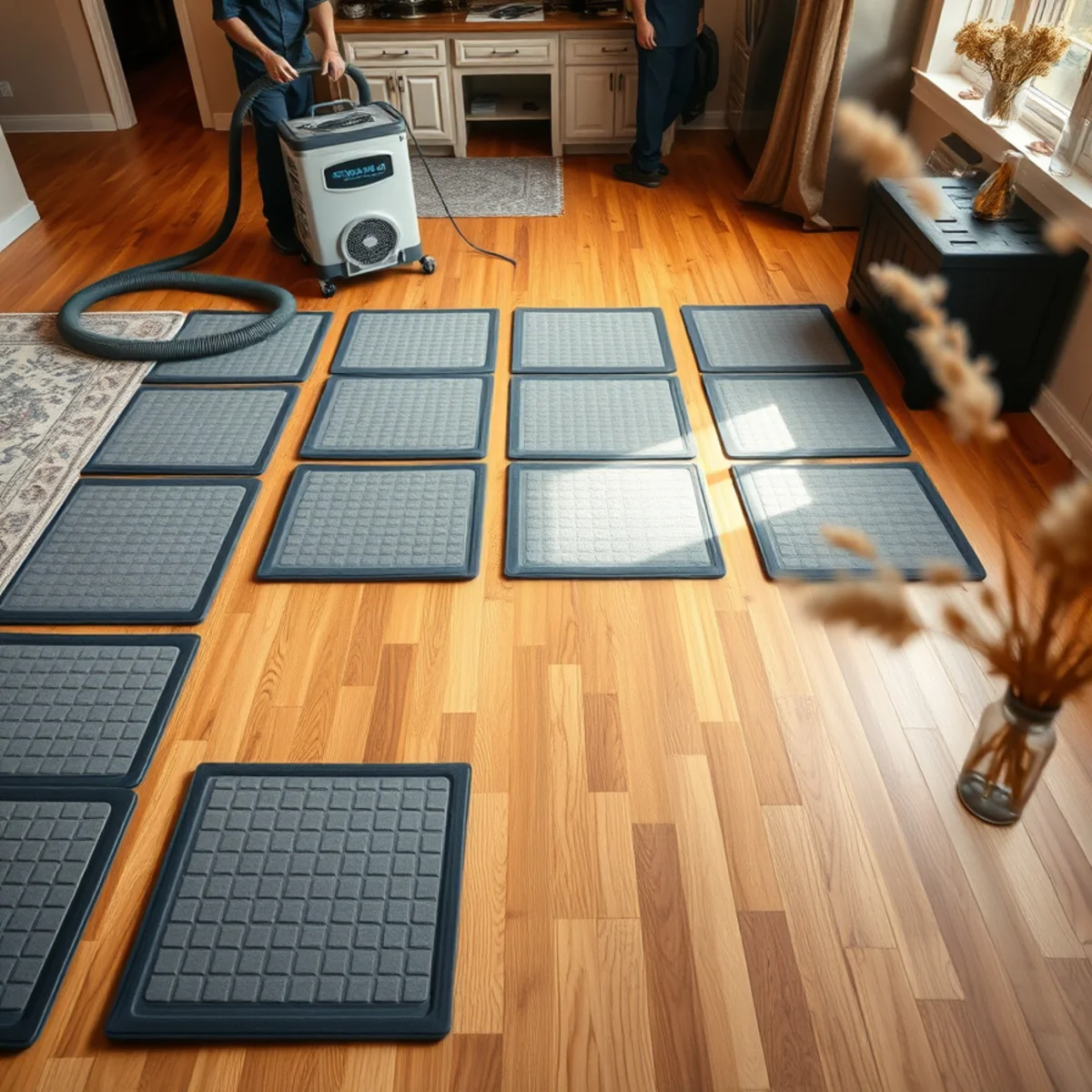
Sometimes saved with floor-drying mats pulling from below. Often not, once the core has swelled.
Luxury vinyl plank
Nearly always has to come up. Water trapped between plank and slab will not dry through the plank.
Wet insulation
Removed, not dried. Saturated fiberglass and cellulose lose R-value and hold water against framing.
What You Get
What structural drying includes
No vague scopes. This is what is actually on the invoice and what you receive at the end of the job.
A dry standard established from your own home
We meter unaffected material of the same type elsewhere in the house. That reading is the target. Without it, dry is just an opinion.
The assembly opened where it needs to be
Base removal, small cavity vents, drilled weep holes, or a section of drywall. Saturated insulation is removed rather than dried, because wet fibreglass will not dry in place on any realistic schedule.
Air movers placed by calculation
Count and angle chosen to sweep the wet surfaces rather than blow across the room. Placement matters more than quantity and it is where most improvised setups fail.
Dehumidification sized to the load
Refrigerant units for typical residential loads; low-grain refrigerant or desiccant for concrete, plaster, hardwood and dense subfloor. Undersized dehumidification just relocates the water into another wall.
Specialty systems where a material is worth saving
Floor-drying mats pulling moisture up through hardwood from the subfloor, and cavity systems that dry a wall from behind without removing the finish.
A daily log you keep
Material moisture content plus temperature and relative humidity inside and outside the chamber, recorded at the same marked points every day until every one reaches standard.
Why Water Damage Irvine
Why Irvine calls us for structural drying
Plenty of companies list this service. These are the things that actually change the outcome on this particular kind of job.
Applied Structural Drying certification
This phase has its own IICRC credential, separate from water restoration. Our technicians hold it, and it is the difference between a drying plan and a pile of fans.
We adjust when a reading stalls
If a point stops moving day over day, the equipment plan changes that day rather than the schedule simply extending. Adding days without changing anything is how drying invoices inflate.
We know what this coastline does to drying
Marine-layer mornings can push outdoor humidity above the indoor level you are trying to hold. Opening windows here frequently imports moisture, which is why we run a closed system with measured intake.
We would rather save the material
Specialty equipment costs more per day and routinely saves a floor worth many multiples of the difference. On a wide-plank or stone floor it is not a close decision.
Honest Pricing
What Structural Drying Costs and Why
Drying is billed primarily on equipment days — how many air movers and dehumidifiers, for how many days — plus the daily monitoring visit. It is the majority of a typical mitigation invoice, and mitigation as a whole generally runs about $3.00 to $7.50 per affected square foot.
The honest way to read a drying estimate is to look at the equipment count against the wet square footage. Too few air movers on a large wet area means a longer dry-down and a bigger total bill, even though the daily rate looks lower. Proper sizing at the start is almost always the cheaper path.
Number of equipment days
The single biggest line. Materials that hit dry standard in two days cost roughly half what four-day materials cost.
Wet square footage and volume
Dehumidification is sized to the cubic volume of the drying chamber, not just the floor area, so high ceilings raise the requirement.
Material density
Concrete, plaster, hardwood and dense hardwood subfloor need more aggressive, longer drying than drywall and carpet.
Specialty equipment
Desiccant dehumidifiers, injectidry cavity systems and hardwood floor mats cost more per day but frequently save the material — and save money overall.
Containment
Isolating the drying chamber with poly and negative air keeps energy in the right room and is required outright on Category 3 work.
Monitoring visits
Daily readings are what proves the job to your adjuster. Skipping them is how claims get partially denied.
A note on estimates: Ask any restoration company for their daily moisture log at the end of the job. If they cannot produce one, they were not measuring — they were guessing, and you have no proof the structure is dry.
Local Coverage
Structural Drying & Dehumidification across Irvine and Orange County
Same crews, same equipment, same 60-minute commitment across Irvine. Pick your neighborhood or city for the local detail.
Irvine Neighborhoods
Nearby Cities
Questions
Structural Drying — Frequently Asked
How long does structural drying take?
Two to four days for most residential losses. Tile over slab and open drywall can finish in 48 hours. Saturated concrete, hardwood floors and multi-layer subfloor assemblies commonly run five to seven days. The reading log tells us when it is done — not the calendar.
Can I turn the equipment off at night? It is loud.
Please do not. Drying is a continuous process, and eight hours off resets much of the day's progress as moisture re-migrates from the core of the material to the surface. If the noise is unmanageable we can often reposition units or add containment to isolate the room so you can sleep elsewhere in the house.
Will my electric bill go up?
Yes, noticeably — this equipment draws real power for several days. It is usually a modest amount relative to the loss, and it is frequently reimbursable as part of a covered claim. Keep the bill and give it to your adjuster.
How do you know when it is actually dry?
We establish your home's dry standard by metering the same material in an unaffected area, then read the affected points daily until they match. Every reading is logged with location, date and value. That log goes to you and to your carrier.
Do I have to leave my house during drying?
Usually not. Most residential drying happens with the family still living there, in rooms outside the containment. You would need alternate housing if the loss is Category 3, if the affected area includes the only kitchen or bathroom, or if a large portion of flooring has been removed.
Local Proof
What customers say
Read verified customer reviews on our Google Business Profile.
“Our water heater went at 4 a.m. and the garage was under an inch of water. A real person answered, told me exactly which valve to close, and a crew was here before 5. They stopped it reaching the hallway.”
Water Heater Leak Cleanup
“We had a warm patch on the kitchen floor for weeks and assumed it was nothing. They found the slab leak in about twenty minutes without opening a single tile, and the report went straight to our adjuster.”
Slab Leak Detection
“Another company told us the whole plaster ceiling had to come out. These guys dried it in place over six days and the room looks exactly like it did. On a 1912 house that matters.”
Structural Drying
Testimonials shown are illustrative placeholders pending verified customer reviews and are not marked up as structured review data. More about our reviews
Related services
Water Extraction & Removal
Truck-mounted vacuums and submersible pumps pull hundreds of gallons an hour — including the water already inside your walls and pad.
Read moreMold Remediation
Containment, HEPA-filtered removal and moisture correction — because mold that grows back was a water problem, not a mold problem.
Read moreCeiling Water Damage Repair
Find the source, dry the cavity, then repair and texture-match — because painting over a stain never once fixed a leak.
Read more
Read next
How Long Does Structural Drying Take? A Room-by-Room Timeline
The honest answer is: until the meter says so. But here are realistic ranges by material and what makes a job run long.
Read moreWhy Your House Still Smells Musty After the Water "Dried"
That smell is microbial VOCs — the byproducts of active growth. It is not a leftover odor. It means something is still growing.
Read more
24/7 live dispatch
Structural Drying & Dehumidification in Irvine, CA — 60 minutes away
Call (201) 277-9344 and a live dispatcher will give you an arrival window on that call. Free on-site assessment and written scope before any demolition.
- Free on-site assessment and written scope before any demolition
- Fully insured — general liability and workers' compensation