

Restoration Service
Roof Leak Water Damage Restoration in Irvine, CA
Tarp it, trace where the water actually traveled, pull the soaked insulation, dry the attic and rebuild the ceiling below.
- On site in 60 minutes, anywhere in Irvine
- IICRC-Certified Crews
- We bill your insurer directly for covered work
Roof leaks are the most under-reported water damage we deal with, because they are seasonal and intermittent. A homeowner sees a small ceiling stain in February, the rain stops in March, the stain dries, and it is forgotten until the following winter — by which point the attic above has been through several wet-dry cycles.
That cycling is exactly what grows mold and rots sheathing. Continuous wetness is bad; repeated wetting and partial drying is worse, because it keeps material in the moisture range where fungal growth thrives without ever fully drying out.
Our scope is everything from the roof deck down: emergency tarping, tracing the real water path, removing saturated insulation, drying the attic and framing, and rebuilding the ceiling. We coordinate licensed roofing for the permanent exterior repair.
Request Roof Leak Damage
Tell us what happened. We respond within minutes, 24/7.
Know the Signs
Signs of a Roof Leak Before It Reaches Your Ceiling
By the time a stain appears on drywall, the attic has been wet for a while. These are the earlier signals.
Dark staining on attic sheathing or rafters
The clearest early evidence. Look with a flashlight after a rain, particularly around penetrations, valleys and at the ridge.
Insulation that is matted, discolored or compressed
Blown-in insulation that has been wet clumps and flattens. It has also lost most of its R-value permanently.
Cracked, slipped or missing roof tiles
Concrete and clay tile is standard across Irvine. Tiles crack under foot traffic and thermal cycling, and Santa Ana gusts shift them.
Deteriorated sealant at flashings and pipe boots
The mastic and rubber boots around vents, chimneys and skylights are the shortest-lived components on a roof. They dry out and crack in the sun.
Granules accumulating in gutters
On the composition-shingle roofs common in adjacent older cities, granule loss means the shingle is at end of life.
A musty attic smell
Attics should smell like dust and hot wood, not damp. Odor means active or recent moisture.
Rusted nail heads or condensation on the underside of sheathing
Sometimes a leak, sometimes a ventilation problem. Both need addressing.
Our Process
How We Restore Roof Leak Damage
Water from a roof travels. Finding where it entered is a separate job from finding where it appeared.
- 1
Hour 1
Emergency tarping
Reinforced poly mechanically fastened over the breach, photographed before and after for your claim. The tarp buys time to do the permanent repair properly rather than in the rain.
- 2
Day 1
Trace the actual path
Attic inspection plus thermal imaging and moisture mapping from below. Water runs along rafters and along the top of drywall until it finds a seam or a can light. The entry point is commonly ten to fifteen feet from the visible stain.
- 3
Day 1
Remove saturated insulation
Wet batt or blown-in insulation does not dry in place on any realistic timeline, holds water against the framing, and has already lost its thermal value. It comes out and gets replaced.
- 4
Days 1–4
Dry the attic and the ceiling assembly
Air movers and dehumidifiers positioned in the attic and in the room below, drying sheathing, rafters, ceiling joists and remaining drywall to documented standard.
- 5
As needed
Treat mold and address rot
Repeated wet-dry cycling makes attic mold common. Growth on sheathing is HEPA vacuumed and abrasively cleaned; structurally compromised framing is evaluated for repair or sistering.
- 6
Coordinated
Permanent roof repair
Licensed roofing handles tile, underlayment, flashing and sealant. The tarp stays on until that work is complete and verified.
- 7
Final
Insulation and ceiling rebuild
New insulation to current R-value, drywall, tape, texture match and paint.
On the Job
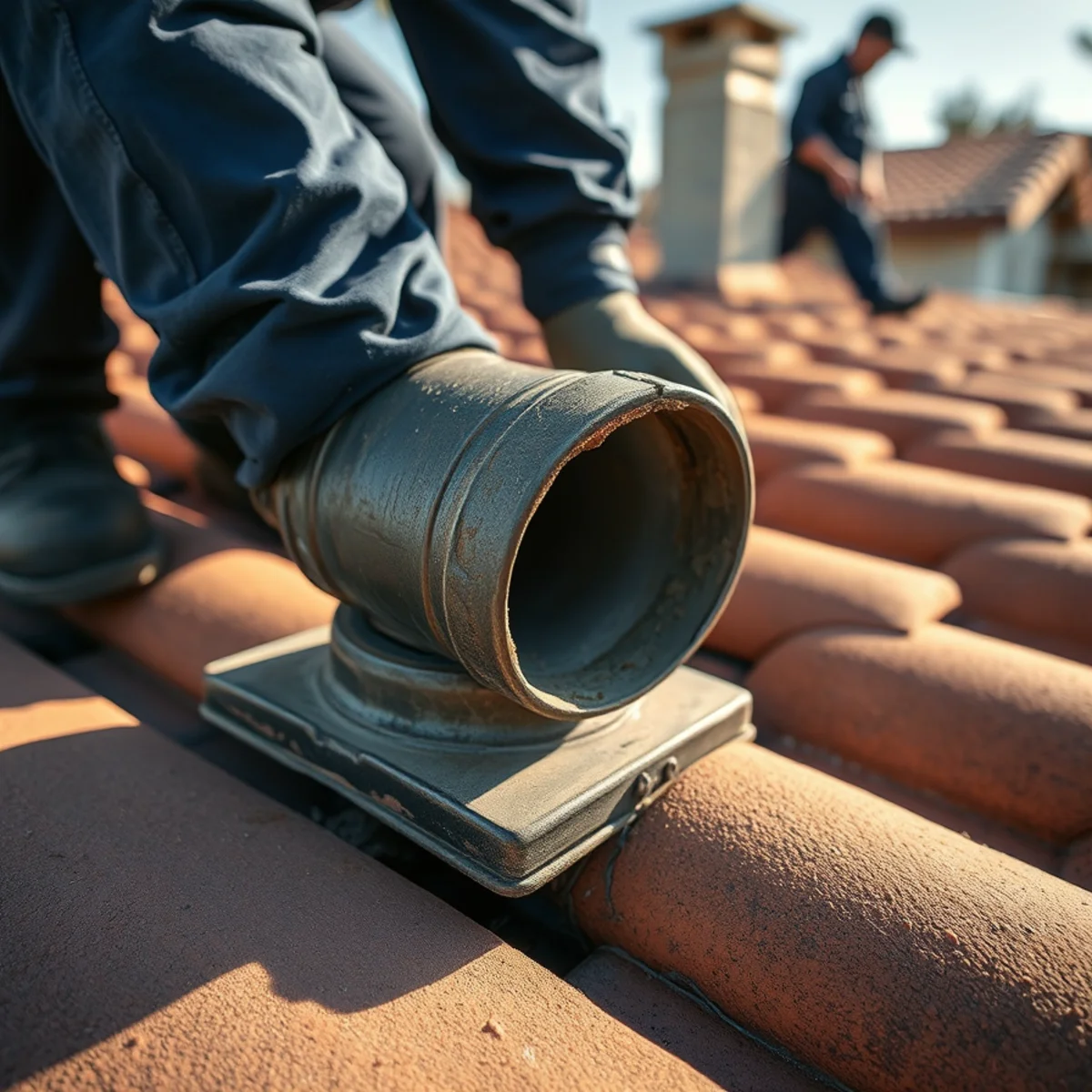
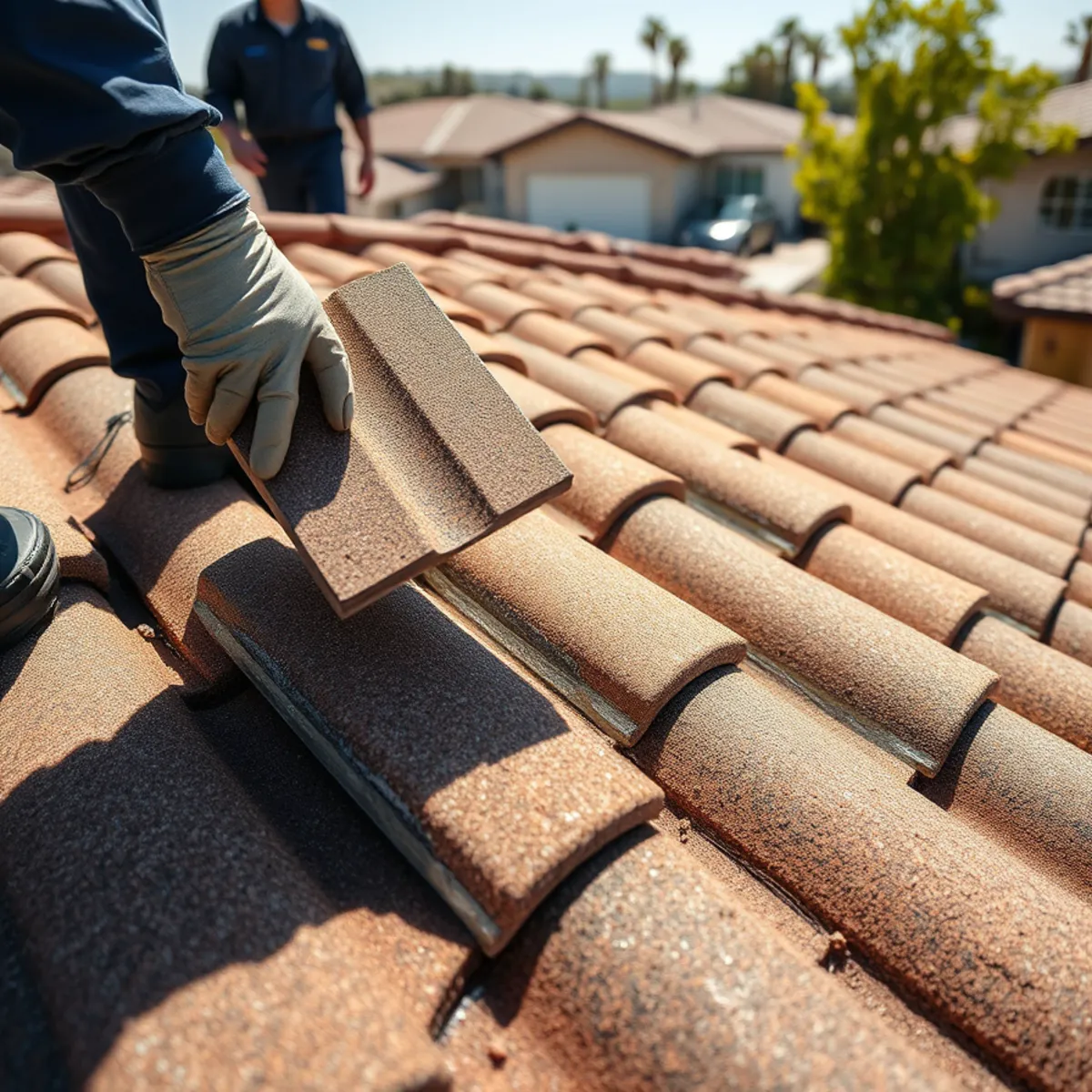
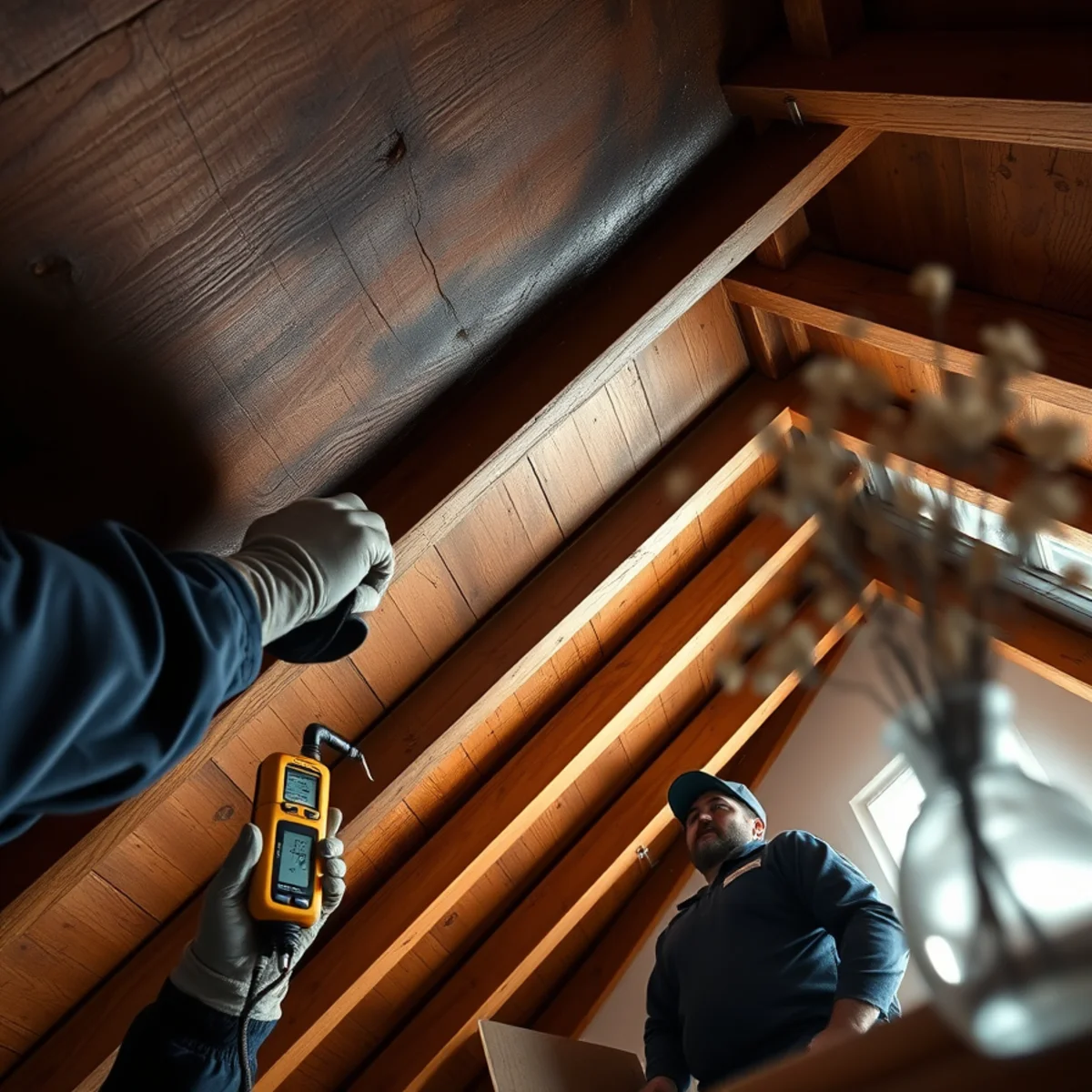
Roof Leak Damage in action
What this work actually looks like in an Irvine property.
Why Irvine Roofs Fail Where They Do
The dominant roofing material across Irvine is concrete or clay tile, and there is a widespread misunderstanding about how it works. The tile is not the waterproofing layer — it is a shedding and UV-protection layer. The actual water barrier is the underlayment beneath it, and the underlayment is what has a service life.
Original underlayment on 1970s and 1980s Irvine tract homes is often at or past end of life even where the tile still looks perfect from the street. Homeowners see intact tile and assume the roof is fine, and the leak is diagnosed as a mystery.
The other consistent failure points are the details rather than the field: valley flashing where two roof planes meet, the flashing around chimneys and skylights, rubber pipe boots around plumbing vents that crack in eight to twelve years of Southern California sun, and the sealant at any penetration. Add nine months a year of intense UV and a Santa Ana season that lifts and shifts tile, and those details are always the first to go.
Underlayment at end of life
The real waterproofing. Fails invisibly under intact-looking tile on older Irvine homes.
Cracked or slipped tile
From foot traffic, thermal cycling and wind. Individually replaceable, but the break lets water at the underlayment.
Failed pipe boots
Rubber collars around plumbing vents. Eight-to-twelve-year life in this UV. A very common source.
Valley and chimney flashing
Where the most water concentrates and where sealant fails first.
Skylights
Common in Irvine tract homes. Seals and flashing both degrade, and a skylight leak drips straight into the room.
Blocked gutters
Overflow runs down the wall and behind the stucco rather than into the downspout.
Standing water right now? Call us before you do anything else.
We are on site within 60 minutes anywhere in Irvine, 24 hours a day.
The Attic Is Where the Real Damage Lives
Homeowners fix the ceiling and consider the job done. That is backwards — the ceiling is the least damaged part of the assembly, because it was the last thing the water reached and the first thing to dry.
Above it, saturated blown-in insulation has permanently lost R-value and is holding water against your ceiling joists. Roof sheathing that has been wet repeatedly is prone to delamination and fungal growth. And Irvine attics reach extreme summer temperatures, which combined with residual moisture creates near-ideal conditions for growth in a space almost nobody inspects.
So when we scope a roof leak, the attic gets as much attention as the room. Insulation out, framing and sheathing assessed and cleaned, everything dried and documented, then new insulation in before the ceiling closes up.
What You Get
What roof leak damage includes
No vague scopes. This is what is actually on the invoice and what you receive at the end of the job.
Emergency tarping photographed before it goes on
Reinforced poly mechanically fastened over the breach, with the exterior damage documented first. That sequence is what preserves a storm claim.
The travel path traced from the attic
Water runs down the underside of the sheathing and along rafters before it exits, so the entry point is commonly ten to fifteen feet from the visible stain. We inspect above and thermal image below.
Saturated insulation removed and replaced
Wet blown-in or batt has permanently lost its R-value and holds moisture against your ceiling joists. It does not dry in place on any realistic timeline.
Attic and ceiling assembly dried to standard
Air movers and dehumidification positioned in the attic and the room below, drying sheathing, rafters, joists and remaining drywall with documented readings.
Mould and rot addressed where cycling caused it
Repeated wetting and partial drying is close to ideal for growth. Sheathing gets HEPA vacuumed and abrasively cleaned; compromised framing is evaluated for repair or sistering.
Permanent roofing coordinated, then the ceiling rebuilt
Licensed roofing for tile, underlayment, flashing and sealant, then new insulation to current R-value, drywall, texture match and paint.
Why Water Damage Irvine
Why Irvine calls us for roof leak damage
Plenty of companies list this service. These are the things that actually change the outcome on this particular kind of job.
We know the underlayment is the real waterproofing
Tile sheds water and blocks UV. The membrane beneath it keeps the building dry, and on 1970s and 1980s Irvine roofs it is frequently at end of life while the tile still looks perfect.
Pipe boots are the failure nobody checks
Rubber collars around plumbing vents last eight to twelve years in this UV. They are a very common source and they cost almost nothing to replace before they fail.
The attic gets as much attention as the room
Homeowners fix the ceiling and consider it done. The ceiling is the least damaged part of the assembly because it was last to get wet and first to dry.
We document the storm, not just the damage
Date, wind direction and exterior photographs before tarping. Carriers deny worn-out roofs and pay storm-created openings, and the evidence is what separates them.
Honest Pricing
What Roof Leak Restoration Costs
There are two budgets. The interior restoration — drying, insulation replacement, ceiling repair — follows standard mitigation pricing of roughly $3.00 to $7.50 per affected square foot plus rebuild. The roofing repair itself is a separate licensed trade cost that ranges from a few hundred dollars for a pipe boot or a handful of tiles to a five-figure re-roof.
What drives the interior number is duration. A single storm event caught within a day is a modest job. A leak that ran through three winters means saturated insulation across a wide area, likely mold on sheathing, and potentially compromised framing.
How many seasons it ran
The dominant variable. Intermittent multi-year leaks are the expensive ones because of cumulative attic damage.
Area of wet insulation
Removal, disposal and replacement across the affected attic footprint, which is usually larger than the ceiling stain suggests.
Number of rooms affected
Water travels along framing. One roof penetration commonly produces damage in two or three rooms.
Attic mold
Common with cycling leaks. Adds containment, HEPA cleaning of sheathing and framing, and verification.
Structural repair
Delaminated sheathing or rot in rafters and joists means carpentry, not just drying.
Ceiling finish
Texture matching, and on smooth ceilings often finishing the full plane. Pre-1980 popcorn requires asbestos testing first.
A note on estimates: Insurance generally covers roof leaks caused by sudden storm damage and denies leaks caused by a worn-out roof. Document the storm date, photograph the exterior damage before tarping, and report it promptly — the distinction is decided by evidence, not by argument.
Local Coverage
Roof Leak Water Damage Restoration across Irvine and Orange County
Same crews, same equipment, same 60-minute commitment across Irvine. Pick your neighborhood or city for the local detail.
Irvine Neighborhoods
Nearby Cities
Questions
Roof Leak Damage — Frequently Asked
My roof only leaks in heavy rain. Should I still fix it?
Yes, and it is more urgent than it feels. An intermittent leak means the attic goes through repeated wet-dry cycles, which is close to ideal for mold growth and sheathing rot — worse in many ways than a continuous leak that gets found and fixed immediately. Intermittent roof leaks are the most common origin of the attic mold we remediate.
Does insurance cover roof leaks?
It covers leaks caused by sudden storm damage — wind lifting tiles, a falling limb breaching the roof — and generally excludes leaks from a roof that has simply reached end of life. Photograph the exterior damage before tarping, note the storm date, and report it promptly. Carriers routinely deny long-running leaks as deferred maintenance.
Why is my ceiling stain nowhere near the damaged tile?
Water entering a roof runs down the underside of the sheathing and along rafters until it hits a low point, a seam or a light fixture penetration, then drips there. Fifteen feet of travel is normal. This is why we inspect the attic and thermal image rather than cutting directly above the stain.
Do I need to replace wet attic insulation?
Yes. Wet fiberglass and cellulose do not dry on any realistic timeline in an enclosed attic, they have already lost most of their R-value, and they hold moisture against your ceiling joists. Removing and replacing it is standard practice, not an upsell.
How do I tell a roof leak from an HVAC condensate leak?
By when it appears. A roof leak shows up during or just after rain and is dormant in dry weather. A condensate leak from an attic air handler grows on hot days and stops in cool weather, because it is driven by how hard the air conditioner is running. If your stain got worse in August and nothing has rained, look up at the air handler rather than the roof.
Local Proof
What customers say
Read verified customer reviews on our Google Business Profile.
“Our water heater went at 4 a.m. and the garage was under an inch of water. A real person answered, told me exactly which valve to close, and a crew was here before 5. They stopped it reaching the hallway.”
Water Heater Leak Cleanup
“We had a warm patch on the kitchen floor for weeks and assumed it was nothing. They found the slab leak in about twenty minutes without opening a single tile, and the report went straight to our adjuster.”
Slab Leak Detection
“Another company told us the whole plaster ceiling had to come out. These guys dried it in place over six days and the room looks exactly like it did. On a 1912 house that matters.”
Structural Drying
Testimonials shown are illustrative placeholders pending verified customer reviews and are not marked up as structured review data. More about our reviews
Related services
Storm Damage Cleanup
Emergency tarping and board-up first, then extraction, drying and repair — before the next band of the storm arrives.
Read moreCeiling Water Damage Repair
Find the source, dry the cavity, then repair and texture-match — because painting over a stain never once fixed a leak.
Read moreMold Remediation
Containment, HEPA-filtered removal and moisture correction — because mold that grows back was a water problem, not a mold problem.
Read more
Read next
Santa Ana Wind Season in Orange County: How Gusts Turn Into Roof Leaks in North Irvine and Tustin
Wind creates the damage; the first rain reveals it. By then nobody connects the two — and that gap is exactly where claims get denied.
Read moreIrvine Gets ~13 Inches of Rain — Almost All of It November to March. Is Your Home Ready?
Eight dry months silt up every drain you own. Then the whole year's rain arrives in a handful of storms. October is the month to fix that.
Read more
24/7 live dispatch
Roof Leak Water Damage Restoration in Irvine, CA — 60 minutes away
Call (201) 277-9344 and a live dispatcher will give you an arrival window on that call. Free on-site assessment and written scope before any demolition.
- Free on-site assessment and written scope before any demolition
- Fully insured — general liability and workers' compensation