Commercial & Property Managers · 6 min read
Water Damage in a Retail Space: A Response Plan for Irvine Spectrum–Area Tenants and Managers
For a retail tenant the damage is rarely the biggest cost. The closed days are. Here is how to minimize them.
Short answer
Retail suites are closed by three failures: sprinkler discharge, rooftop HVAC condensate or unit failure, and blocked roof drains ponding water on a low-slope roof. The response plan is the same for all three — isolate, extract immediately, contain and zone so part of the floor keeps trading, and document everything for the business interruption claim.
For a retail operator, a water loss is a revenue event before it is a property event. Two weeks closed in a Spectrum-area suite costs far more than the drying invoice, and the difference between two days closed and two weeks is mostly decided in the first hour.
This is the plan we recommend tenants and property managers put in place before anything happens.
The Three Failures That Actually Close Retail Suites
Fire sprinkler discharge. A single activated head releases fifteen to twenty-five gallons a minute until the system is isolated, and accidental activations — a ladder, a forklift, corrosion, a frozen rooftop line — are far more common than actual fires. This is the highest-volume commercial loss we respond to.
Roof drains on low-slope roofs. Commercial roofs have no natural shedding; they rely entirely on drains and scuppers. One blocked drain ponds water on the deck during a storm until it finds a seam. Entirely preventable with two clean-outs a year.
Rooftop HVAC units. Large packaged units sitting directly above tenant space, producing substantial condensate. A failed pan or blocked condensate line drops it through the ceiling grid, and it does it in summer when nobody is thinking about water.
The First Hour
Life safety first, then the source. For a sprinkler activation that means getting the system isolated, which requires building engineering or your fire-protection vendor — and it means having those numbers somewhere other than in one manager's phone.
Get people out of the affected area and protect inventory that can still be moved. Elevate what you can; a pallet or a shelf is enough.
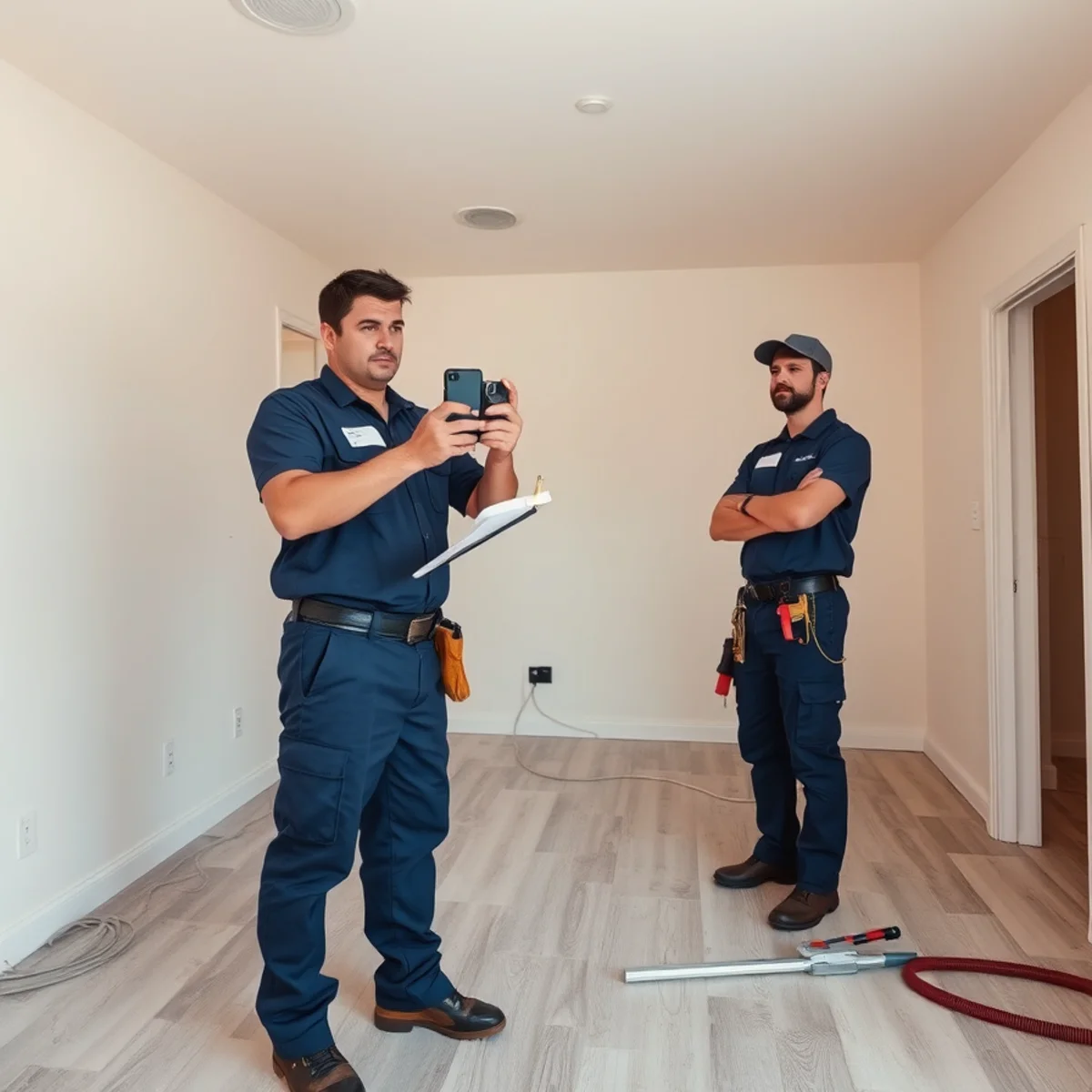
Photograph everything before you touch it. Wide shots, then the source, then inventory. This is your claim and it is only as good as the record.
Then call restoration. Every hour before extraction starts is more square footage affected and more inventory lost.
Standing water right now? Call us before you do anything else.
We are on site within 60 minutes anywhere in Irvine, 24 hours a day.
Zoning Is What Keeps You Open
The instinct is to close the whole suite. Frequently that is not necessary.
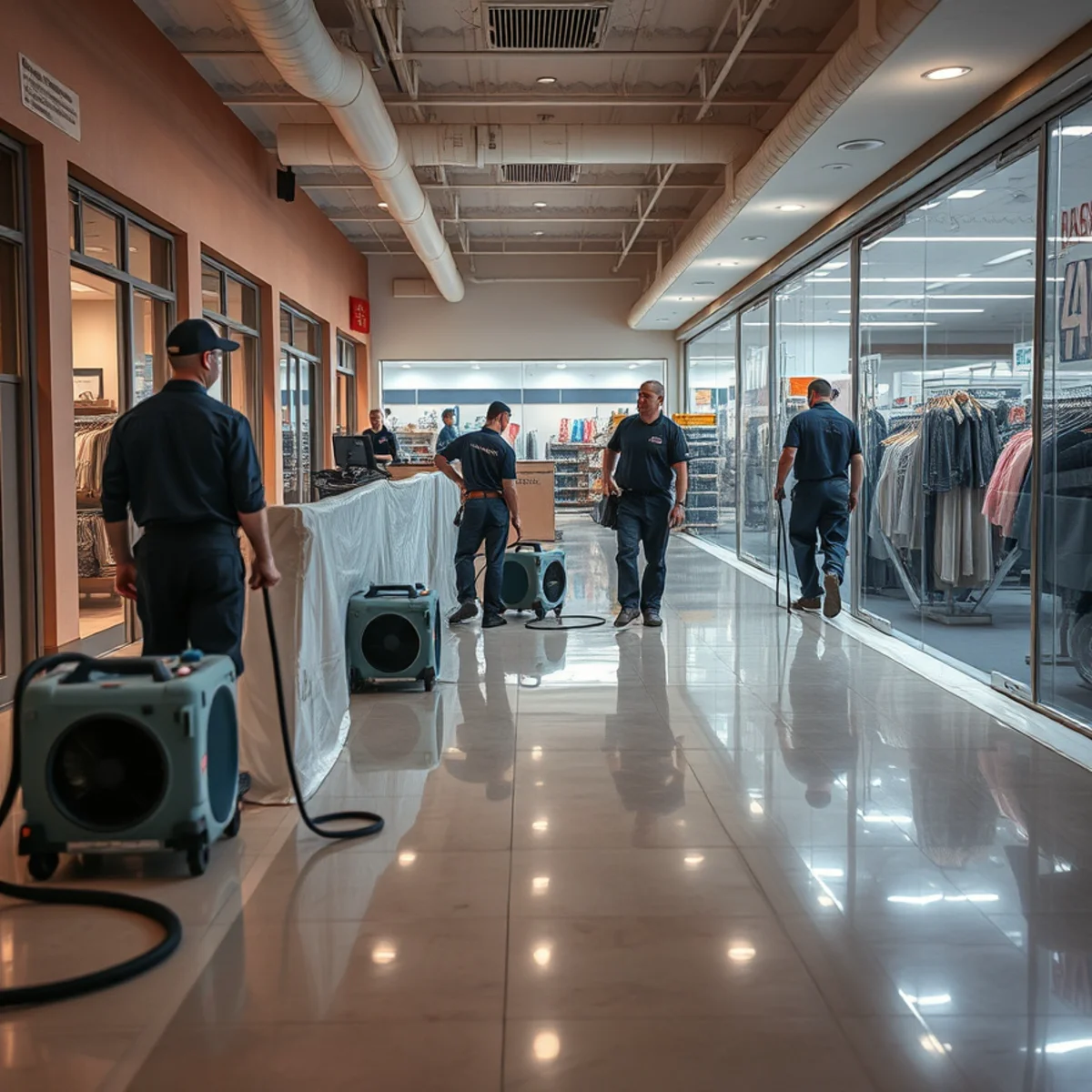
Containment zoning isolates the affected area behind poly barriers with negative air where needed, while the rest of the space continues operating. On a stockroom loss, the sales floor often stays open. On a partial sales floor loss, you may lose a section rather than a store.
We plan zones with the tenant before setup, sequenced by what restores revenue fastest — sales floor before stockroom, front of house before back of house.
And on retail we work overnight as a default, so equipment and crews are not in the space during trading hours.
Business Interruption Documentation
Commercial policies frequently include business interruption coverage, which pays lost income during the period the property cannot operate. What most operators do not realize is how much that claim depends on documentation the restoration contractor produces.
Your carrier will want the date and time of loss, the scope of affected area, a drying timeline with supporting moisture readings, and a defensible reason the space could not be occupied for the period claimed.
A restoration company that dries the space and hands you a one-page invoice leaves you unable to substantiate any of that. Ask up front for daily moisture logs by location, equipment placement records, photographic progression and a scope narrative.
On a commercial loss that documentation is frequently worth more than the restoration invoice itself.
Set Up a Response Agreement Before You Need It
This is the single highest-value thing a retail tenant or property manager can do, and it costs nothing.
Agree in advance: who to call and at what number, what scope thresholds are pre-approved so work can start without waiting for a signature at 2 a.m., certificates of insurance already on file with the landlord or property manager, and building access pre-cleared with security.
Add the fire-protection vendor's number, the building engineer's number and the landlord's emergency contact to the same document, and make sure every shift manager has it.
On a real incident that removes twenty to thirty minutes from the response, which on a sprinkler discharge is several hundred gallons.
The Landlord and Tenant Split
Most commercial leases put the building shell and systems with the landlord and the tenant improvements and contents with the tenant. So the ceiling grid may be the landlord's and your flooring, fixtures and inventory yours.
That means two scopes and often two carriers on a single loss. We produce them separately from the start, which is what keeps the two parties from arguing over one combined document for two months while your suite sits closed.
Read your lease's damage and destruction clause before anything happens. It will tell you who repairs what, whether rent abates during the closure, and what notice you owe the landlord.
From the field
Zoning is what keeps you open
The instinct after a loss is to close the suite. Frequently that is not necessary. What actually determines whether you can keep trading is whether the affected area can be isolated from the sales floor with a proper barrier, whether egress and life safety are unaffected, and whether the water was clean. Poly containment sealed floor to ceiling, negative air ducted so nothing crosses the barrier, and equipment placed so it does not block a path — that combination keeps a substantial share of retail losses partially open.
The other operational reality at the Spectrum is that most of these tenancies share systems and structure with neighbours. Water from a sprinkler head or a roof drain does not respect a demising wall, and the suite beside you may be affected before you know your own is. That is why the first call should be to building management alongside the restoration call — isolating a riser or a roof drain is frequently their access, not yours.
The honest tradeoff: staged, zoned drying takes longer in calendar days than clearing the whole suite and drying it open. It also keeps revenue coming in during those days. Which is better depends entirely on your margins and your season, and it is a decision we lay out rather than make for you — with the caveat that Category 3 water and any compromise to electrical or egress removes the option entirely.
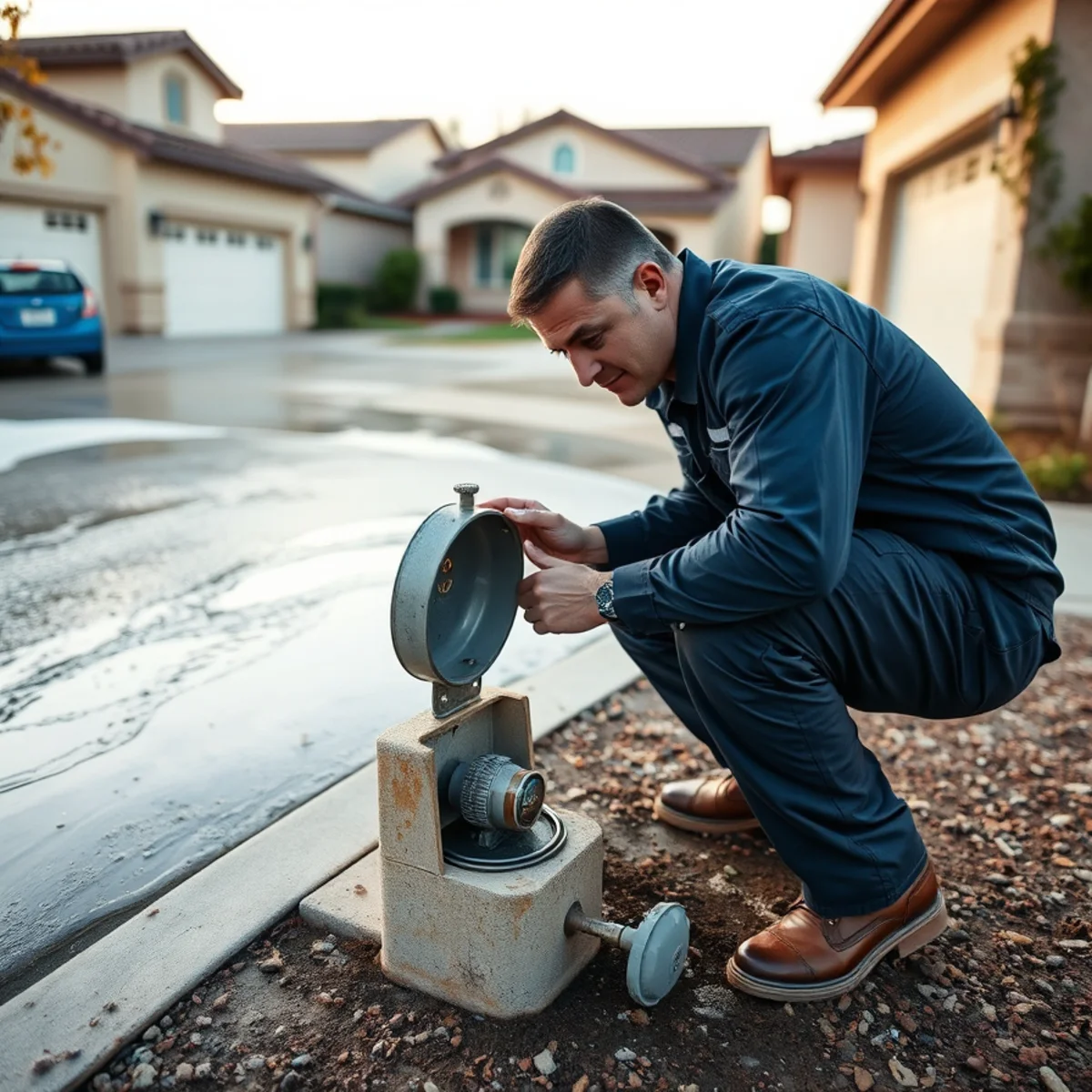
Know your shut-off and riser locations before you need them
Ten minutes finding a sprinkler control valve is two hundred gallons at fifteen to twenty-five gallons a minute per head.
Business interruption claims need dated evidence
Timestamped photographs, equipment logs, a line-item scope and records of what could not be sold. Reconstructed later, it is far weaker.
Frequently Asked Questions
How fast can you respond to a commercial loss at the Irvine Spectrum?
Four minutes. Our base is on Rockfield Boulevard, essentially down the street. On a sprinkler discharge that speed is the difference between one suite closed for two days and several closed for a week, because a head releases 15 to 25 gallons a minute until the system is isolated.
Can my store stay open during restoration?
Often yes, at reduced capacity. Containment zoning isolates the affected area behind barriers while the rest of the space operates, and we work overnight so equipment and crews are not present during trading hours. We plan the zones with you before setup, sequenced by what restores revenue fastest.
What documentation do I need for a business interruption claim?
Date and time of loss, the affected area scope, a drying timeline supported by daily moisture readings by location, equipment placement records, photographic progression and a narrative establishing why and for how long the space was unusable. Ask your restoration company for all of it up front — a one-page invoice substantiates nothing.
Need help with this in Irvine?
We handle this work every week across Irvine and Orange County. A live dispatcher answers 24/7, gives you an arrival window, and tells you what to do while you wait. Free on-site assessment and written scope before any demolition.
Related services