Problem Solving · 5 min read
Black Mold vs. Mildew: How to Tell the Difference and When to Call a Pro
The useful distinction is not species. It is whether what you are looking at is a surface film or the visible edge of something growing inside the material.
Short answer
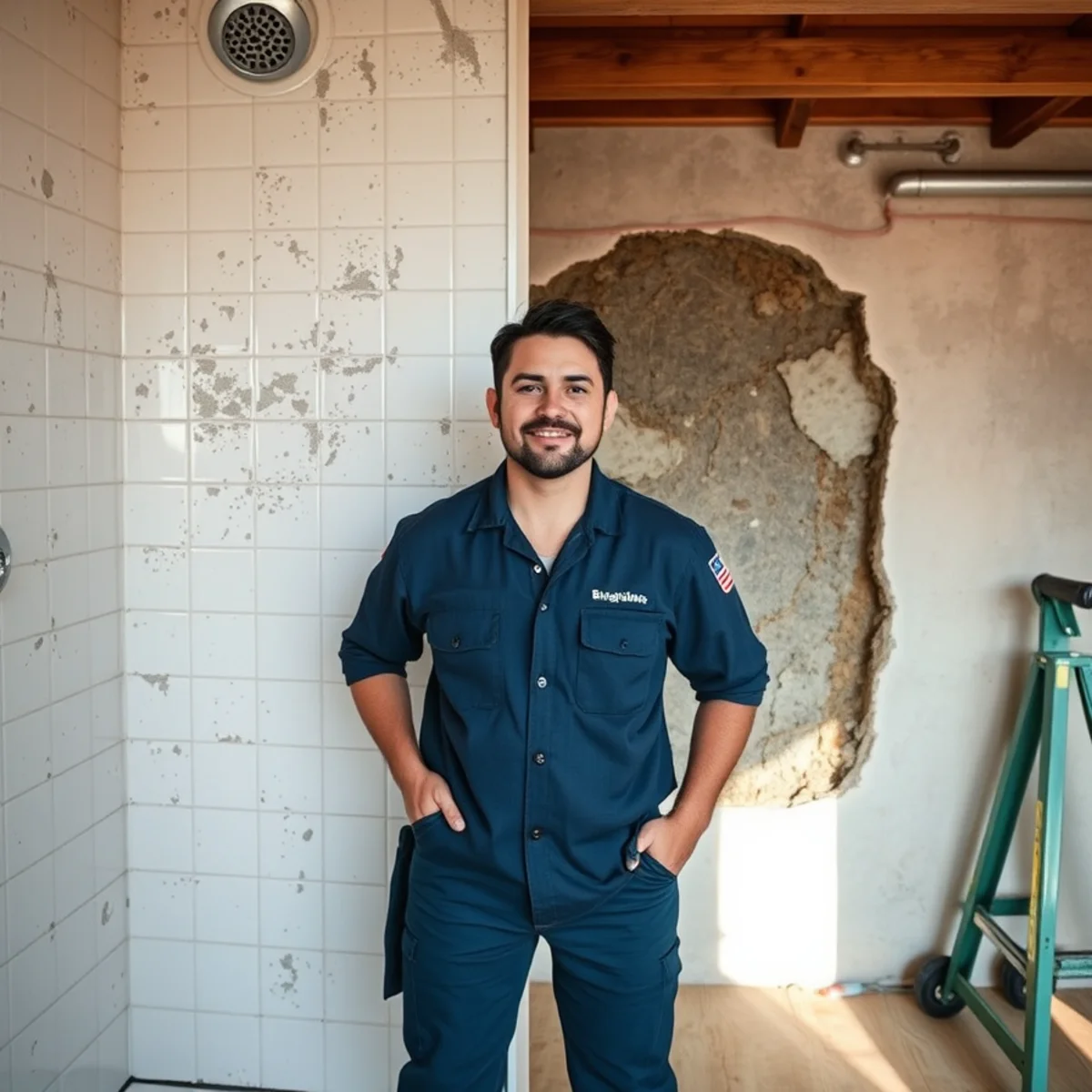
Mildew is a surface growth — powdery or downy, usually white to grey, sitting on top of a material and wiping off. Mold in a building has penetrated the material and grows in it, so it does not wipe away and it returns. Colour is not a reliable identifier, and no visual inspection identifies a species.
Homeowners want to know whether the dark patch in the bathroom is black mold. It is a reasonable question and it is slightly the wrong one, because species almost never changes what has to be done.
The distinction that actually matters is whether this is a surface film living on soap scum and humidity, or the visible edge of growth that has penetrated the material.
What Mildew Actually Is
In everyday use, mildew describes surface-level growth on non-porous or semi-porous materials in consistently damp areas — tile grout, shower caulk, window sills, painted bathroom walls.
It sits on the surface. It is usually white, gray or light brown, sometimes powdery or downy. It wipes off with a household cleaner and it comes back if the humidity that fed it is still there.
It is a ventilation problem, not a water damage problem. The fix is an exhaust fan that actually vents outside and that runs long enough, plus keeping surfaces dry.
What Mold in a Building Means
Growth on porous material — drywall paper, wood framing, insulation, carpet backing — has depth. The visible patch is the fruiting surface of a colony that extends into the material.
It is usually darker and often fuzzy or slimy in texture. It does not wipe off; wiping smears it and leaves a stain, because the structure is inside the material.
Critically, it means something is wet. Growth on porous material requires a sustained moisture source, so finding mold means there is a leak, a condensation problem or a drainage issue behind it.
Wipes off cleanly
Surface film. Likely mildew. Ventilation problem.
Smears and leaves a stain
Growth with depth in the material. There is a moisture source behind it.
On tile, grout or caulk
Almost always surface. Clean it and fix the ventilation.
On drywall, wood or insulation
Porous material. Assume depth and find the water.
Standing water right now? Call us before you do anything else.
We are on site within 60 minutes anywhere in Irvine, 24 hours a day.
About Stachybotrys
Stachybotrys chartarum is the species behind the black mold headlines. It is real, and it does prefer chronically wet cellulose material — the paper facing on drywall is close to ideal for it.
But color is not a reliable identifier. Plenty of dark growth is Cladosporium or Aspergillus, and plenty of Stachybotrys is not dramatically black.
More to the point, the remediation protocol is the same regardless of species: contain the area, remove contaminated porous material under HEPA filtration, correct the moisture source. Knowing the species rarely changes the scope of work, which is why we generally do not recommend paying for identification before remediation.
When It Is a DIY Job and When It Is Not
Under about ten square feet on a hard surface, with a moisture source you can identify and fix: reasonable to handle yourself. Clean the surface, fix the ventilation or the leak, keep it dry.
Between ten and a hundred square feet, or anywhere on porous material: professional containment is strongly recommended. Disturbing growth releases spores, and without containment and negative air you distribute them through the house.
Over a hundred square feet, any HVAC involvement, or anyone in the household who is immunocompromised, asthmatic, elderly or an infant: professional, with independent post-remediation verification.
And any growth where you cannot identify the moisture source needs investigation regardless of size, because you cannot fix what you have not found.
The Testing Question
We deliberately do not sell air testing alongside our own remediation. A company that tests, interprets its own results, sells you the remediation and then clears its own work has an obvious conflict of interest, and it is the most common complaint pattern in this industry.
Testing genuinely earns its cost in two situations: when the extent of contamination is unclear and you need a scope you can trust, and afterward as post-remediation verification — particularly in a sale, a tenant dispute or an HOA claim.
In both cases, use an independent industrial hygienist rather than the company doing the removal.
From the field
About Stachybotrys, and why we do not lead with it
The phrase 'black mold' usually means Stachybotrys chartarum, and the reason we are careful with it is that colour tells you almost nothing. Plenty of harmless growths are black, Stachybotrys is not always black, and no one — including us — can identify a species by looking at it. Meanwhile the remediation approach does not change based on species: any established growth on a wetted material gets contained, removed and the moisture source corrected. That is true whether it turns out to be Cladosporium or Stachybotrys.
What genuinely matters more than species is extent, location and whether anyone in the household is immunocompromised, asthmatic or elderly. A square foot behind a bathroom vanity is a different situation from growth inside an HVAC return, regardless of what a lab would call either one.
The honest tradeoff on testing: air or surface sampling is useful when the extent is unclear, when a tenant, buyer, carrier or attorney needs an independent number, or when someone is symptomatic and a physician wants information. It is frequently unnecessary when growth is visible and the source is known, at which point you are paying to confirm what is already in front of you. When an independent result matters, we recommend a third-party hygienist rather than testing our own work — a company that tests, interprets and then sells the remediation has an obvious conflict.
Under about ten square feet on a hard surface is usually a DIY job
Detergent, water, drying, and correcting the moisture source. Over that, or inside a cavity or an HVAC system, is not.
Do not bleach porous material
Bleach is mostly water and its active component stays on the surface. On drywall or wood it feeds the substrate and leaves the growth beneath it intact.
Frequently Asked Questions
Is black mold more dangerous than other mold?
It gets the headlines, and the practical answer is that the remediation protocol is the same for any species: contain, remove contaminated porous material under HEPA filtration, fix the moisture. Any indoor mold growth in quantity warrants attention, and species identification rarely changes what has to be done.
How do I tell mold from mildew?
Try wiping it. Surface mildew on tile, grout or caulk comes off cleanly with a household cleaner. Growth on drywall, wood or insulation smears and leaves a stain, because the colony extends into the material. Mildew is a ventilation problem; mold on porous material means there is a moisture source behind it.
Can I clean mold with bleach?
On a hard non-porous surface, bleach kills what it contacts. On porous material it does not reach the growth inside — the water in the bleach can actually feed it. And bleach applied over organic soil is largely neutralized before it disinfects anything. Clean first, and remove porous material rather than trying to treat it.
Need help with this in Irvine?
We handle this work every week across Irvine and Orange County. A live dispatcher answers 24/7, gives you an arrival window, and tells you what to do while you wait. Free on-site assessment and written scope before any demolition.
Related services