
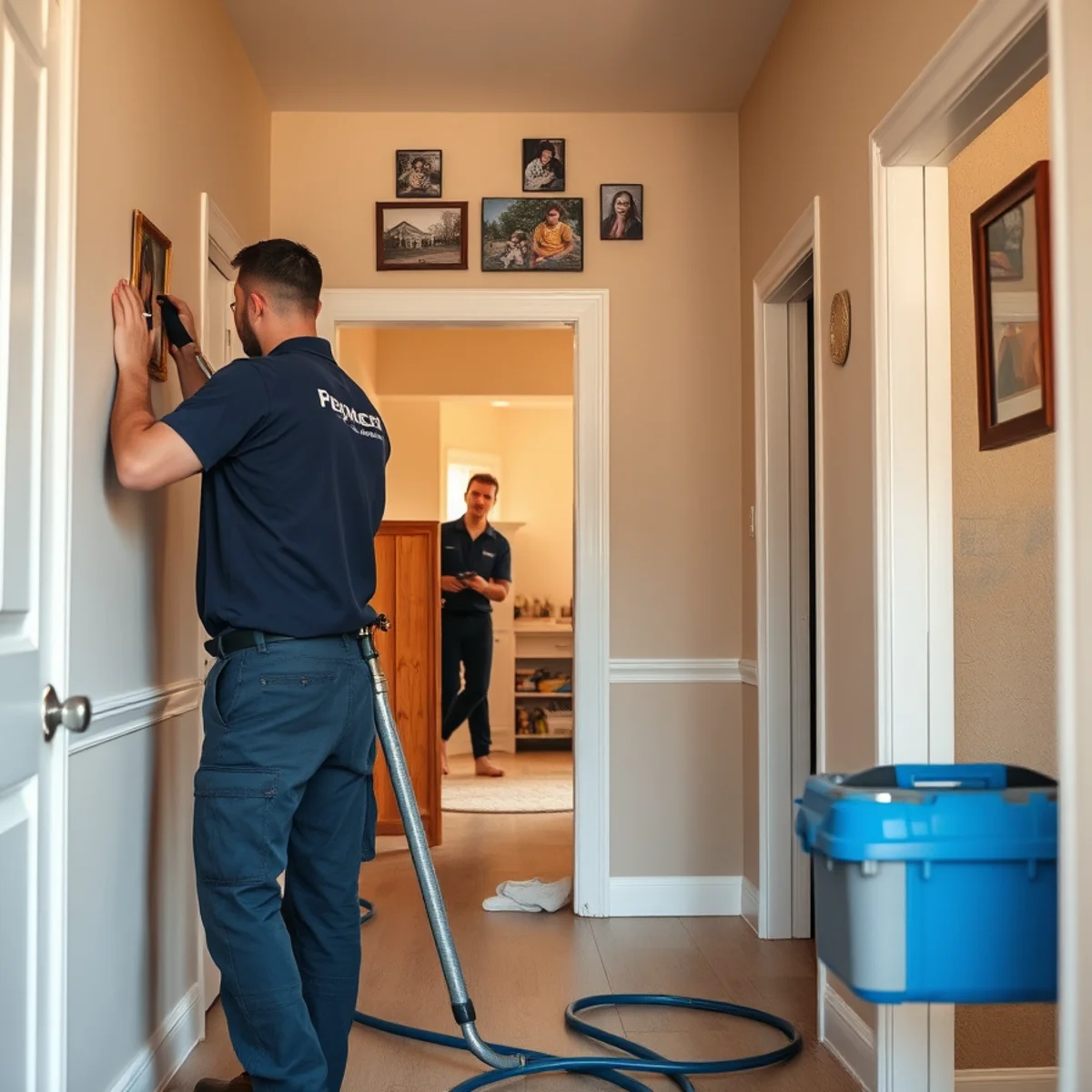
Restoration Service
Residential Water Damage Restoration in Irvine, CA
Single-family, condo or townhome — one company from the first extraction through the final coat of paint, with your insurer billed directly.
- On site in 60 minutes, anywhere in Irvine
- IICRC-Certified Crews
- We bill your insurer directly for covered work
Most homeowners hiring a restoration company are doing it for the first time, under time pressure, while the house is unusable. The single most useful thing we can tell you is this: hire one company for the whole job.
The industry's standard structure splits the work. A mitigation company extracts and dries, then leaves. You then find a general contractor to rebuild. Two contracts, two schedules, two scopes that do not quite agree, and an adjuster who now has two documents to reconcile — with each contractor pointing at the other when something falls between them.
We do both. One scope, one point of contact, one company accountable from the first extraction through the final coat of paint. It is the single biggest difference between a restoration that takes three weeks and one that takes three months.
Request Residential Restoration
Tell us what happened. We respond within minutes, 24/7.
Know the Signs
Every Kind of Home Water Loss We Handle
Irvine's housing stock ranges from 1970s single-story tracts to 2020s attached townhomes and custom estates. Each has a characteristic failure.
Kitchen losses
Dishwasher supply lines, refrigerator ice-maker lines, sink angle stops and disposal connections. The complication is always cabinetry — particleboard boxes wick from below and swell permanently.
Bathroom losses
Toilet supply lines and wax rings, failed shower pans, deteriorated grout at the pan junction, and tub overflows. On an upper floor these become the ceiling problem below.
Laundry losses
Washing machine supply hoses under constant pressure, and drain hoses that back up or come loose. Frequently in a garage or a second-floor closet, both of which spread badly.
Slab leaks
Irvine's signature loss. Copper under concrete in pre-1990 tracts, running quietly for weeks before flooring lifts.
Water heaters
Forty to eighty gallons at once, usually in the garage, usually while nobody is home.
Roof and storm intrusion
Concentrated in the November-to-March rainy season, appearing as ceiling stains rooms away from the entry point.
Neighbor and upstairs unit losses
In condos and attached townhomes, the water that damages your home frequently originated in someone else's. Different insurance conversation entirely.
Our Process
Start to Finish on a Residential Restoration
Here is the whole arc, so you know what your next few weeks look like.
- 1
Hour 1
Emergency response
On site within 60 minutes, source stabilized, safety checked, water classified and the wet area mapped with meters and thermal imaging.
- 2
Hours 1–4
Extraction and setup
Standing water removed, deep extraction through carpet and pad, base removal and cavity vents where the meter says the wall is wet, then air movers and dehumidifiers placed the same visit.
- 3
Day 1
Documentation and your carrier
Full photo and video record, moisture readings at mapped points, and a line-item scope in the format adjusters expect. We contact your adjuster directly and bill the carrier for covered work.
- 4
Days 1–4
Monitored drying
Daily readings at the same marked points until every one reaches your home's dry standard. You get the log.
- 5
As needed
Mold remediation
If growth is present, containment goes up and remediation happens before rebuild, with independent verification on anything substantial.
- 6
Weeks 2–4
Rebuild
Insulation, drywall, texture match, paint, base, flooring, cabinetry and trim. Matching existing finishes is usually what sets the schedule, particularly on discontinued flooring.
- 7
Final
Walkthrough and close-out
We walk it with you, fix the punch list, and hand over the complete documentation package — readings, photos, scopes and warranty.
On the Job
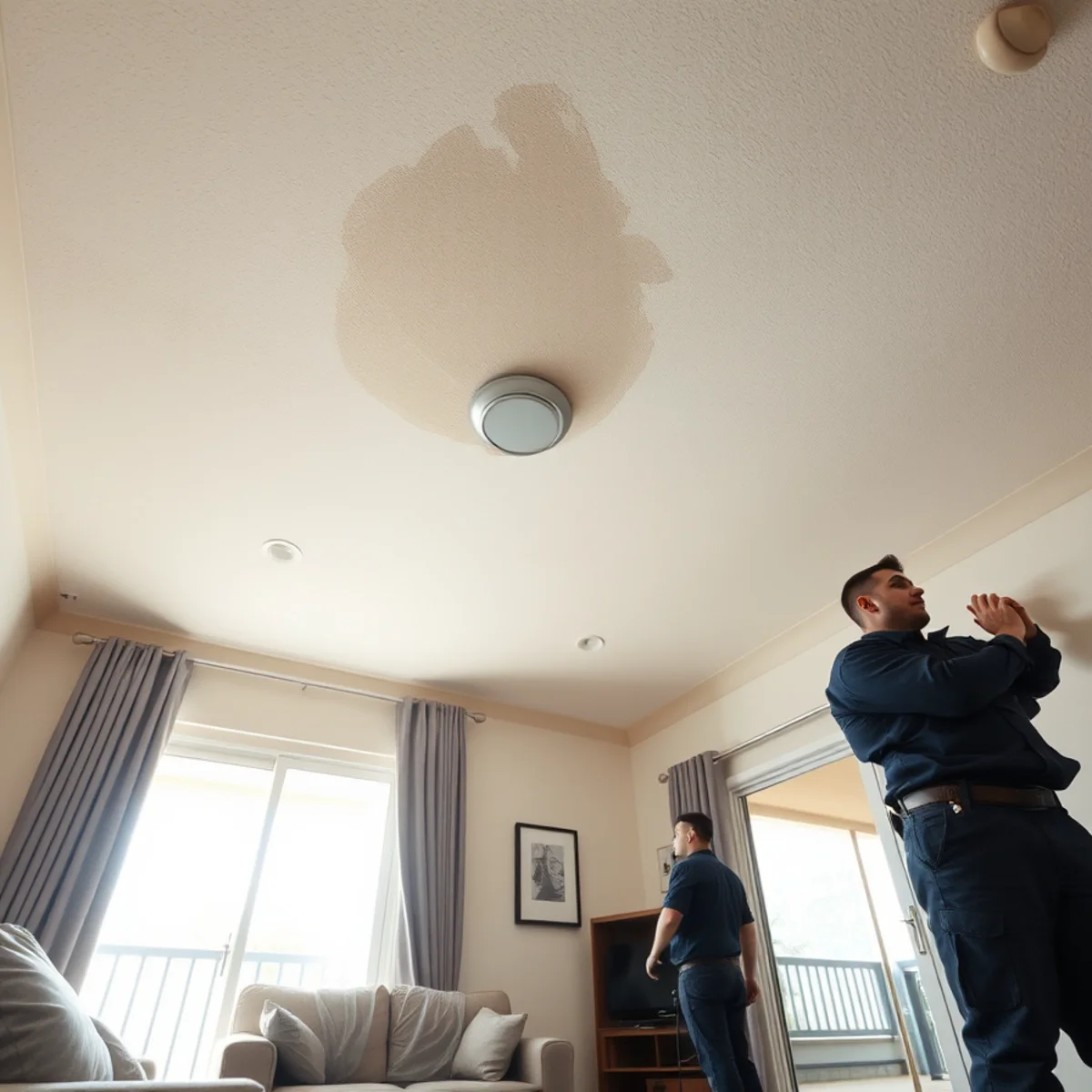
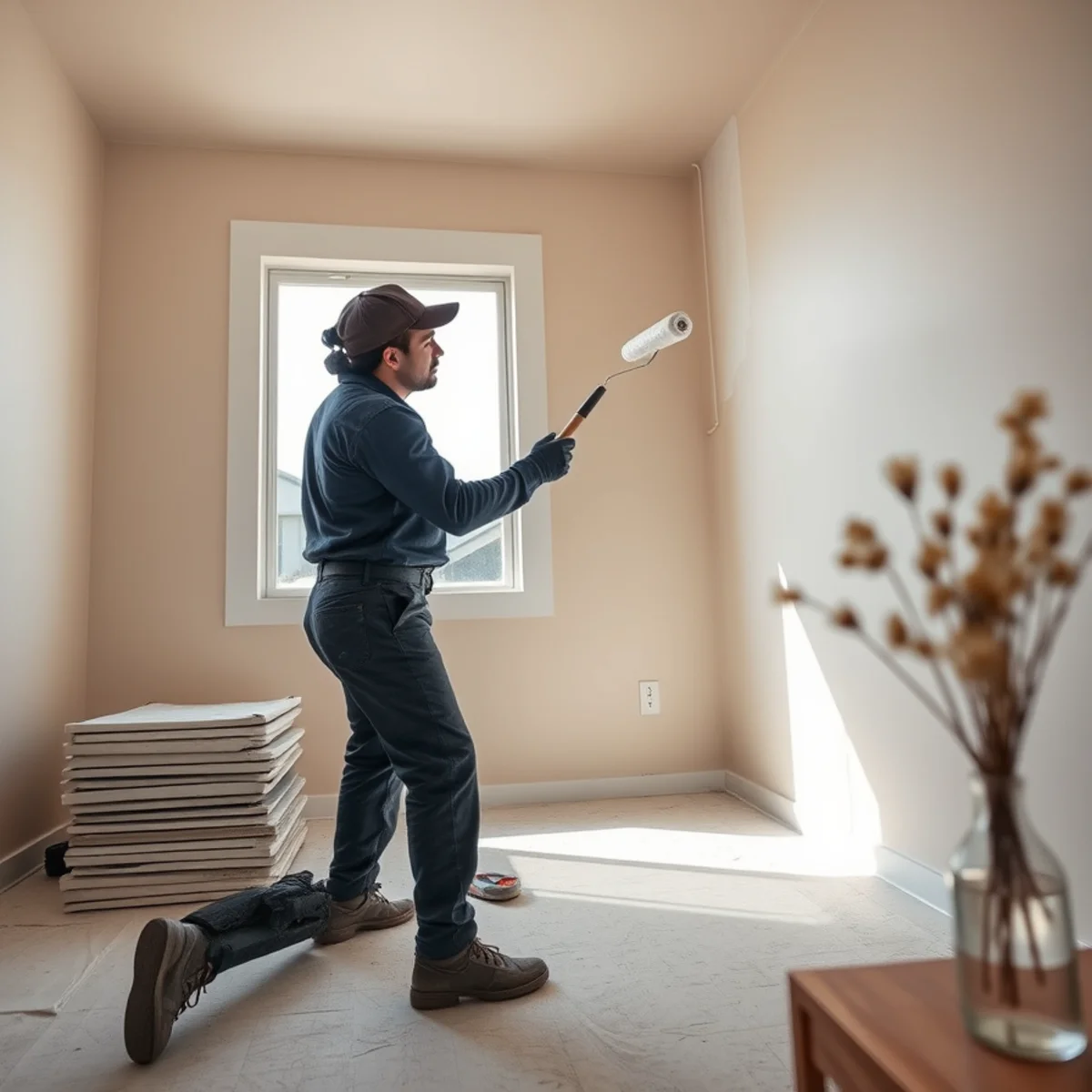
Residential Restoration in action
What this work actually looks like in an Irvine property.

Condo, Townhome and HOA Water Damage in Irvine
A large share of Irvine housing is attached or HOA-governed, and that changes the answer to the only question that really matters: who pays for what.
California law and your association's CC&Rs together determine the split. The general framework is that the association is responsible for common area and often for the building shell, while the unit owner is responsible for what is inside the unit — but the boundary varies enormously between associations, and the phrase to look for in your CC&Rs is usually the definition of the unit boundary and any provision about betterments and improvements.
The practical sequence when water crosses a unit line: notify the HOA or management company immediately in writing, notify your own carrier, do not wait for the association to act before mitigating, and photograph everything including the point of origin if you can access it. Delay while the responsibility question gets litigated is how a two-day dry-out becomes a mold remediation.
We work these jobs constantly and we handle the HOA-facing side: certificates of insurance, approval for equipment placement in common areas, dumpster and staging locations, work-hour restrictions, and separate scope documentation per unit so each owner's carrier gets only what pertains to their unit.
Notify in writing, immediately
Email the association and your carrier the same day. The written record is what protects you later.
Mitigate first, argue later
Your policy requires you to prevent further damage. Waiting for a responsibility determination can jeopardize your own claim.
Photograph the origin if you can
If the source is in another unit or a common area, documentation of it is the evidence that assigns responsibility.
Read the unit boundary definition
Your CC&Rs define where the association's responsibility stops and yours starts. It is usually a specific wall or surface.
Check for loss assessment coverage
An HO-6 endorsement that covers your share of an association deductible or uncovered common-area loss. Inexpensive and frequently overlooked.
Standing water right now? Call us before you do anything else.
We are on site within 60 minutes anywhere in Irvine, 24 hours a day.
Living Through a Restoration
The questions we get most are not technical. They are about daily life, so here are honest answers.
You can usually stay in the house. Most residential drying happens with the family in place, in rooms outside containment. You would need to relocate if the loss is Category 3, if the only kitchen or bathroom is affected, if a large area of flooring has been removed, or if someone in the household is immunocompromised or has significant respiratory issues.
It will be loud. Air movers and dehumidifiers run continuously for several days and they are genuinely disruptive. Please do not turn them off overnight — eight hours off resets much of the day's progress as moisture migrates back to the surface. If it is unbearable we can often reposition equipment or add containment to isolate the noise to one part of the house.
Your electric bill will go up noticeably for those days, and it is frequently reimbursable as part of a covered claim. Keep the bill. And if your policy includes loss of use coverage, hotel or rental costs during an uninhabitable period are typically covered — ask your adjuster about it early rather than after you have paid out of pocket.
What You Get
What residential restoration includes
No vague scopes. This is what is actually on the invoice and what you receive at the end of the job.
One contract from extraction to final paint
The industry standard splits mitigation and rebuild between two companies. You get one scope, one point of contact and one company accountable for the whole arc.
A full photo and moisture record from hour one
Wide shots, close-ups of the source and every wet material, plus readings at mapped points, before anything is moved.
Deep extraction and a sized drying plan
Truck-mounted vacuum, weighted carpet passes, cavity venting where the meter says it is wet, then equipment sized to the load rather than to what is on the truck.
Specialty drying where a material is worth saving
Floor mats for engineered hardwood, cavity systems for walls with cabinetry or millwork that cannot be matched, desiccant for slab.
Mould handled before rebuild, verified independently
If growth is present, containment goes up and it is remediated first, with third-party verification on anything substantial. We do not clear our own work.
Rebuild matched, then a walkthrough and punch list
Insulation, drywall, texture, paint, baseboard, flooring, cabinetry and trim, then the complete documentation package handed over.
Why Water Damage Irvine
Why Irvine calls us for residential restoration
Plenty of companies list this service. These are the things that actually change the outcome on this particular kind of job.
Most of Irvine is HOA-governed and we work it constantly
Certificates of insurance, equipment approval in common areas, staging and dumpster locations, work hours, and separate per-unit scopes when water crosses a line.
We tell you honestly whether to file
If the loss is near your deductible, filing can cost more in future premium than it recovers. We will give you a realistic scope number before you decide, and we will do the job on a cash basis if that is the better call.
You can usually stay in the house
Most residential drying happens with the family in place, in rooms outside containment. We will tell you plainly the cases where you should not.
We answer the questions that are actually on your mind
Can we stay, how loud is it, what happens to the electric bill, how long until the kitchen works again. Those matter more day to day than the drying science does.
Honest Pricing
What a Residential Restoration Costs
Mitigation — extraction and drying — generally runs $3.00 to $7.50 per affected square foot depending on water category. Rebuild runs roughly $20 to $37 per square foot for finished space in this market. Irvine sits toward the higher end of published national ranges, and the reason is finishes: engineered hardwood, stone, custom cabinetry and upgraded trim are common here and expensive to replace.
In practice: a single-room clean-water loss caught within hours commonly lands in the low four figures with no rebuild at all. A kitchen loss that took the cabinet bases and the flooring runs into the mid five figures. A whole-floor loss with mold and full rebuild goes higher.
You get a written line-item scope after the assessment and before any demolition. If we open a wall and find more than the meter suggested, you hear about it before we proceed.
Response time
The one variable you control. Hours versus a day is frequently the difference between drying materials and replacing them.
Water category
Category 3 roughly doubles mitigation cost for the same footprint and mandates removal of porous materials.
Finish level
Builder-grade carpet and laminate versus wide-plank engineered hardwood and stone is a large multiplier on the rebuild side.
Cabinetry
Particleboard cabinet boxes wick from below and swell permanently. Matching an existing kitchen often means more replacement than the wet area alone.
Flooring availability
Discontinued tile or a specific hardwood run is frequently the longest lead item and can force a larger replacement area for a clean match.
Mold
Adds containment, remediation and verification. Most California policies cap mold coverage at $5,000 to $10,000.
A note on estimates: Deductibles are worth thinking about honestly. If your loss is genuinely near your deductible, filing may cost you more in future premium than it recovers. We will give you a realistic scope number before you decide whether to file.
Local Coverage
Residential Water Damage Restoration across Irvine and Orange County
Same crews, same equipment, same 60-minute commitment across Irvine. Pick your neighborhood or city for the local detail.
Irvine Neighborhoods
Nearby Cities
Questions
Residential Restoration — Frequently Asked
Do you handle the repairs too, or just the drying?
Both, and that is deliberate. Most companies stop at drying and hand you off to a general contractor, which means two contracts, two schedules and two scopes for your adjuster to reconcile. We carry the job from extraction through the final coat of paint under one scope and one point of contact.
Can we stay in the house during restoration?
Usually yes. Most residential drying happens with the family in place, in rooms outside containment. Relocation is warranted for Category 3 losses, when the only kitchen or bathroom is affected, when large areas of flooring have been removed, or when someone in the household is immunocompromised. If your policy includes loss of use, those costs are typically covered.
Who pays when water comes from the unit above mine?
It depends on your CC&Rs and on whether the upstairs owner was negligent. Practically: notify your HOA and your own carrier in writing the same day, start mitigation immediately rather than waiting for a determination, and document the origin if you can access it. Your own policy generally responds first and may pursue recovery afterward.
How long will my home be under construction?
Drying is two to four days for most losses, five to seven if a slab is involved. Rebuild depends on scope and on material lead times — a single room is commonly one to two weeks after drying, a kitchen with custom cabinetry can run six to ten. Matching discontinued flooring is the most frequent cause of delay, and we flag it early.
Should I file an insurance claim?
If the loss is clearly above your deductible, yes, and report it promptly — delay is what carriers use to argue damage was gradual. If it is close to your deductible, the premium impact of filing may exceed the recovery. We will give you a realistic scope number before you decide, and we are happy to do a job on a cash basis if that is the better call for you.
Local Proof
What customers say
Read verified customer reviews on our Google Business Profile.
“Our water heater went at 4 a.m. and the garage was under an inch of water. A real person answered, told me exactly which valve to close, and a crew was here before 5. They stopped it reaching the hallway.”
Water Heater Leak Cleanup
“We had a warm patch on the kitchen floor for weeks and assumed it was nothing. They found the slab leak in about twenty minutes without opening a single tile, and the report went straight to our adjuster.”
Slab Leak Detection
“Another company told us the whole plaster ceiling had to come out. These guys dried it in place over six days and the room looks exactly like it did. On a 1912 house that matters.”
Structural Drying
Testimonials shown are illustrative placeholders pending verified customer reviews and are not marked up as structured review data. More about our reviews
Related services
Water Damage Restoration
Extraction, structural drying, mold prevention and full rebuild — one crew, one contract, billed straight to your insurer.
Read moreSlab Leak Water Damage Restoration
Irvine's signature water loss. We locate it, document it for your claim, dry the slab properly, and rebuild what came out.
Read moreCeiling Water Damage Repair
Find the source, dry the cavity, then repair and texture-match — because painting over a stain never once fixed a leak.
Read more
Read next
HOA Water Damage Protocols in Irvine: Who Pays When Water Crosses Unit Lines
Most of Irvine is HOA-governed. When water crosses a unit line, the outcome is decided by your CC&Rs and by what you document in the first hour.
Read moreHow to Document Water Damage for an Insurance Claim (Photo & Receipt Checklist)
Your claim will be decided on evidence created in the first hours. Here is exactly what to capture before anything gets cleaned up.
Read more
24/7 live dispatch
Residential Water Damage Restoration in Irvine, CA — 60 minutes away
Call (201) 277-9344 and a live dispatcher will give you an arrival window on that call. Free on-site assessment and written scope before any demolition.
- Free on-site assessment and written scope before any demolition
- Fully insured — general liability and workers' compensation