
Restoration Service
Slab Leak Water Damage Restoration in Irvine, CA
Irvine's signature water loss. We locate it, document it for your claim, dry the slab properly, and rebuild what came out.
- On site in 60 minutes, anywhere in Irvine
- IICRC-Certified Crews
- We bill your insurer directly for covered work
If there is one water loss that defines Irvine, this is it. The city was built in planned phases on slab-on-grade foundations, with copper supply lines run through and beneath the concrete. The tracts that went up between roughly 1970 and 1990 — Woodbridge, University Park, Northwood, Deerfield, El Camino Real, Walnut, Turtle Rock, Rancho San Joaquin — now have plumbing that is forty to fifty years old.
Add Orange County's hard, mineral-heavy water scaling the inside of that copper, and alkaline soil chemistry working on the outside, and you get the pinhole leak: a weep so small it never makes a puddle, running twenty-four hours a day under your foundation for weeks or months before anything visible happens.
By the time most homeowners call, the subgrade is saturated, water has wicked up the bottom of several walls, and flooring has begun to lift. The good news is that a slab leak caught at the warm-floor stage is a genuinely manageable job.
Request Slab Leak Damage
Tell us what happened. We respond within minutes, 24/7.
Know the Signs
The Warning Signs of a Slab Leak
Slab leaks are quiet by nature. Every one of these is worth investigating on its own — two together is close to conclusive.
A warm spot on the floor
The most specific single indicator, and it means the hot-water line. Walk your house barefoot in the morning. A patch of tile that is noticeably warm with no appliance, no sunlight and no floor heating nearby is a hot-line leak until proven otherwise.
Water bill up with no change in usage
A pinhole running continuously wastes a meaningful volume over a billing cycle. Irvine Ranch Water District statements are consistent enough that a sustained jump stands out.
The sound of running water with everything off
Stand in a quiet hallway at night with every fixture closed. A faint continuous hiss is water escaping a pressurized line.
Damp or lifting flooring away from any fixture
Water spreads along the top of the slab. Cupped hardwood, lifting laminate or darkening grout in a bedroom often originates at a bathroom two rooms away.
A musty smell with no visible water
Moisture wicking up into the base of drywall and carpet pad, growing mold in a wall cavity you have not opened.
New cracks in drywall, tile or the slab itself
Saturated subgrade soil swells and shifts. Cracks that appear suddenly with no other explanation deserve a look.
Reduced hot water pressure
Water escaping before it reaches your fixtures. Often noticed as a shower that lost pressure over a few months.
Our Process
How a Slab Leak Job Actually Runs
This is a multi-trade sequence. Getting the order right is what keeps the cost down and the claim clean.
- 1
Day 1
Confirm and locate
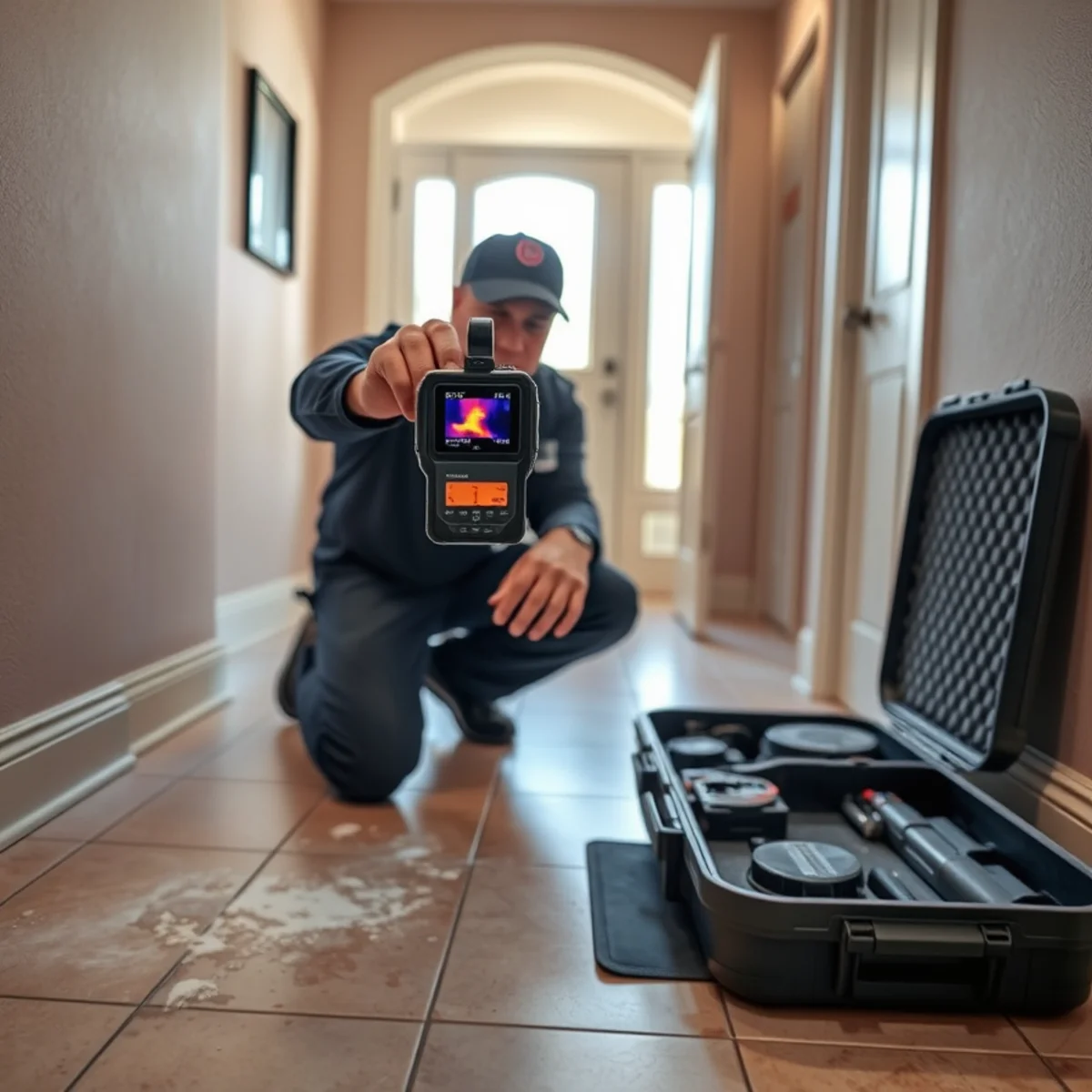
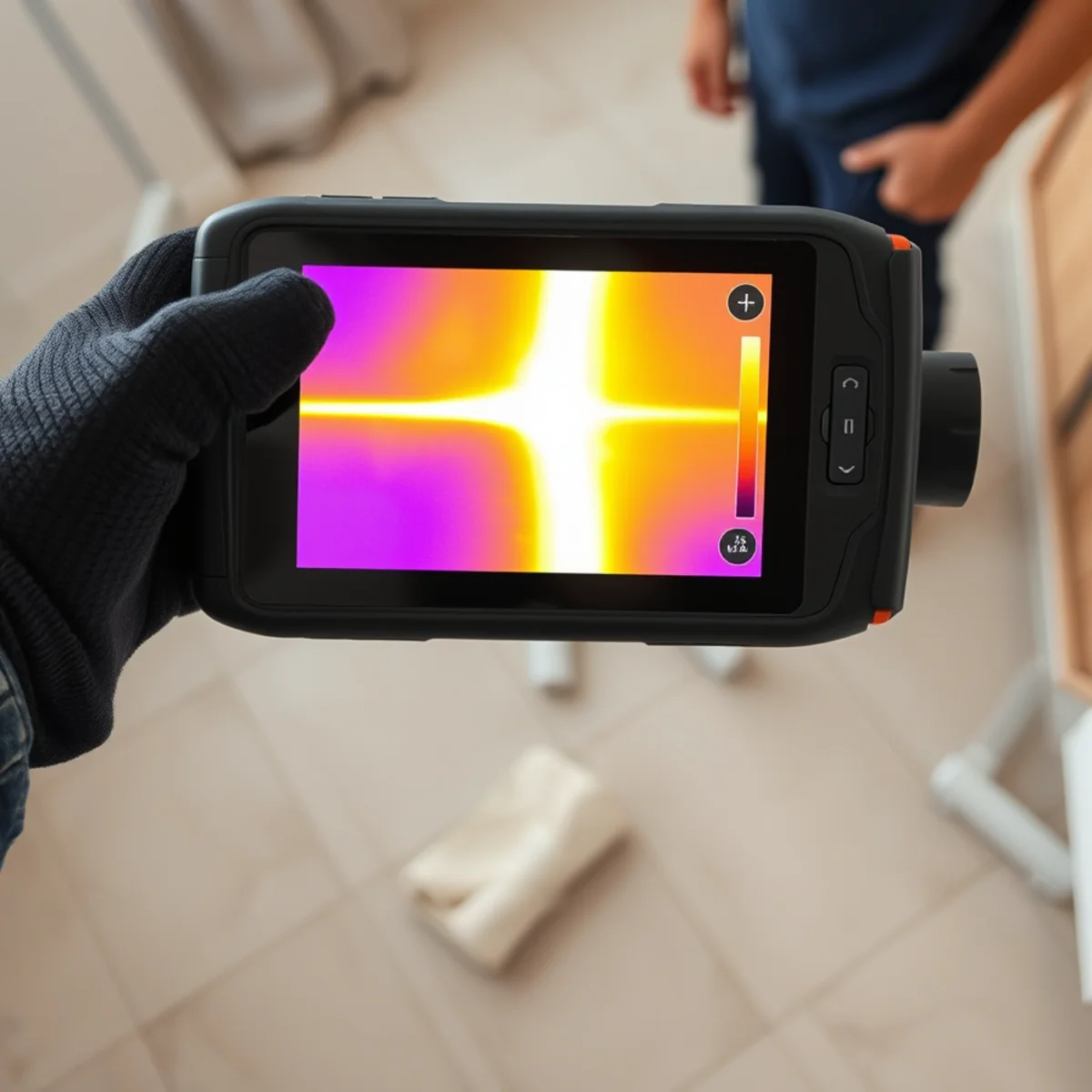
Meter test with the house isolated, then hot/cold isolation at the water heater to identify the failed side. Thermal imaging, moisture mapping and acoustic listening narrow it to a marked point, usually within a foot or two. Tracer gas if the acoustics are ambiguous.
- 2
Day 1
Document for your carrier
Thermal captures, moisture readings at mapped points, photographs of every affected material. This package is what supports the access-and-damage portion of your claim, which is the portion most policies actually cover.
- 3
Day 1–2
Repair decision and licensed plumbing
Spot repair, reroute overhead, or full repipe. We give you a straight recommendation based on the age of the system and how many leaks you have had, then coordinate a licensed plumber to do the work.
- 4
Days 2–7
Dry the slab and the assemblies
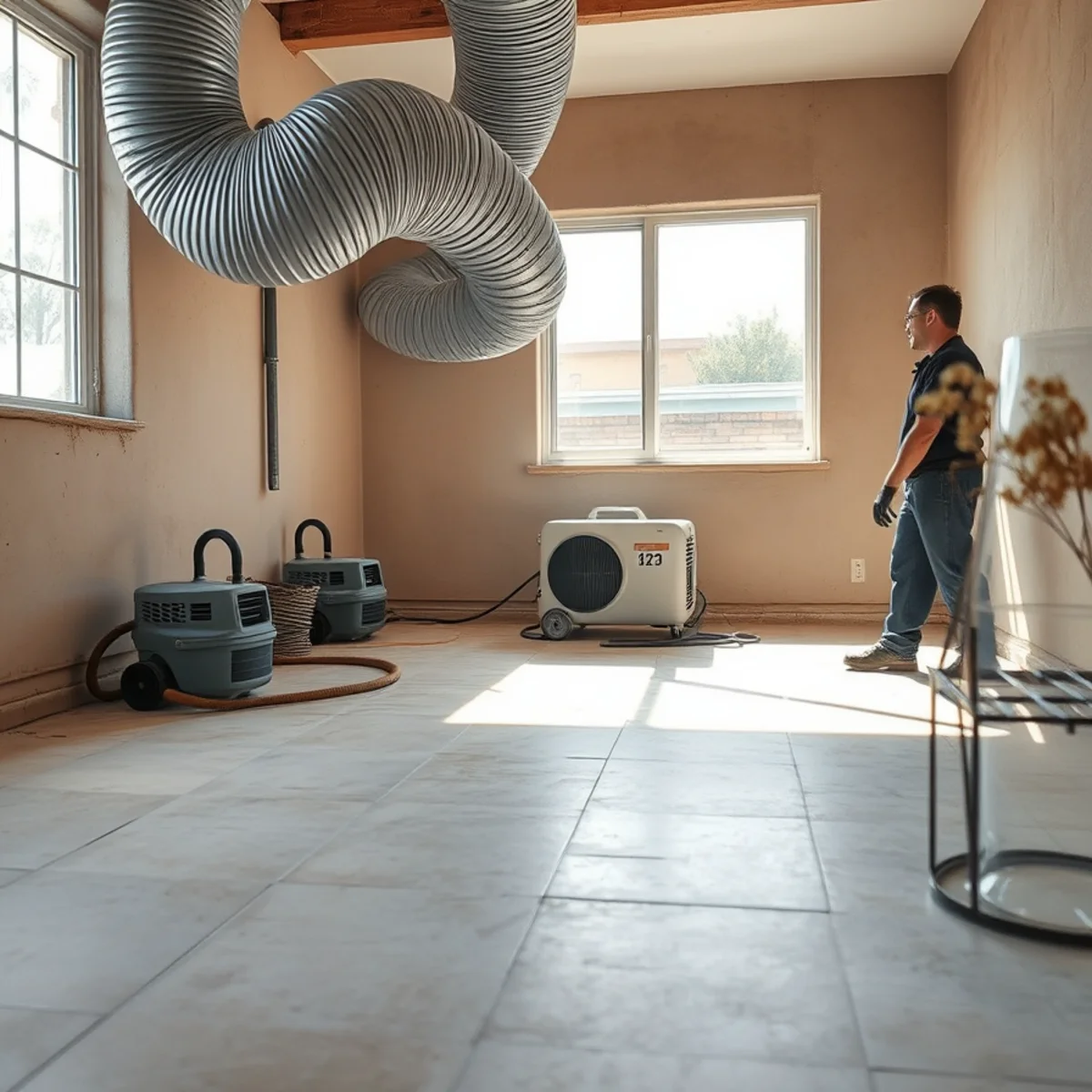
This is the long pole. Concrete holds moisture deep and gives it up slowly, so slab drying needs low-grain refrigerant or desiccant dehumidification rather than a standard unit, and it commonly runs five to seven days rather than two to four.
- 5
As needed
Mold remediation
Because slab leaks run for weeks before discovery, growth at the base of walls is common. If we find it, containment goes up and it is remediated before rebuild.
- 6
Final
Rebuild
Concrete patch, flooring, base, drywall, texture, paint and any cabinetry. Flooring is the hard part — matching a discontinued tile or an aged hardwood is often the longest lead item on the job.
On the Job
Slab Leak Damage in action
What this work actually looks like in an Irvine property.
Which Irvine Homes Are Most at Risk
The risk is a function of when the house was built and what the supply lines are made of, and in a master-planned city that maps almost perfectly onto village boundaries.
The highest-risk group is the 1970s and early 1980s cohort: Woodbridge, University Park, Northwood, Deerfield, El Camino Real, Walnut, Rancho San Joaquin, Turtle Rock and Lower Peters Canyon. Copper under slab, four to five decades of hard water, and a soil environment that works on the pipe from outside. Woodbridge in particular is a concentration point simply because of how many homes went up there in a short window.
The moderate group is the late 1980s and 1990s — Westpark, Oak Creek, Northwood Point, Parkside. Same materials, ten to twenty fewer years of exposure. These are the homes where first leaks are starting to appear now.
The lower-risk group is anything built from roughly 2000 onward: Woodbury, Stonegate, Portola Springs, Quail Hill, Eastwood, Cypress Village, Orchard Hills, Great Park, Northpark. Many use PEX rather than copper, or copper with better protection where it passes through concrete. These homes still get water damage — but from appliances, water heaters and fittings, not from the slab.
Built 1970–1985
Highest risk. Copper under slab at 40–55 years. Woodbridge, University Park, Northwood, Deerfield, Walnut, El Camino Real.
Built 1985–2000
Moderate and rising. Westpark, Oak Creek, Northwood Point, Parkside. First-leak territory now.
Built 2000 and later
Lower slab-leak risk. Woodbury, Stonegate, Quail Hill, Eastwood, Cypress Village, Orchard Hills, Great Park.
Two or more prior leaks, any age
Highest risk regardless of build year. The conditions apply to the whole system, not one section.
Standing water right now? Call us before you do anything else.
We are on site within 60 minutes anywhere in Irvine, 24 hours a day.
Spot Repair, Reroute or Repipe — An Honest Comparison
We do not do the plumbing, which means we have no financial stake in which option you choose. Here is the comparison we would give a family member.
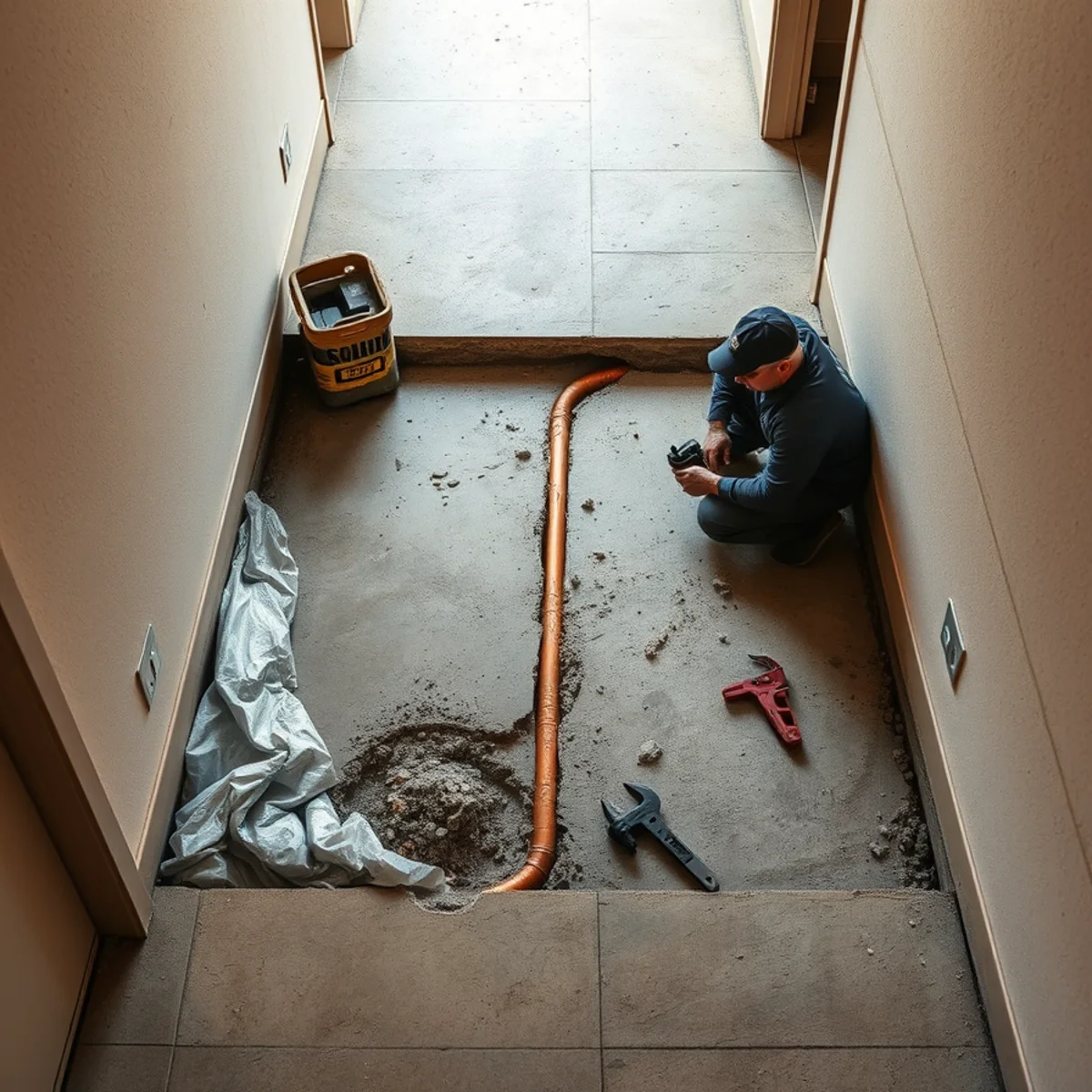
A spot repair opens the slab at the marked location, removes the failed section and splices in new pipe. It is the cheapest option and it is the right one for a first leak in a system with no history. The downside is that it leaves the rest of the aging line under the concrete.
A reroute abandons the failed run under the slab and runs new pipe overhead through the attic and down inside the walls. It costs more and requires drywall repair at each drop, but that run is permanently out from under the concrete. Good when one line has failed and the rest of the system is sound.
A full repipe replaces the entire supply system, usually in PEX, run overhead. It is the largest up-front number and it ends the problem. In a pre-1990 Irvine home on its second or third leak, this is almost always the better financial decision — because the restoration cost of each future leak, which is frequently several thousand dollars in drying and rebuild, is the part people forget to count.
What You Get
What slab leak damage includes
No vague scopes. This is what is actually on the invoice and what you receive at the end of the job.
Confirmation and hot-cold isolation
A meter test with the house isolated, then hot separated from cold at the water heater. That halves the search area before any equipment comes out of the case.
Non-invasive location to a marked point
Thermal imaging, moisture mapping and acoustic listening, with tracer gas where the acoustics are ambiguous. Concrete gets opened once, at the mark.
A documentation package built for the claim
Thermal captures, moisture readings at mapped points and photographs of every affected material. Most policies cover accessing the leak and the resulting damage while excluding the pipe, and this is what makes that portion clean.
A straight recommendation on repair approach
Spot repair, overhead reroute or full repipe, based on the age of the system and how many leaks you have had. We do not do plumbing, so the advice costs us nothing either way.
Slab drying with desiccant or low-grain equipment
Concrete holds moisture deep and gives it up slowly. This is the long pole and it commonly runs five to seven days rather than the two to four a drywall room needs.
Mould remediation if the leak ran long
Because slab leaks run for weeks before discovery, growth at the base of walls is common. If we find it, containment goes up and it is handled before rebuild.
Why Water Damage Irvine
Why Irvine calls us for slab leak damage
Plenty of companies list this service. These are the things that actually change the outcome on this particular kind of job.
This is Irvine's defining loss and we treat it that way
Slab-on-grade construction, copper under concrete in every tract built 1970 to 1990, hard water inside the pipe and alkaline soil outside. We know which villages are in the window and which are not.
We map risk by build phase, not by guesswork
Woodbridge, University Park, Northwood, Deerfield, El Camino Real and Walnut are the high-risk cohort. Westpark, Oak Creek and Parkside are entering it. Everything from 2000 on is a different problem entirely.
We say when a repipe is the cheaper path
Everyone compares plumbing invoice to plumbing invoice and forgets the restoration cost that recurs with every leak. On a second failure in a pre-1990 home that arithmetic usually favours the repipe.
Report it the day you suspect it
A leak reported promptly is treated as sudden. One a carrier can show ran for months may be denied as gradual. The date of discovery is a fact they will rely on.
Honest Pricing
Slab Leak Costs: The Three Separate Numbers
A slab leak generates three distinct costs and they are covered very differently, so it is worth keeping them separate in your head and on your paperwork.
Detection is the smallest, typically a few hundred dollars. The plumbing repair varies enormously by approach — a spot repair is the low end, a reroute is mid, and a whole-house PEX repipe on a typical Irvine single-family home is a five-figure project. Restoration is the third: mitigation at roughly $3.00 to $7.50 per affected square foot plus rebuild at $20 to $37 per square foot for finished space.
Here is the coverage reality. Most California policies cover the cost of accessing the leak — breaking and patching the concrete — and the resulting water damage, but exclude the failed pipe itself. So the drying, drywall and flooring are typically covered while the plumber's invoice for the copper is not. And if a carrier can show the leak ran for months, they may argue the damage was gradual and deny part of it. That is why calling at the warm-floor stage matters financially, not just practically.
How long it ran before discovery
The single biggest driver of both cost and coverage. Weeks of saturation means more drying days, more materials, and a harder claim.
Slab drying time
Concrete is the slowest material we dry. Five to seven days with desiccant or low-grain equipment is normal.
Flooring type and availability
Matching a fifteen-year-old discontinued tile is often the hardest part of the rebuild and sometimes forces a larger replacement area.
Repair approach chosen
Spot repair, reroute or repipe — each with a very different plumbing cost and a different amount of drywall to restore.
Mold, if present
Common with long-running leaks. Adds containment, removal and independent verification.
Cabinetry and built-ins
Slab water wicks into cabinet toe-kicks and bases. Particleboard swells and does not recover.
A note on estimates: If you suspect a slab leak, report it to your insurer the day you suspect it, even before it is confirmed. The date of discovery is a fact your carrier will rely on, and an early report is your strongest protection against a gradual-damage denial.
Local Coverage
Slab Leak Water Damage Restoration across Irvine and Orange County
Same crews, same equipment, same 60-minute commitment across Irvine. Pick your neighborhood or city for the local detail.
Irvine Neighborhoods
Nearby Cities
Questions
Slab Leak Damage — Frequently Asked
How do I know if I have a slab leak?
The most specific sign is a warm spot on the floor with no appliance or sunlight to explain it, which indicates the hot-water line. Others: a water bill that jumped with no change in usage, the sound of running water with every fixture off, damp or lifting flooring in a room without plumbing, and a musty smell with no visible source. A meter test with the house isolated confirms whether water is leaving the system.
Why are slab leaks so common in Irvine?
Two conditions overlap. Nearly all Irvine homes are slab-on-grade, and tracts built between roughly 1970 and 1990 ran copper supply lines through or under that concrete — those pipes are now 40 to 55 years old. Meanwhile Orange County water is hard and mineral-heavy, scaling the pipe from inside, while alkaline soil chemistry attacks it from outside. The result is pinhole corrosion.
Does insurance cover slab leak repair?
Usually the access and the damage, but not the pipe. Most California policies pay to break and patch the concrete and to restore the water damage, while excluding the failed pipe itself. Coverage also depends on timing — a leak reported promptly is treated as sudden; one that clearly ran for months may be denied as gradual. Report it the day you suspect it.
Should I repipe or just fix the one leak?
First leak in a system with no history: a spot repair is reasonable. Second or third leak in a pre-1990 Irvine home: repipe. The conditions that caused the first failure apply to the entire run of pipe, and the restoration cost of each subsequent leak — the drying and the rebuild, not just the plumbing — is what makes repeated spot repairs the expensive path.
How long does slab leak restoration take?
Detection is same-day. Plumbing repair is typically one to three days depending on approach. Drying the slab is the long part at five to seven days, because concrete releases moisture slowly. Rebuild depends on flooring lead times and commonly runs one to three weeks after drying completes.
Local Proof
What customers say
Read verified customer reviews on our Google Business Profile.
“Our water heater went at 4 a.m. and the garage was under an inch of water. A real person answered, told me exactly which valve to close, and a crew was here before 5. They stopped it reaching the hallway.”
Water Heater Leak Cleanup
“We had a warm patch on the kitchen floor for weeks and assumed it was nothing. They found the slab leak in about twenty minutes without opening a single tile, and the report went straight to our adjuster.”
Slab Leak Detection
“Another company told us the whole plaster ceiling had to come out. These guys dried it in place over six days and the room looks exactly like it did. On a 1912 house that matters.”
Structural Drying
Testimonials shown are illustrative placeholders pending verified customer reviews and are not marked up as structured review data. More about our reviews
Related services
Leak Detection & Repair Coordination
Thermal imaging, acoustic listening and moisture mapping to pinpoint a leak before anyone opens a wall or a slab.
Read moreStructural Drying & Dehumidification
Air movers plus industrial dehumidifiers, with daily moisture readings — equipment leaves when the material hits dry standard, not when it feels dry.
Read moreBurst Pipe Cleanup
From the moment the line lets go: shut-off guidance on the phone, extraction on arrival, drying the same visit.
Read more
Read next
Why Irvine's Master-Planned Slab Homes Are Slab-Leak Hotspots
When several thousand homes go up in a decade with the same materials, they fail on the same curve. Here is the village-by-village map.
Read moreSlab Leak Repair vs. Whole-House Repipe: What Each Costs and What Insurance Covers
Your first slab leak is an incident. Your second is a pattern. Here is how to decide, including the restoration costs everyone forgets to count.
Read more
24/7 live dispatch
Slab Leak Water Damage Restoration in Irvine, CA — 60 minutes away
Call (201) 277-9344 and a live dispatcher will give you an arrival window on that call. Free on-site assessment and written scope before any demolition.
- Free on-site assessment and written scope before any demolition
- Fully insured — general liability and workers' compensation