Local Irvine & Orange County · 6 min read
Why Irvine's Master-Planned Slab Homes Are Slab-Leak Hotspots
When several thousand homes go up in a decade with the same materials, they fail on the same curve. Here is the village-by-village map.
Short answer
Two conditions overlap in Irvine: a housing stock built in planned phases on slab-on-grade with copper supply lines, and Orange County water that is hard enough to scale those lines from inside while alkaline soil attacks them from outside. Villages built from the early 1970s to the late 1980s are now forty to fifty-five years into that.
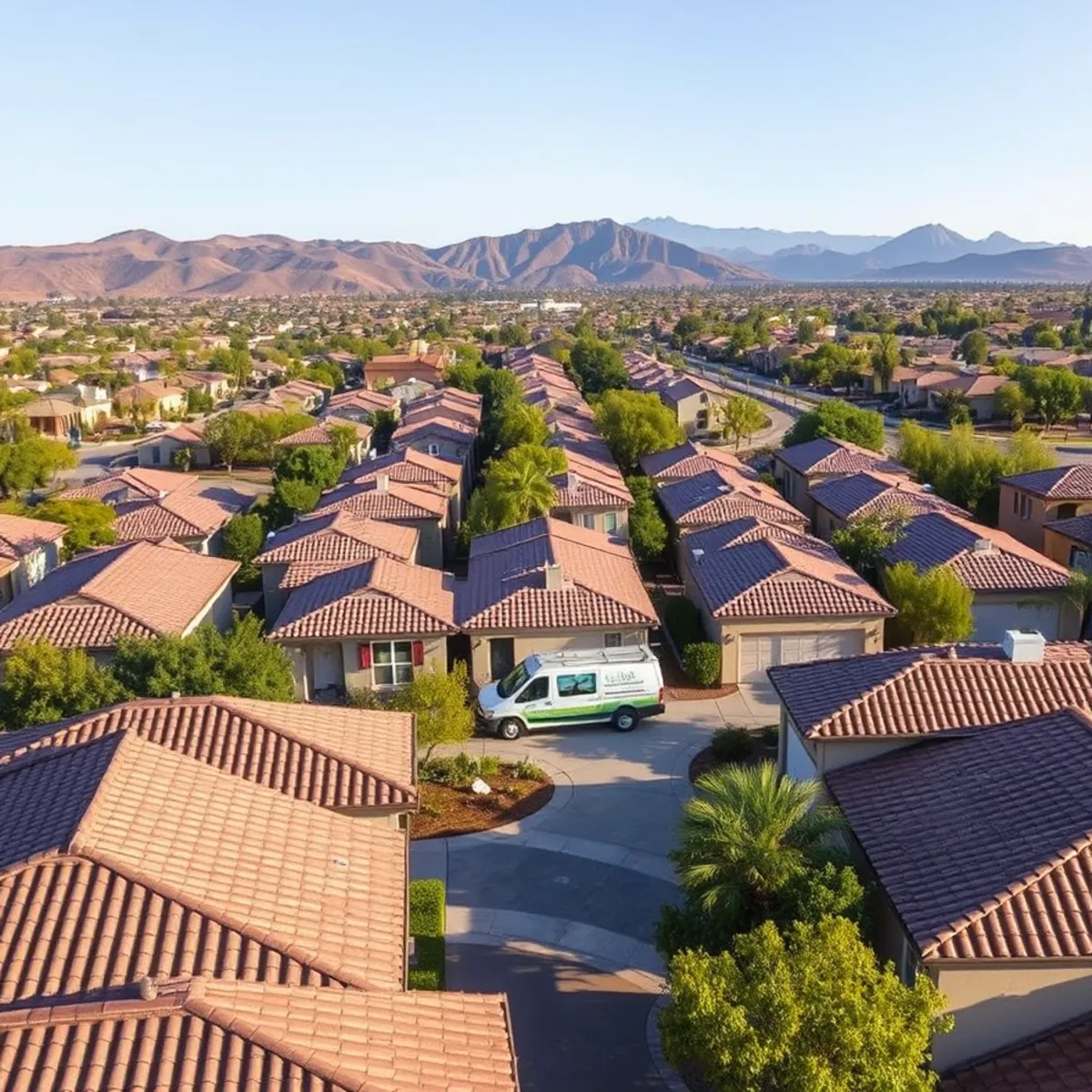
Irvine is unusual among American cities in that its housing was built in coordinated phases by a small number of builders working from a master plan. That produced the schools, the parks and the greenbelts people move here for.
It also produced something less pleasant: plumbing that ages in cohorts. When several thousand homes go up in a decade with the same copper, run through the same slabs, fed by the same hard water, they do not fail randomly. They fail together.
The Two Conditions That Overlap Here
First, construction. Nearly every home in Irvine sits on a slab-on-grade foundation, and homes built from the early 1970s through the late 1980s ran copper supply lines through or beneath that concrete. Overhead routing through attics became more common later; under-slab was standard then.
Second, water chemistry. Orange County's supply is hard and mineral-heavy. Scale builds on the inside of copper pipe, narrowing the bore and creating turbulence at bends and fittings, which erodes the pipe wall from within. Meanwhile, where soil chemistry around the slab runs alkaline, the pipe corrodes from the outside as well.
The result is the pinhole leak: a weep too small to trip anything, running continuously under a foundation for weeks or months before flooring lifts or a wall goes damp.
The Village-by-Village Risk Map
Because the city was built in phases, risk maps almost perfectly onto village boundaries.
Highest risk — built 1970–1985
Woodbridge, University Park, Northwood, Deerfield, El Camino Real, Walnut, Turtle Rock, Rancho San Joaquin, Lower Peters Canyon. Copper at 40–55 years. Multiple leaks in one home are common.
Rising — built 1985–2000
Westpark, Oak Creek, Northwood Point, Parkside. Approaching or just entering the pinhole window. First leaks appearing now.
Low slab-leak risk — built 2000+
Woodbury, Stonegate, Quail Hill, Portola Springs, Eastwood, Cypress Village, Orchard Hills, Great Park, Northpark, Turtle Ridge, Shady Canyon. Different failure profile entirely.
Standing water right now? Call us before you do anything else.
We are on site within 60 minutes anywhere in Irvine, 24 hours a day.
What the Newer Villages Get Instead
Homes built from 2000 onward largely do not get slab leaks, and will not for decades. Many use PEX rather than copper, and where copper is used it is better protected where it passes through concrete.
What they get is first-generation component failure. Water heaters installed at build, now at or past their eight-to-twelve-year rating. Braided supply lines rated for five to eight years and never replaced. Angle stops scaled shut from hard water. And in the attached and stacked plans that are common in newer villages, one of those failures reaches two or three homes.
Different problem, same underlying cause: a whole village built at once means a whole village of components aging out at once.
Why the Second Leak Is the Decision Point
Copper does not fail randomly. It fails where water chemistry, soil chemistry and flow velocity have been working on it for decades, and those conditions are essentially uniform across every foot of pipe in a single house.
So the first pinhole is the leading edge of a system-wide condition, not an isolated defect. The second confirms it.
The arithmetic people get wrong is comparing plumbing invoice to plumbing invoice. Every slab leak also generates a restoration cost — detection, extraction, five to seven days of slab drying with desiccant equipment, then concrete patching, flooring, base, drywall and paint. That restoration cost frequently exceeds the plumbing repair and it recurs with every leak.
We do not do plumbing, so this recommendation costs us nothing to make: on your second leak in a pre-1990 Irvine home, put the money toward a repipe.
What to Watch For If You Live in the Older Villages
A warm spot on the floor with no appliance or sunlight to explain it. Walk your house barefoot in the morning.
A water bill that jumped with no change in usage. IRWD bills are steady enough that a sustained 30 to 40 percent increase stands out.
The sound of running water with every fixture off, listened for in a quiet hallway at night.
Damp or lifting flooring in a room with no plumbing, because water spreads laterally along the slab.
And the ten-minute confirmation: shut off every fixture, watch the meter's low-flow indicator for fifteen minutes. If it moves, you have a leak, and you found it before it surfaced.
From the field
Why the failures cluster village by village
Irvine was not built house by house. It was built in villages, each over a few years, with the same trades, the same materials and the same plumbing details throughout. That means the copper in Woodbridge is essentially one cohort of pipe of one age under one set of conditions, and the copper in Northwood is a slightly younger cohort. Corrosion is a time-and-chemistry process, so a cohort fails as a cohort — not on the same day, but within the same handful of years.
That is why our call volume from Woodbridge, University Park, El Camino Real, Deerfield and Walnut looks nothing like our call volume from Quail Hill or Cypress Village, and why a homeowner in an older village who hears that two neighbours have had slab leaks is receiving genuinely useful information about their own house. It is also why the newer villages get an entirely different problem — components and envelope intrusion — rather than a milder version of the same one.
The honest tradeoff we give owners in the older villages: a first leak is reasonably handled with a spot repair. At a second, the arithmetic changes, because the conditions that produced it apply to every foot of pipe in that slab and each subsequent leak carries its own access, drying and rebuild cost on top of the plumbing. We do not do plumbing, so that recommendation costs us nothing to make.
Know your village's build era
Early 1970s through late 1980s slab-on-grade with copper is the profile. If that is your house, detection is a routine check rather than an emergency service.
Two leaks is the decision point, not five
By the third, most owners have paid more in access, drying and flooring than a repipe would have cost, and they still have the original pipe.
Frequently Asked Questions
Which Irvine neighborhoods get the most slab leaks?
The 1970s and early 1980s villages: Woodbridge, University Park, Northwood, Deerfield, El Camino Real, Walnut, Turtle Rock and Rancho San Joaquin. Those have copper supply lines under slab at 40 to 55 years of hard-water exposure. Woodbridge in particular is a concentration point simply because of how many homes went up there in a short window.
Do newer Irvine homes get slab leaks?
Essentially not yet. Villages built from 2000 onward — Woodbury, Stonegate, Quail Hill, Eastwood, Cypress Village, Orchard Hills, Great Park — have decades of life left in the supply piping. Their failures are original water heaters, braided supply lines and angle stops, all installed at build and all aging out together.
My neighbor had a slab leak. Should I be worried?
It is a genuine signal. Homes in the same tract were built in the same year by the same crews with the same materials and are fed by the same water. If two or three homes on your street have had slab leaks recently, yours is on the same curve. Learn the warning signs and run the meter test occasionally.
Need help with this in Irvine?
We handle this work every week across Irvine and Orange County. A live dispatcher answers 24/7, gives you an arrival window, and tells you what to do while you wait. Free on-site assessment and written scope before any demolition.
Related services