Problem Solving · 5 min read
Wet Drywall: When It Can Be Saved and When It Has to Come Out
Most wet drywall can be dried in place. The cases where it cannot are predictable, and knowing which you have prevents unnecessary demolition.
Short answer
Clean water that wicked a few inches, sat briefly and has nothing but empty cavity behind it can usually be dried in place. Drywall comes out when the water was Category 2 or 3, when it wicked above roughly two feet, when insulation is behind it, or when it sat long enough to lose structural integrity.
There is a reflex in this industry to cut drywall. Sometimes it is necessary. Frequently it is not, and unnecessary demolition turns a mitigation job into a rebuild.
Four things decide it, and a competent technician will walk you through all four before a knife comes out.
Factor One: Water Category
Clean water — a supply line, a tub overflow — can be dried in place in most cases. The gypsum absorbed clean water and it will release it.
Gray water is a judgment call based on how much and how long. Contaminated water in the gypsum core is not something you can clean out of the material.
Black water — sewage or outdoor floodwater — is not a judgment call. Drywall that contacted Category 3 water comes out to a line above the contamination, typically a clean two-foot or four-foot cut, under the IICRC S500 standard.
Factor Two: How High It Wicked
Drywall wicks upward by capillary action, and it slows considerably somewhere in the range of twelve to sixteen inches on a standard wall. That is why the classic flood cut is at two feet — above the typical wick line with margin.
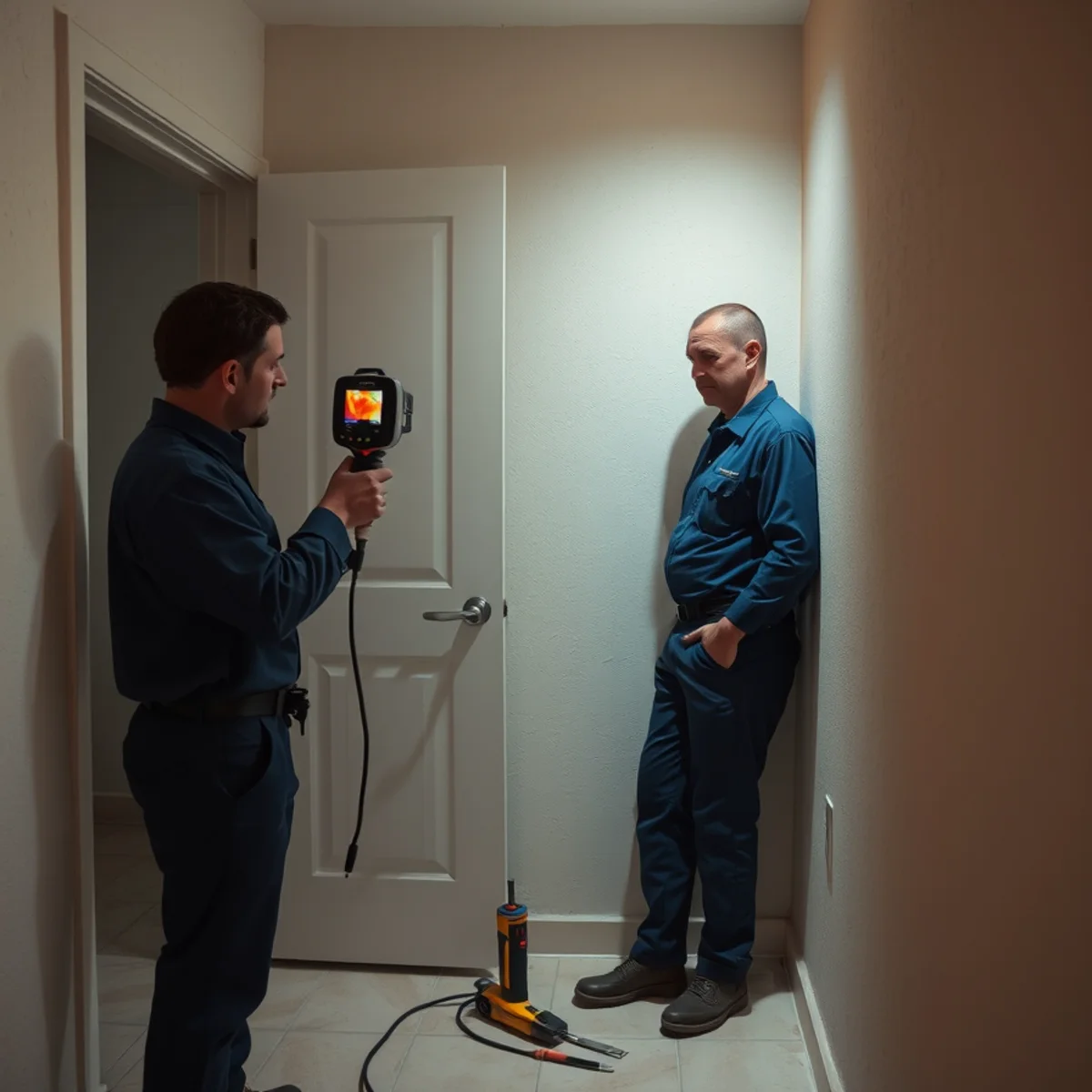
If the meter shows moisture in the bottom eight inches only, base removal and cavity venting will usually dry it in place.
If the wick line is above two feet, you are usually looking at removal, because drying an assembly that saturated from behind the finish is slow and unreliable.
Standing water right now? Call us before you do anything else.
We are on site within 60 minutes anywhere in Irvine, 24 hours a day.
Factor Three: What Is Behind It
An interior wall with no insulation is easy. Open the base, make small cavity vents, put airflow through, and it dries.
An exterior wall with fiberglass batt insulation is a different story. Saturated fiberglass does not dry in place on any realistic schedule, it loses R-value permanently, and it holds water against the framing and the back of the drywall. The insulation has to come out, which means the drywall has to come off to reach it.
That single factor — insulated exterior wall versus uninsulated interior wall — is frequently the whole decision.
Factor Four: How Long It Sat
Gypsum that was wet for a few hours and then properly dried is fine. Gypsum that was wet for three days has begun to lose integrity — the paper facing delaminates, the core softens, and the paper is organic material that supports growth.
Visible growth on the paper facing means removal, full stop. So does drywall that has lost structural integrity — if it is soft enough to press a thumb into, it is not going to be a sound wall again.
This is the factor most affected by your response time, which is why calling early is cheaper than calling late.
What Proper In-Place Drying Looks Like
Remove the baseboard. This alone opens the bottom edge and is often enough on a lightly wetted interior wall.
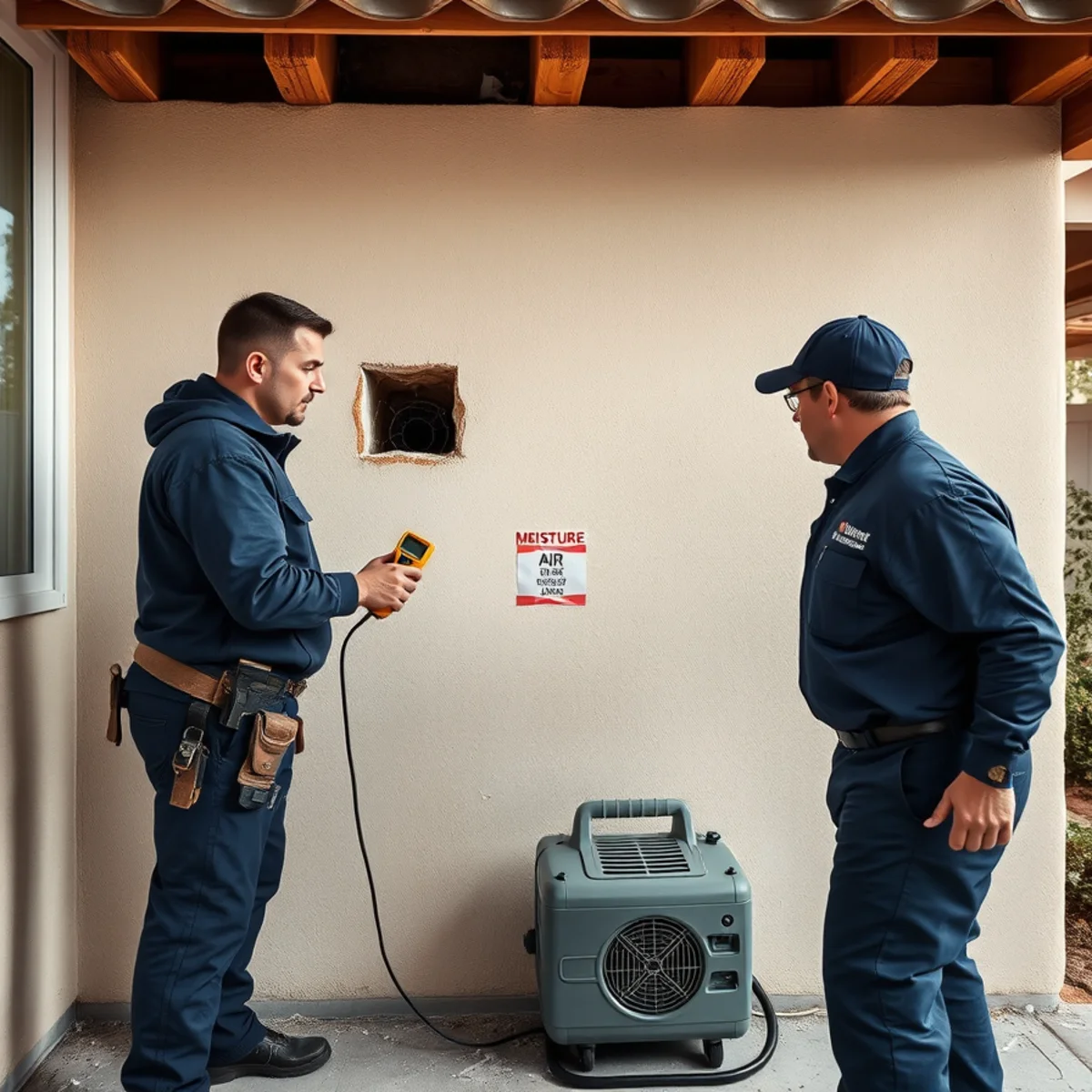
Make small inspection or vent holes low on the wall, behind where the base will go back, so air can move into and through the cavity. On a stud bay that is holding water, this is what lets it out.
Direct air movers along the wall surface — across it, not at it — and run dehumidification sized for the space to capture what evaporates.
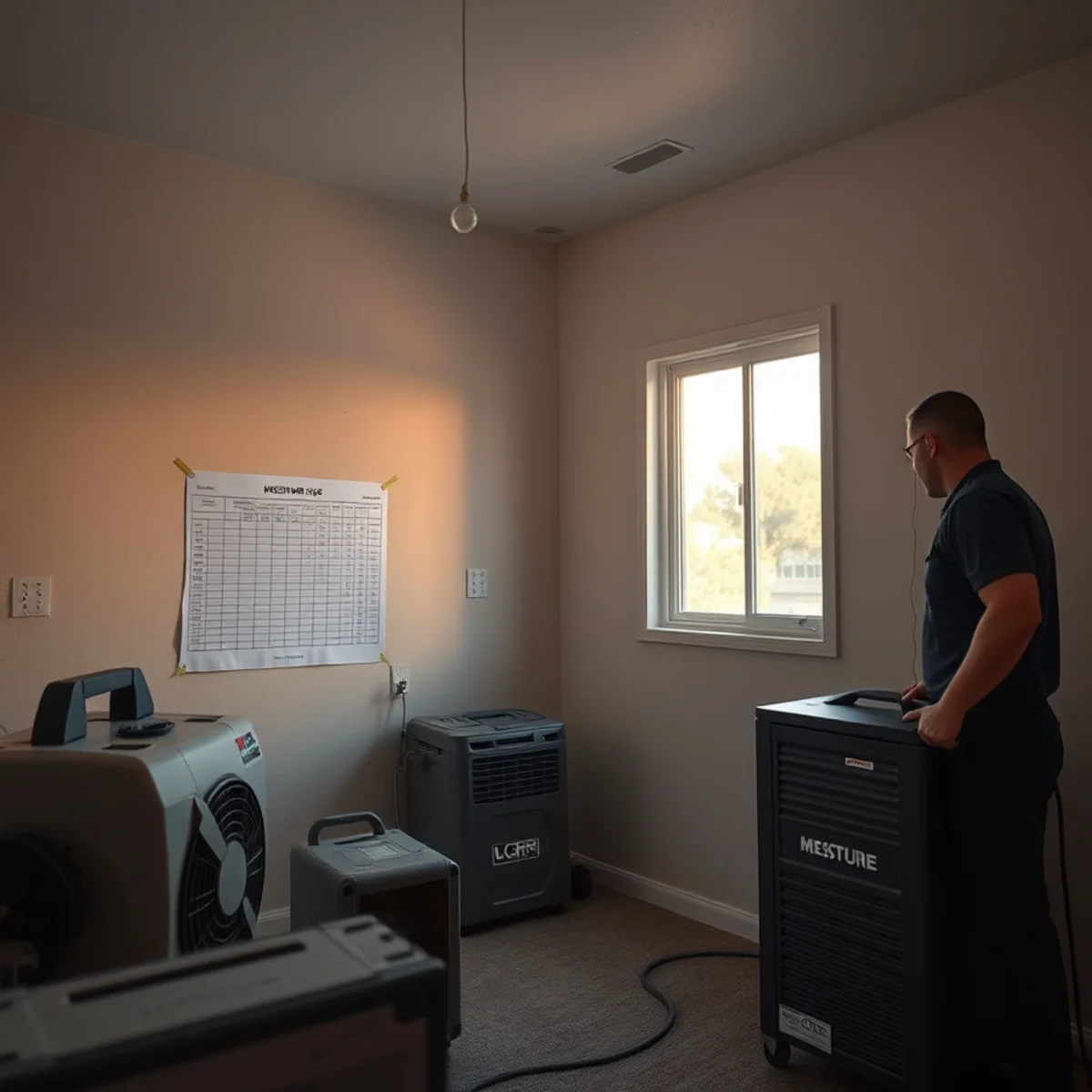
Meter daily at marked points and do not stop until the readings match the dry standard from unaffected material of the same type elsewhere in the house.
If a contractor proposes to cut two feet of drywall off every wall in a clean-water loss without metering first, ask them to show you the readings. Sometimes the answer really is cut it. It should never be the default.
From the field
What proper in-place drying actually looks like
Drying drywall in place is not a fan pointed at a wall. It means removing the baseboard so the bottom edge is exposed, drilling weep holes or removing a small section at the base so the cavity is vented, directing air movers along the wall surface rather than at it so the boundary layer breaks, and running a dehumidifier sized to capture what those surfaces release. Then readings at the same marked points daily until the material is at dry standard.
The reason it works is that gypsum releases moisture reasonably well when it has somewhere to release it to. The reason it fails is a closed cavity with insulation in it — batt insulation holds water, blocks airflow, and turns a two-day dry into a job that never reaches standard, which is why insulation in a wetted cavity is a removal decision almost every time.
The honest tradeoff: a flood cut at twelve to twenty-four inches is faster, cheaper and more certain than a marginal in-place dry, and it costs you drywall, tape, texture, paint and baseboard on one wall. In-place drying costs more equipment days and preserves finishes that are hard to match. On a plain painted wall we usually recommend the cut. On wallpaper, panelling, tile or a custom finish, the equipment days are the better deal.
Ask to see the readings, not the verdict
Dry standard is a number relative to an unaffected reference area in the same building, not a feeling. Any drying job should end with a log you can read.
A wick line above two feet is usually a removal
Beyond that height the water was substantial, sat long, or is being fed from above. Drying it closed rarely reaches standard in a reasonable timeframe.
Frequently Asked Questions
How long can drywall stay wet before it has to be replaced?
There is no exact hour, but the practical window is short. Gypsum wet for a few hours and dried properly is usually fine. By day three the paper facing starts delaminating, the core softens, and growth begins on the organic paper. If you can press a thumb into it, it is finished.
What is a flood cut?
Removing drywall in a clean horizontal line above the wet zone — typically at two feet or four feet — so that what remains is sound and the replacement piece lands on a stud and a clean edge. It is standard for Category 3 losses and for anywhere insulation behind the wall has to come out.
Can I just dry it with a fan and repaint?
A fan without a dehumidifier moves moisture from the wall into your house air, where it condenses somewhere else. And painting over damp gypsum traps moisture against it, which is exactly what mold needs. Dry it properly with metering, or remove it — those are the two real options.
Need help with this in Irvine?
We handle this work every week across Irvine and Orange County. A live dispatcher answers 24/7, gives you an arrival window, and tells you what to do while you wait. Free on-site assessment and written scope before any demolition.
Related services