Problem Solving · 5 min read
Why Shop-Vaccing a Flooded Carpet Isn't Enough (What Professional Extraction Pulls Out)
The carpet feels dry to the touch and the pad underneath is still saturated. That gap is where most DIY water damage goes wrong.
Short answer
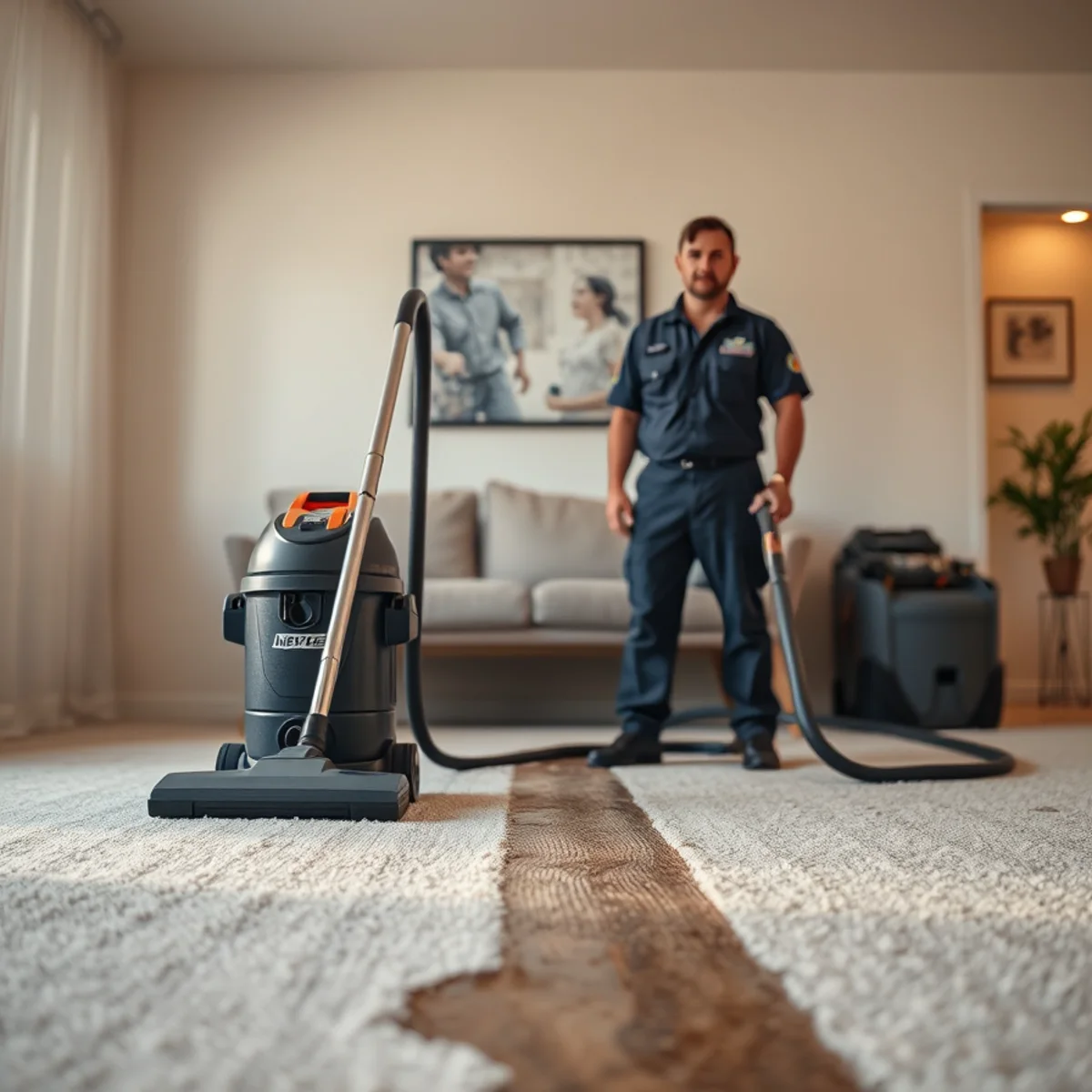
A shop vac removes surface water from carpet and leaves the pad beneath it saturated. Pad holds several times its weight in water, and a household vacuum cannot generate the sustained lift needed to pull it out. What remains evaporates into the room, wicks up drywall, and starts the mold clock in a house that looks dry.
We get called to a lot of homes where someone spent four hours with a rented shop vac before phoning anyone. The carpet feels almost dry. The meter says otherwise.
Understanding why is the difference between a three-day dry-out and pulling up a room of flooring in a week.
The Pad Is the Problem, Not the Carpet
Carpet itself holds relatively little water and releases it fairly readily. The pad underneath is a different material entirely — open-cell foam or bonded urethane designed to compress and rebound, which means it is essentially a sponge with a very large capacity.
A saturated pad holds many times its own weight in water and gives it up slowly. It also sits directly on the slab, in the dark, at room temperature, against organic materials. That is close to ideal conditions for microbial growth.
So the carpet face feeling dry tells you almost nothing about what is happening two millimetres below it.
Why a Shop Vac Cannot Reach It
A consumer wet/dry vacuum has a small motor producing modest airflow and modest lift at the nozzle. Held against a carpet face, it pulls water out of the carpet fibres. It does not have enough lift to draw water up through the carpet backing out of the pad below.
Professional extraction uses a weighted head — often 80 to 200 pounds — that compresses the carpet and pad together while a truck-mounted or high-capacity portable unit applies far greater vacuum. The compression squeezes water up out of the pad and the vacuum takes it away.
That is a completely different physical operation, and it is why the same room that would take most of a day with a rental — leaving the pad saturated — is bulk-extracted in well under an hour with the right equipment.
Standing water right now? Call us before you do anything else.
We are on site within 60 minutes anywhere in Irvine, 24 hours a day.
What Happens to the Water You Leave Behind
It does not stay put. Moisture in a saturated pad evaporates into the room air, raises indoor humidity, and migrates into the drywall of adjacent walls and the contents of the room.
If you have fans running with no dehumidifier, you accelerate that migration without removing anything. You have not dried the room. You have distributed the water into materials that are harder to find and slower to dry.
And the pad itself, sitting wet against a slab, begins supporting growth within the 24-to-48-hour window that applies to any wet organic material.
When the Pad Can Be Saved and When It Cannot
Clean water, caught quickly, deep-extracted properly: the pad frequently survives. We float the carpet — lift an edge and blow air underneath — and dry both layers from below.
Gray water: the pad comes out. It absorbed contaminated water and it cannot be reliably cleaned. The carpet itself is usually cleanable and can be reinstalled over new pad.
Black water — sewage or outdoor floodwater: both come out and are disposed of. This is not a judgment call under the IICRC S500 standard.
The variable you control is the first one. Hours matter here more than in almost any other part of a water loss.
How to Tell If It Actually Dried
Feel is not a measurement. The only way to know is a moisture meter reading against a dry standard established from the same material in an unaffected part of the house.
Signals that something did not dry: a musty smell that comes and goes, particularly on humid days or when the HVAC runs; carpet that feels cool underfoot in one area; baseboards that separated from the wall; and any visible discoloration at the bottom of drywall.
If you dried a room yourself and any of those appear over the following weeks, the pad or the wall cavity retained moisture and it is worth having metered before it becomes a remediation.
From the field
What a truck-mounted extractor does that a shop vac cannot
The difference is not suction in the everyday sense — it is sustained lift measured in inches of water, combined with a weighted extraction head that compresses the carpet and pad so the water in the pad has somewhere to go. A truck-mounted unit maintains that under continuous load across hundreds of square feet. A shop vac loses lift as its tank fills, has no mechanism to compress the assembly, and is designed to pick up water sitting on a surface rather than water held inside one.
The measurable version: after a homeowner has shop-vacced a room and it looks dry, we routinely read the pad at or near saturation and the drywall wicking two to six inches up from the base. Those numbers are why we bring a meter to every job before deciding anything. Feeling a carpet with your hand tells you about the top eighth of an inch of fibre.
The honest tradeoff: shop-vaccing is genuinely worth doing while you wait. Every gallon you remove is a gallon that is not soaking further into the pad and up the wall, and on a small clean-water spill on hard flooring it may be all that is needed. What it is not is a substitute for extraction on carpet, and the mistake is stopping there because the surface reads dry.
Never use a household shop vac on gray or black water
It aerosolises contaminated water through an unfiltered exhaust and the machine itself becomes contaminated waste.
Do not run fans without a dehumidifier
Airflow alone moves moisture from the carpet into the air and then into the walls. Without a dehumidifier capturing it, you are relocating the problem, not solving it.
Frequently Asked Questions
Can I dry wet carpet myself?
For a small clean-water spill caught immediately on a hard floor edge, sometimes. Once water has reached the pad across any meaningful area, rental equipment will not pull it out — you need a weighted extraction head and high-capacity vacuum, followed by dehumidification. Surface drying leaves the pad wet and that is where the mold starts.
How do I know if the carpet pad is wet?
A pinless moisture meter reads through the carpet, or a technician lifts a corner and checks directly. By feel alone you cannot tell — a carpet face can feel nearly dry over a fully saturated pad, which is exactly why DIY drying so often leaves moisture behind.
Should the carpet be removed?
Depends on the water category and how long it sat. Clean water caught early: usually both carpet and pad are saved by deep extraction and floating. Gray water: pad out, carpet usually cleanable. Black water: both removed. A meter and the IICRC S500 standard make that call, not guesswork.
Need help with this in Irvine?
We handle this work every week across Irvine and Orange County. A live dispatcher answers 24/7, gives you an arrival window, and tells you what to do while you wait. Free on-site assessment and written scope before any demolition.
Related services