
Prevention & Maintenance · 5 min read
Gutters, Downspouts, and Yard Drainage: A Pre-Rainy-Season Checklist for OC Homes
Most storm intrusion we respond to has nothing wrong with the building. It is about where water goes once it lands.
Short answer
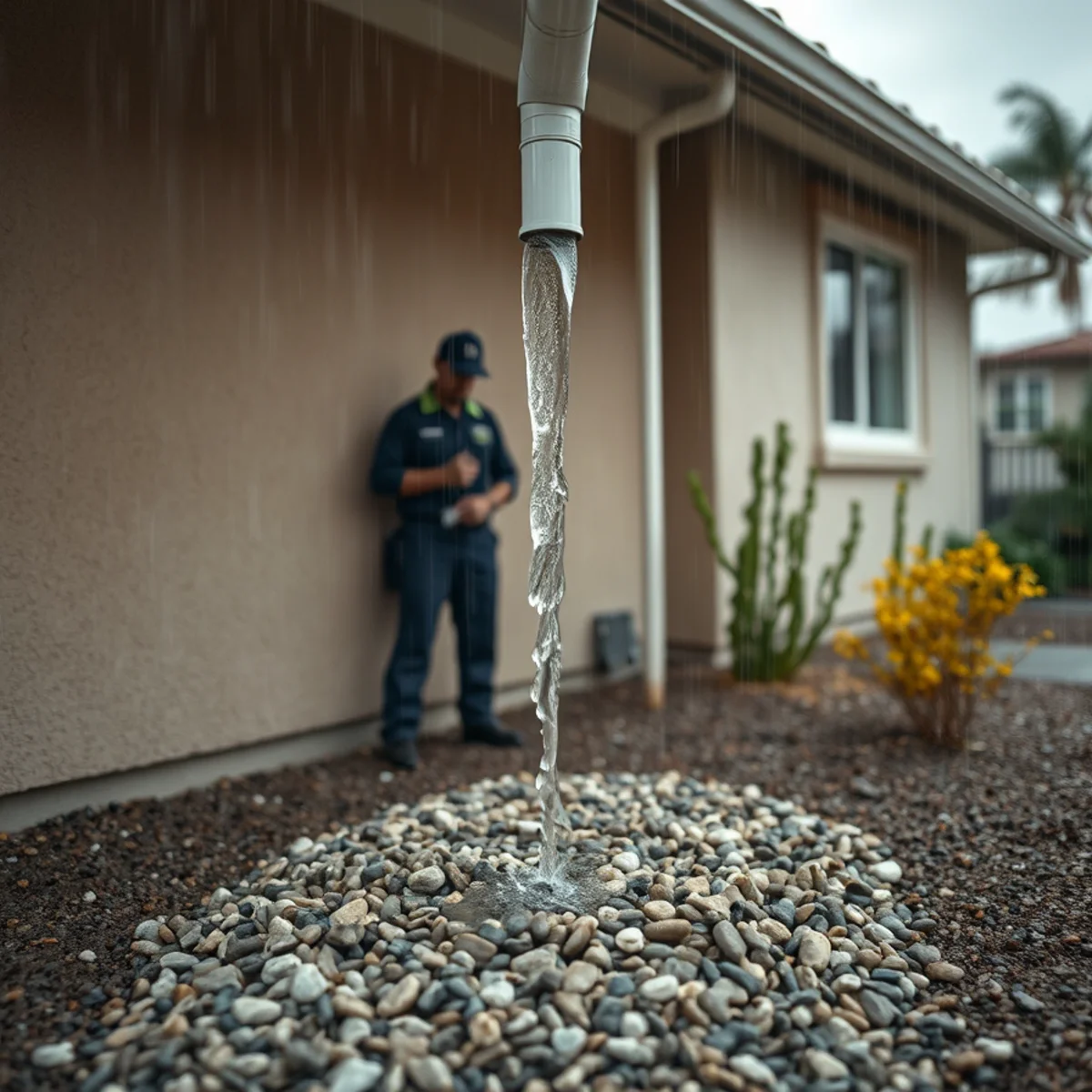
Clear the gutters, then check they still slope to the outlets. Follow every downspout to where it actually discharges — not where you assume it does. Clear area drains and yard drains, find your subdrain outlets, and check the grade against the foundation. Do all of it in October, before the first real storm.
Homeowners worry about the roof. In practice, most of the storm intrusion we respond to in Orange County has nothing wrong with the roof at all — the water landed exactly where it was supposed to and then had nowhere good to go.
Drainage is the unglamorous half of storm preparedness and it is where the cheap wins are.
Gutters: Clear Them, Then Check the Slope
Clear all debris, then run a hose in at the far end and watch. Water should move steadily to the downspout with no ponding.
Standing water in a gutter means either a blockage further along or a section that has lost its slope — gutters sag over time as hangers loosen. Refastening a sagging run is straightforward and it matters.
Check the seams and end caps for leaks while the water is running. A leaking seam directly above a doorway or a wall penetration puts water exactly where you do not want it.
A blocked or overflowing gutter sends water down the wall and behind the stucco rather than into the downspout — which is water inside the wall assembly, not on the ground.

Downspouts: Where Does It Actually End Up
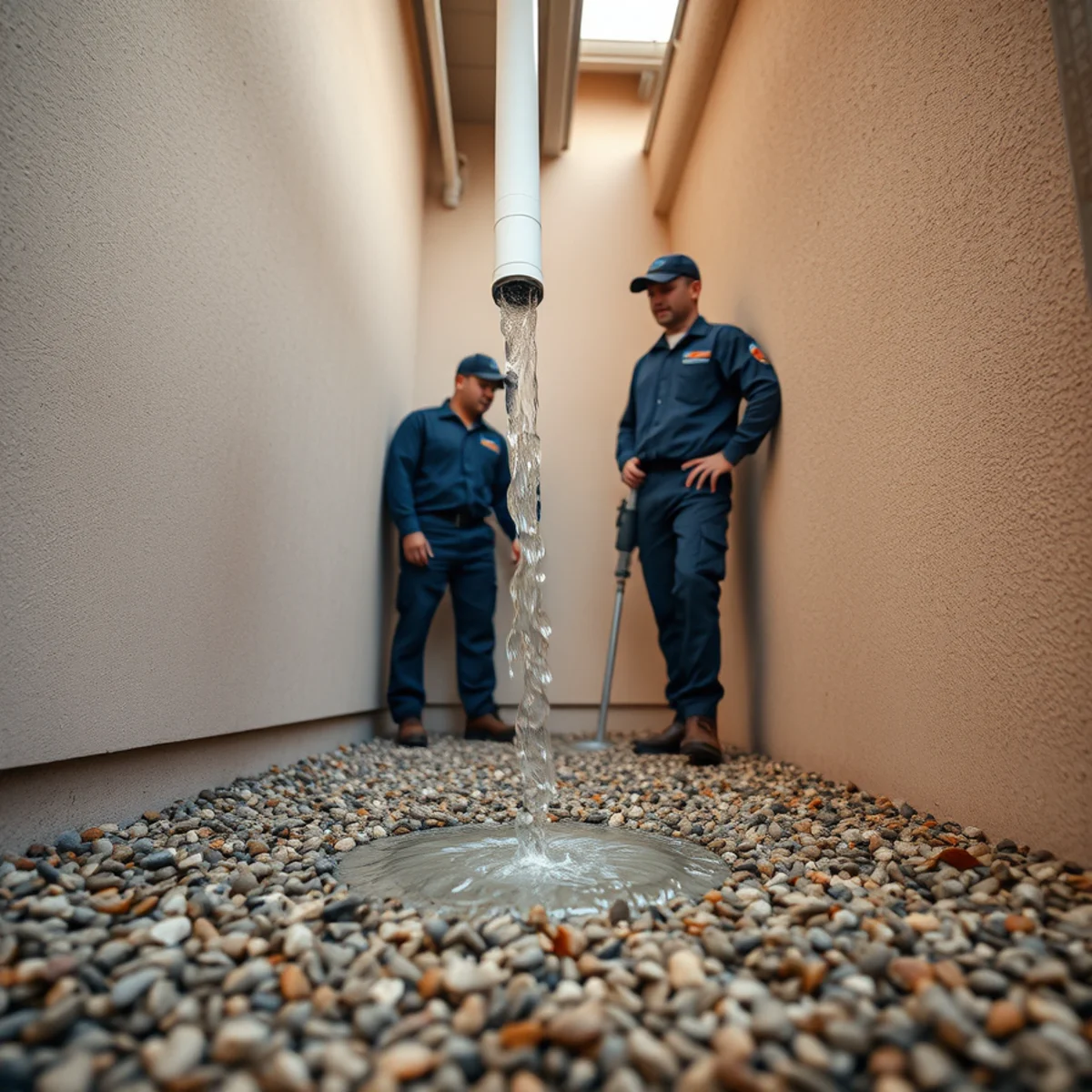
Follow every downspout to its discharge point. A downspout that dumps at the base of a wall is the same as no downspout at all — it just concentrates all the roof water at one point against your foundation.
Extensions or splash blocks routing water four to six feet away from the building are inexpensive and effective.
Where downspouts connect to underground drain lines, those lines silt up like every other drain. Run a hose in and confirm water comes out the other end. If it backs up at the inlet, the line is blocked and the downspout is effectively discharging at the foundation.
Count your downspouts against your roof area too. A long gutter run with one downspout at one end will overflow in an intense storm even when perfectly clear.
Standing water right now? Call us before you do anything else.
We are on site within 60 minutes anywhere in Irvine, 24 hours a day.
Yard Drains and Area Drains
Find every one. Walk side yards, planters, patios, low points and along fence lines. Mature landscaping progressively hides them.
Clear each grate and run a hose in to confirm flow. Silt accumulates over eight dry months and a drain that looks clear at the surface can be blocked a foot down.
Look at where they are supposed to discharge — usually a curb outlet at the street. Confirm water actually comes out there.
If you have a drain you know exists but cannot locate, or an outlet that has never discharged anything, that is worth having a drainage contractor look at before the season rather than during a storm.

Slopes, Retaining Walls and Subdrains
This is the one that catches hillside homeowners in Turtle Rock, Laguna Hills, Mission Viejo, Brea, Anaheim Hills and Laguna Niguel.
Homes on graded pads have subdrains behind retaining walls and terrace drains cut into slopes. All of it is invisible and consequently unmaintained until it fails.
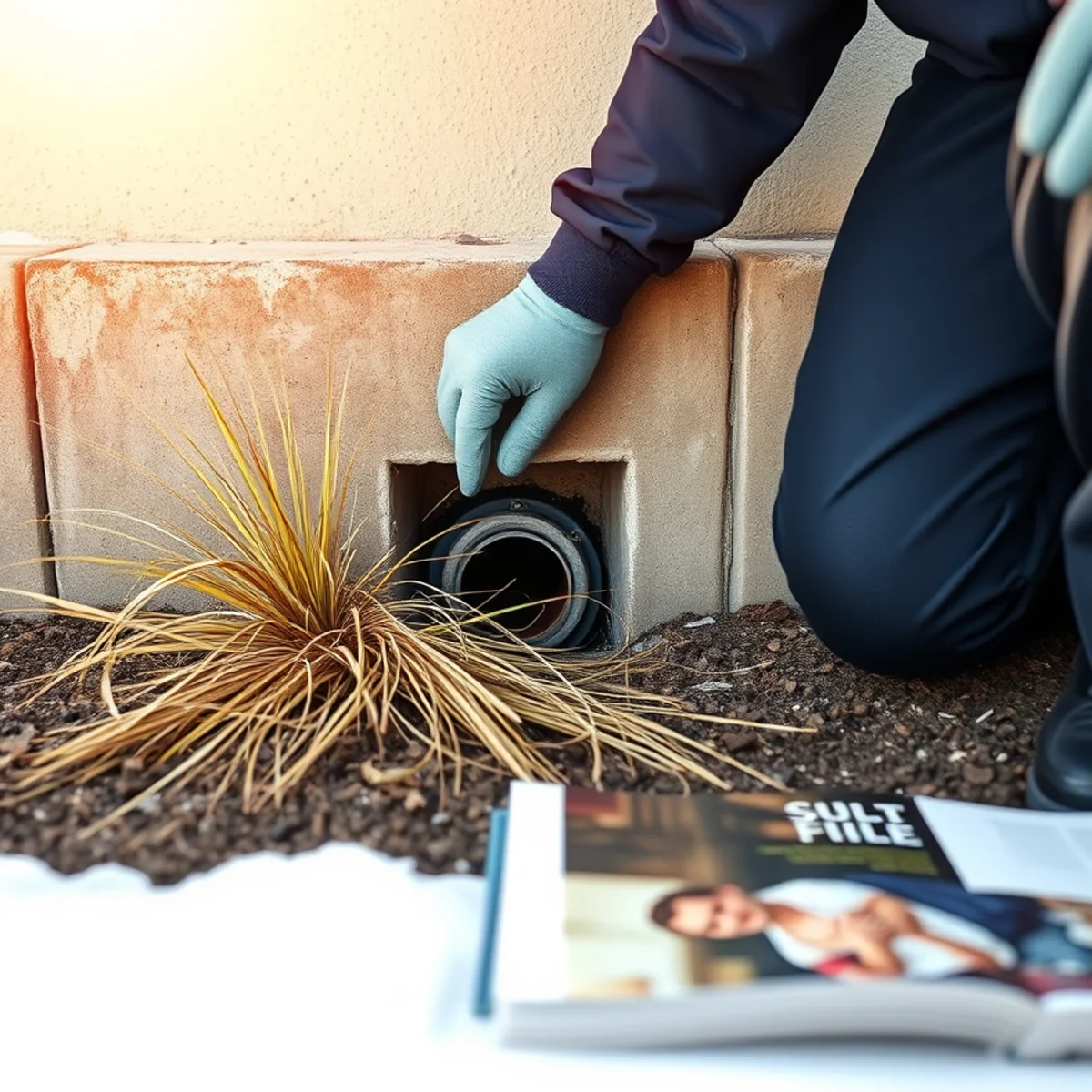
When a subdrain silts up, hydrostatic pressure builds behind the wall and pushes water through into the base of an uphill wall. Indoors it looks like a plumbing leak; outdoors the giveaway is efflorescence, a chalky white mineral bloom on the concrete or stucco.
Find your subdrain outlets — they should be visible at the toe of a slope or through a retaining wall. Clear the terrace drains on any slope you own. And note any spot where water pools rather than moving.
The Grade Around the House
Soil should slope away from the building for at least the first several feet. Over decades of added mulch and refreshed planter beds, finished grade quietly rises — and in many older Orange County homes it now sits at or above the slab edge.
When that happens, water arriving at the wall has a downhill path into the house. It is the single most common storm intrusion condition we find and it costs almost nothing to fix.
Walk the perimeter and look at the relationship between planter soil and the slab. Anywhere it is level or higher, dig it back down and re-establish the fall.
While you are there, check the driveway. If it pitches toward the garage rather than the street, a trench drain at the apron or a threshold seal on the door ends a problem that otherwise recurs every winter.

From the field
Where downspouts actually end up
The most common drainage fault we find is not a blocked gutter. It is a downspout that discharges within a foot of the foundation, or into an underground line that was severed during a landscaping job years ago and now empties into the soil beside the wall. Nobody notices, because the visible half of the system works perfectly — water leaves the gutter and disappears into a pipe.
The test takes five minutes with a hose. Run water into each downspout and go find where it comes out. If it does not appear at a visible discharge point within a reasonable time, that line is broken or blocked, and every storm is delivering a roof's worth of water directly against your foundation. On a big roof plane that is hundreds of gallons in a single hour of rain.
The honest tradeoff on gutter guards: they genuinely reduce the amount of leaf litter that reaches the trough, and they do not eliminate maintenance — fine debris and seed still get through, and the guards themselves can shed water past the gutter in heavy rain if they are the wrong type for your roof pitch. Under Orange County's eucalyptus, pepper and pine, they are usually worth it. They are not a reason to stop looking.
Check gutter slope, not just cleanliness
A clean gutter that has sagged holds standing water and overflows at the low point. A quarter inch of fall per ten feet toward the outlet is the target.
Efflorescence on a retaining wall is a subdrain telling you something
Chalky white mineral bloom means water is moving through the wall. On a graded pad that almost always means the subdrain behind it has silted.
Frequently Asked Questions
How far should a downspout discharge from the house?
Four to six feet at minimum, further if the ground slopes back toward the building. A downspout dumping at the base of a wall concentrates all the roof water from that section at a single point against your foundation, which is worse than no downspout at all.
What is efflorescence and what does it mean?
The chalky white mineral bloom that appears on concrete, stucco or masonry. It is left behind as water moves through the material and evaporates at the surface, so it is direct evidence that water is passing through that wall — usually from a blocked subdrain or a drainage problem behind it.
How do I know if my subdrain is working?
Find the outlet — it should be visible at the toe of a slope or through a retaining wall — and check whether anything discharges from it during or after rain. If you cannot locate an outlet, or nothing has ever come out of yours, have a drainage contractor investigate before the rainy season rather than during it.
Need help with this in Irvine?
We handle this work every week across Irvine and Orange County. A live dispatcher answers 24/7, gives you an arrival window, and tells you what to do while you wait. Free on-site assessment and written scope before any demolition.
Related services