Prevention & Maintenance · 5 min read
The 10-Minute Monthly Leak Inspection: Everywhere Water Hides in Your Home
Almost every catastrophic loss we respond to left evidence somewhere first. Ten minutes a month is how you find it.

Short answer
Ten minutes a month, in this order: under every sink, behind and under every toilet, the water heater and its pan, behind the washing machine, then the meter with everything off. You are looking for damp, staining, corrosion at fittings and any warping of cabinet bases — the early signals that precede every expensive loss.
The losses we respond to are almost never the first sign of a problem. There was a mineral crust on a fitting, a rust ring under a valve, a slightly damp cabinet floor — evidence that was there for months and that nobody was looking for.
This walkthrough takes ten minutes and it is the highest-return home maintenance habit available.
Under Every Sink
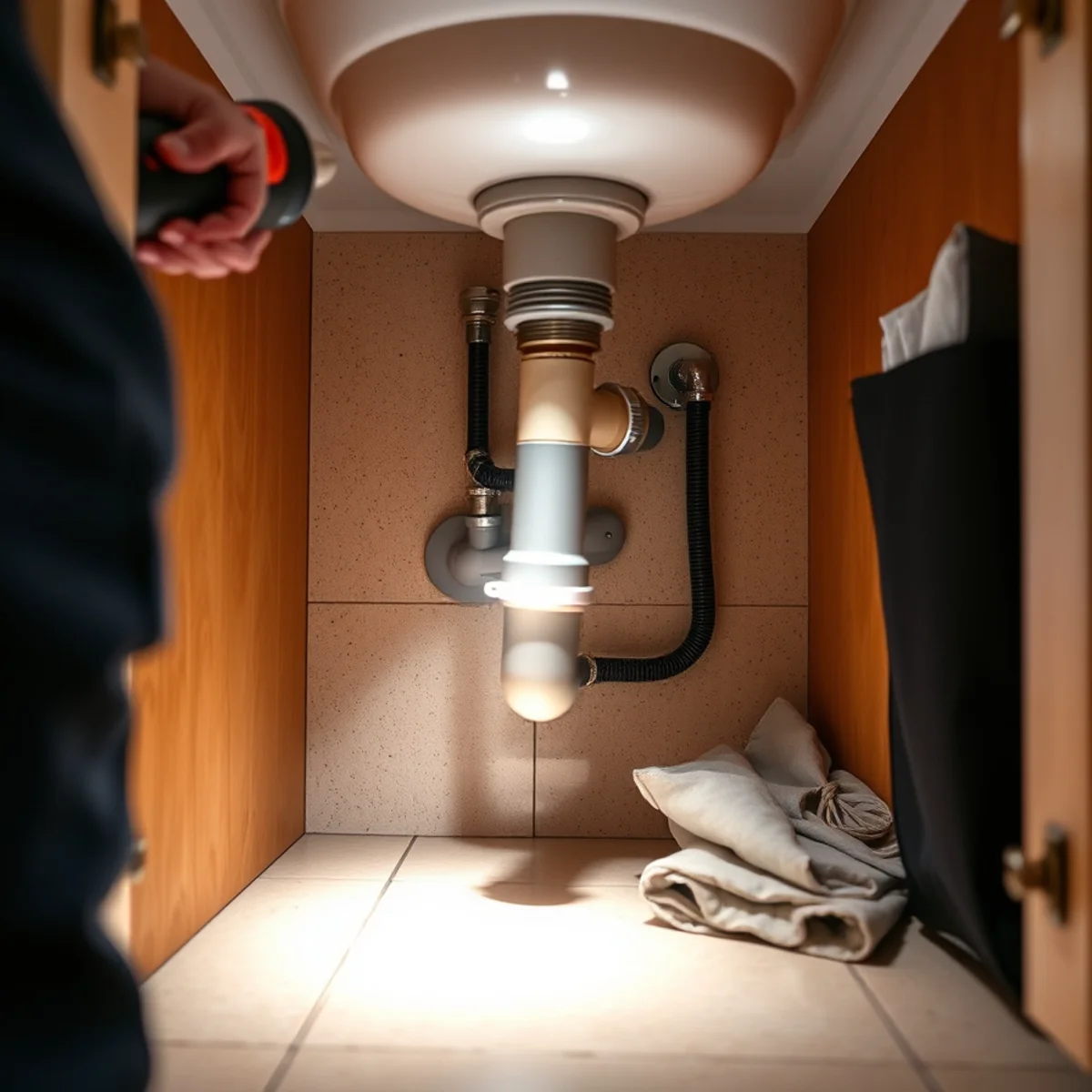
Flashlight, and look at four things: the angle stops where the supply lines attach to the wall, the supply lines themselves, the P-trap and drain connections, and the cabinet floor.
You are looking for a white or green mineral crust at a fitting, a rust ring, discoloration or softness in the cabinet floor, and any dampness. A crust means water has been evaporating there — a slow weep that is not yet dripping.
Run the water and look again while it is running, then run the disposal if there is one. Some leaks only appear under flow.
Behind and Under Every Toilet
Check the supply line and angle stop for crust or corrosion. Feel the floor at the base of the toilet — softness or discoloration points at a failing wax ring, which leaks into the subfloor rather than onto the floor.
Check for rocking. A toilet that moves when you shift your weight has a compromised seal.
And run the dye test: a few drops of food coloring in the tank, wait fifteen minutes without flushing, check the bowl. Color in the bowl means the flapper is leaking, which is silent, continuous and the most common cause of an unexplained water bill increase.

Standing water right now? Call us before you do anything else.
We are on site within 60 minutes anywhere in Irvine, 24 hours a day.
The Water Heater
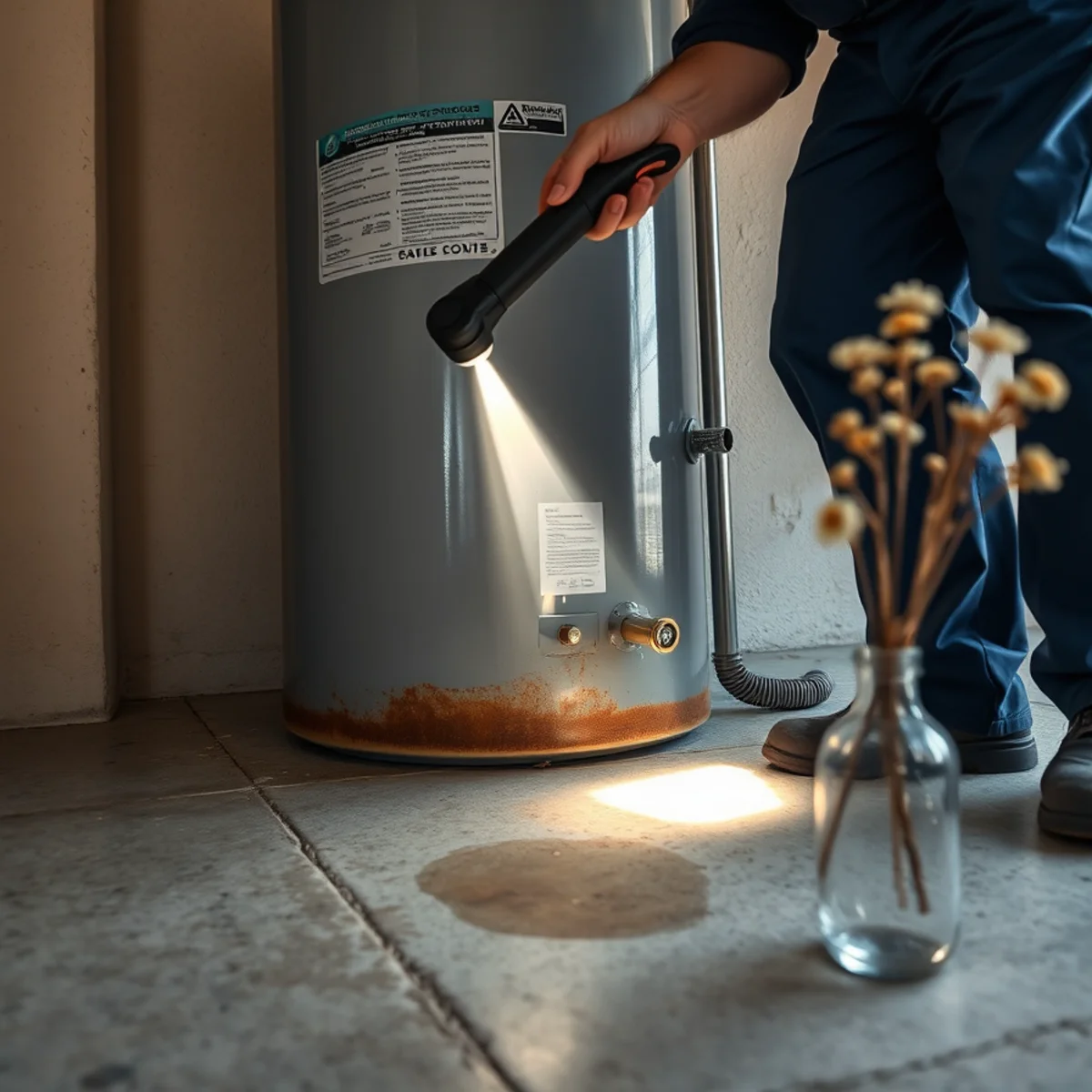
Look at the base of the tank for any puddle, staining or rust ring. Even a small intermittent weep at the bottom means the tank wall is compromised, and that is the last warning before it opens up.
Check the temperature and pressure relief valve discharge pipe for signs of water. Dripping there means either excessive pressure or a failed valve, and both are safety issues.
Check the fittings at the top for corrosion, and confirm the seismic strapping is intact — two straps, into structure, upper third and lower third.
Note the manufacture date from the serial number. If it is past ten years, plan the replacement.
The Laundry
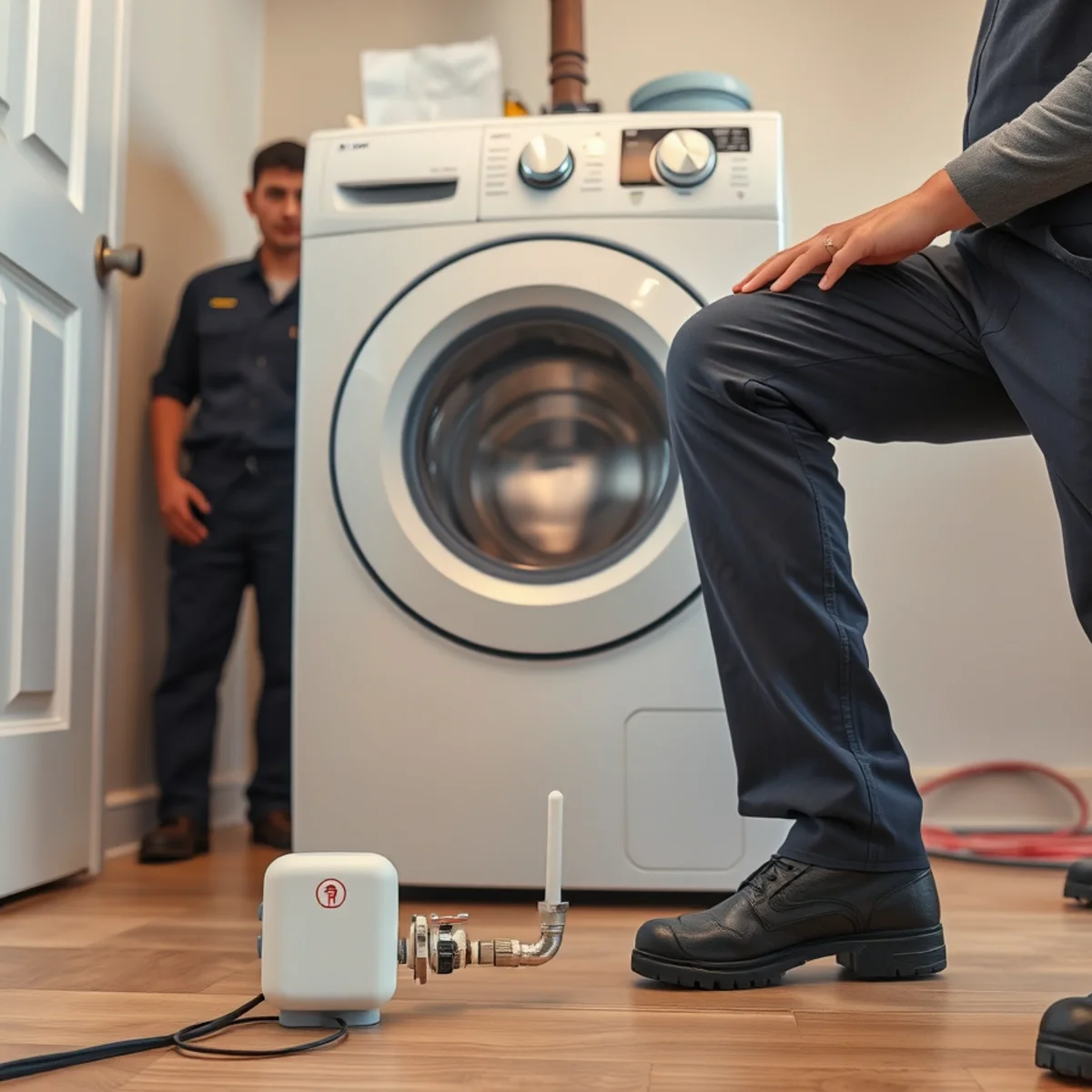
Look at both supply hoses for bulging, cracking, corrosion at the fittings or any dampness. If they are rubber rather than braided stainless, replace them now regardless of condition.
Check behind the machine for staining on the wall or floor.
Confirm the drain hose is properly secured in the standpipe and has not worked loose.
If your laundry is on a second floor, confirm the drain pan is present and its drain line is clear.

Appliances and the Rest of the House
Pull the refrigerator out far enough to see the ice maker supply line and look for a mineral crust at the connection and staining on the floor behind it. This is one of the most commonly overlooked connections in a house.
Look at the dishwasher's kick panel area for dampness, and check the supply connection under the adjacent sink.
Walk the house barefoot and notice any warm spot on the floor with no explanation.
Look at ceilings, particularly below upstairs bathrooms and near the attic air handler, for any stain or discoloration.
Check exterior hose bibs for drips and corrosion, and look for any unusually green or soggy patch of lawn.

Finish With the Meter
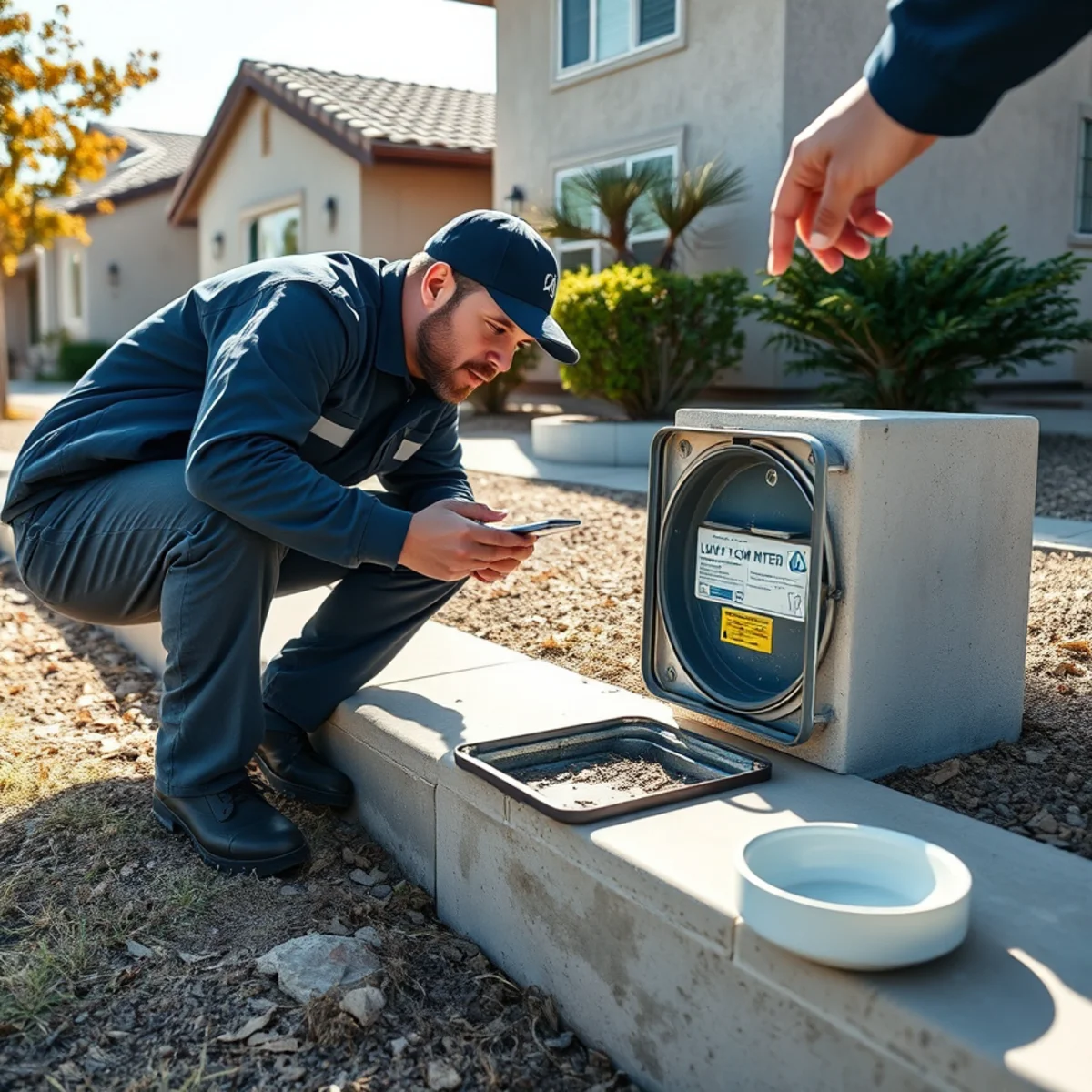
Once every few months, run the meter test. Shut off every fixture, note the low-flow indicator position, wait fifteen minutes, and check again.
Movement means water is leaving your supply system somewhere you have not found. It is the single most definitive check available and it costs nothing.
Also worth doing annually: exercise every angle stop in the house and your main shut-off, fully closed and fully open. Hard water scales valves shut, and you do not want to discover that during an emergency.
From the field
What we actually look at, and what it tells us
Under a sink, the tell is rarely a drip in progress. It is a white or green crust on a fitting, a water line staining the cabinet base, or a patch of the base that has darkened and swelled slightly. Those are the fingerprints of a slow weep that has been running intermittently, and they appear months before anything reaches a floor. Run a hand along the bottom of the trap and the supply connections and feel for damp rather than looking for a puddle.
Behind a toilet, look at the base of the angle stop and the floor at the back of the bowl. Rocking is the other signal — a toilet that moves when you shift your weight has a compromised wax seal, and that leaks under the flooring rather than onto it, which is why the first symptom is frequently a soft subfloor rather than water.
The honest limitation of any visual inspection: it finds surface failures and it finds nothing inside a wall or under a slab. That is what the meter step is for, and it is why we put it last — thirty minutes with everything off and a low-flow indicator that should be still. A monthly walk-around plus a quarterly meter check covers both the visible and the hidden, and between them they catch the overwhelming majority of what we get called about.
Put a plain paper towel under a suspect fitting
Leave it a day. It records an intermittent weep that a hand check at the wrong moment will miss entirely.
Photograph the same spots each time
Comparing this month's photo to last month's shows change your eye adapts to. Staining that grows slowly is invisible to memory.
Frequently Asked Questions
How often should I check for leaks?
The under-sink and appliance walkthrough monthly, or at minimum quarterly. The meter test every few months. The annual items — exercising angle stops and your main shut-off, flushing the water heater — once a year. Ten minutes a month catches nearly everything before it becomes a claim.
What does a white crust on a fitting mean?
Water has been evaporating there. Dissolved minerals in the water are left behind as the moisture evaporates, so a mineral crust is a record of a slow weep that has been happening for a while, even if nothing is actively dripping when you look. It is worth addressing.
Are water leak sensors worth it?
Very. Wi-Fi sensors under every sink, behind each toilet, at the water heater and behind the washer cost little and text you within a minute. Nearly every catastrophic loss we respond to was a small failure that ran unnoticed for hours or days — which is exactly the scenario a sensor eliminates.
Need help with this in Irvine?
We handle this work every week across Irvine and Orange County. A live dispatcher answers 24/7, gives you an arrival window, and tells you what to do while you wait. Free on-site assessment and written scope before any demolition.
Related services