Prevention & Maintenance · 5 min read
Winter Storm Prep Checklist for Orange County Homes (Do These Before the November Rains)
Do this in October. Everything on the list is cheap, and it prevents the losses we spend every winter cleaning up.

Short answer
Do drainage first — clear every area drain, gutter, downspout and subdrain outlet, because a blocked drain is what turns rain into an interior loss. Then check the grade against the foundation, inspect the roof from the ground, seal thresholds, and price flood coverage. All of it belongs in October, before the November rains.
Orange County goes eight months without meaningful rain and then takes most of a year's total in a handful of storms. That pattern is what silts up every drain you own and degrades every sealant on your roof, then tests all of it at once.
This is the list. It takes a weekend and it prevents the large majority of the storm intrusion we respond to.
Drainage — Do This First
Locate and clear every area drain, yard drain, channel drain and patio drain on the property. They silt up over the dry months and mature planting quietly covers them.
Run a hose into each one to confirm it actually flows rather than just looking clear at the grate.
Find your subdrain outlets if you have retaining walls or a graded slope — they should be visible at the toe of a slope or through the wall. If you cannot find one, or nothing has ever discharged from it, have it checked before the season.

Grade Around the House
Soil should slope away from the building. Over decades of added mulch and refreshed planter beds, finished grade quietly rises, and in many older Orange County homes it now sits at or above the slab edge.
Walk the perimeter. Anywhere planter soil is level with or above the slab, dig it back down and re-establish a fall away from the wall.
This is the single most common storm intrusion condition we find, it has nothing to do with the building itself, and fixing it costs almost nothing.

Standing water right now? Call us before you do anything else.
We are on site within 60 minutes anywhere in Irvine, 24 hours a day.
Roof, Gutters and Downspouts
Look at the roof from the ground with binoculars. Cracked or slipped tiles, shifted or missing ridge caps, debris in valleys, and the rubber boots around plumbing vents — those last about eight to twelve years in this UV and are a very common leak source.
Clear the gutters. A blocked gutter overflows down the wall and behind the stucco rather than into the downspout, which puts water into the wall assembly.
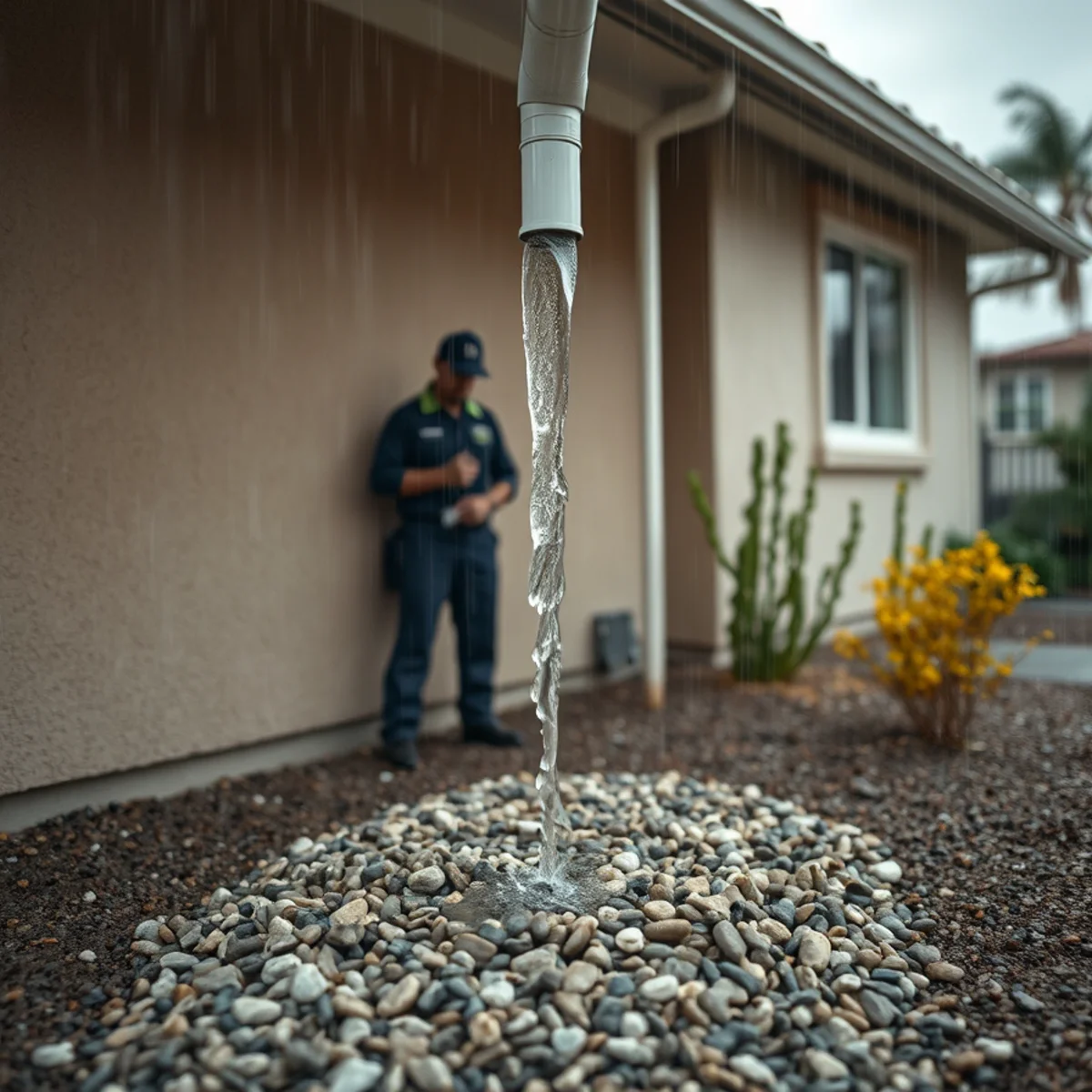
Confirm every downspout discharges away from the foundation. Extensions or splash blocks routing water four to six feet out are inexpensive. Check underground downspout drain lines for blockage too.
Trim tree limbs back from the roof. Wind-driven limbs are a leading cause of tile damage and they arrive in the same season.

Thresholds and Entry Points
If your driveway pitches toward the garage rather than the street, storm runoff has a direct path under the door. A trench drain at the apron or a threshold seal on the door solves it permanently.
Check window and slider weep holes at the bottom of the frames. They clog with dirt and cause water to back up into the wall instead of draining out. A pipe cleaner clears them.
Check the sealant at doors, windows, hose bibs, vents and any wall penetration. Dried, cracked or missing sealant is where wind-driven rain gets in.

Inside the House
Get anything you care about off the garage floor and out of cardboard. Pallets, shelving or lidded plastic bins.
Check that your sump works if you have one — mostly relevant to subterranean parking and some commercial properties in this market.
Know where your main water shut-off is and confirm it actually turns. A valve that has not been operated in fifteen years frequently will not.
Photograph the exterior and interior of your home now, in good condition. A before-condition record is genuinely useful if you later need to establish what a storm changed.

The Insurance Deadline
If you are going to buy flood insurance, October is the last reasonable month. NFIP policies generally carry a 30-day waiting period from purchase, so you cannot buy it when a storm is in the forecast.
Standard homeowners policies exclude flood entirely — surface water, runoff, rising water and mudflow. Outside a mapped hazard area, premiums are often surprisingly low, and research from UC Irvine argues that drainage-driven urban flooding is under-represented in common models.
While you are on the phone with your agent, ask two other things: whether you carry a water backup of sewers or drains endorsement, and what your loss assessment limit is if you own a condo.

From the field
The insurance deadline nobody mentions
Every item on a storm-prep list is physical except one, and the one people miss has a clock on it. NFIP flood policies carry a waiting period — typically thirty days from purchase before coverage takes effect. That means the useful month to price flood coverage is October, and the useless month is the week an atmospheric river is on the forecast.
It matters here more than people assume because a standard homeowners policy excludes surface water entirely, and the losses we respond to during Orange County storms are overwhelmingly surface water: a driveway that slopes toward the garage, a threshold barely above grade, a subterranean level below street elevation, a low point on the block where the street stopped draining. None of that requires a mapped flood zone to happen, and properties outside mapped zones qualify for preferred-risk policies that are inexpensive precisely because the map says low risk.
The honest ranking of everything on the list: clearing drains is free and prevents the most losses. Correcting grade is nearly free and prevents the sneakiest ones. A roof inspection is modest and cheapest in October. New drainage installation is real money and is occasionally the right answer. Flood coverage is the one that matters when all the physical preparation was not enough, which is the scenario people never plan for.
Photograph the roof after the first Santa Ana
Dated photographs of storm damage in October are what turn a January leak from a deferred-maintenance denial into a covered storm claim.
Know where your water shut-off is before a storm
Storm season is also when supply failures get discovered late, because nobody is checking a garage during a week of rain.
Frequently Asked Questions
When should I do storm prep in Orange County?
October. The rainy season runs November through March and the first significant storm is the one that finds everything that degraded over eight dry months. It also gives you time to buy flood insurance before the 30-day NFIP waiting period becomes a problem.
What is the single most important item on the list?
Clearing every area drain, followed closely by checking that the finished grade around your house still slopes away from it. Those two conditions account for a large share of the storm intrusion we respond to, and both cost essentially nothing to fix.
Do I need to get on the roof?
No, and please do not — tile roofs crack under foot traffic and falls from roofs are a leading cause of serious home-maintenance injuries. Inspect from the ground with binoculars or a phone camera at full zoom. If you see something that needs closer inspection, hire a roofer.
Need help with this in Irvine?
We handle this work every week across Irvine and Orange County. A live dispatcher answers 24/7, gives you an arrival window, and tells you what to do while you wait. Free on-site assessment and written scope before any demolition.
Related services