Emergency Guides · 5 min read
Standing Water in the House: Is It Safe to Stay, and Who Do You Call First?
Three questions decide it: is there an electrical hazard, what kind of water is it, and is anything structurally compromised. Here is how to answer each.
Short answer
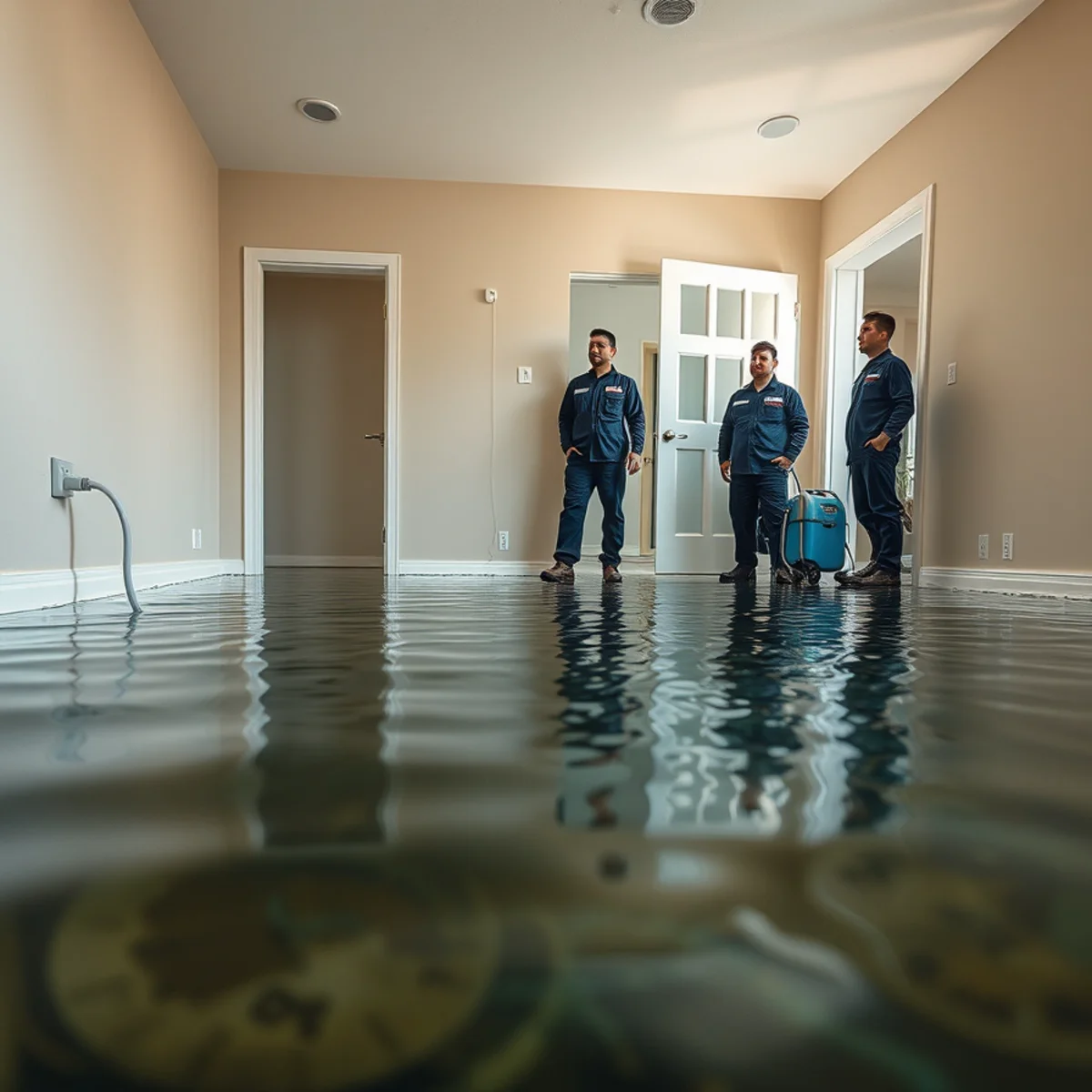
Not until you have answered three questions: is any of that water near energised outlets, appliances or a panel; what category of water is it; and is anything structurally compromised, particularly a bulging ceiling. Any yes means leave and call from outside. Clean water on a hard floor with power isolated is usually safe to stay with.
Standing water in a house raises three separate safety questions, and they are worth answering in order rather than all at once while you are stressed.
Is there an electrical hazard. What kind of water is this. And is anything structurally compromised. If any of those is a yes, the answer is that you leave and figure the rest out from somewhere dry.
Question One: Electricity
This is the one that kills people. If water has reached outlets, appliances, extension cords, a subpanel or your main electrical panel, do not enter the area.
If you can reach the breaker panel from a dry position and shut off the affected circuits, do that. If the panel itself is in the water or you would have to cross water to reach it, do not. Call the utility.
Do not assume that because a light is off, a circuit is dead. And do not use a household shop vac in standing water near energized outlets.
Question Two: What Kind of Water Is It
The IICRC S500 standard sorts water into three categories, and the category determines whether staying is reasonable.
Category 1 — Clean water
A broken supply line, a tub overflow, an appliance supply failure. Low health risk. Staying in unaffected parts of the house is usually fine.
Category 2 — Gray water
Washing machine or dishwasher discharge, urine-only toilet overflow. Bacteria present. Stay out of the affected area; the rest of the house is generally okay.
Category 3 — Black water
Sewage, toilet overflow with solids, outdoor floodwater, or any water standing long enough to grow biology. Leave. This is a health hazard, not a property problem.
Standing water right now? Call us before you do anything else.
We are on site within 60 minutes anywhere in Irvine, 24 hours a day.
The Detail Most People Miss About Categories
Category degrades with time. Clean water sitting on a warm floor for 48 hours is no longer clean water — it has picked up soil, gypsum and organics from everything it touched, and it now supports microbial growth.
So the same event can be a stay-in-the-house situation on hour two and a leave-the-house situation on day two. This is one of several reasons waiting costs more than it saves.
Question Three: Is Anything Structurally Compromised
A sagging or bulging ceiling is holding water weight and can release all at once. Clear the area beneath it and stay out.
Floors that feel soft or springy where they did not before, particularly over a crawl space, mean the subfloor or the joists are involved. Stairs are a specific concern — a wet stair tread or a saturated stringer is a fall waiting to happen.
In a multi-story home, water that has been sitting in a floor assembly is a real load. If a ceiling below is stained across a large area and sagging, treat the floor above it as compromised too.
Other Reasons to Leave Even If the Water Is Clean
If the only kitchen or the only bathroom is out of service, staying stops being practical fast. If a large area of flooring has been removed, the house becomes genuinely difficult to live in.
If anyone in the household is immunocompromised, has significant asthma or respiratory disease, is elderly or is an infant, the threshold for leaving should be much lower — moisture and microbial growth affect them disproportionately.
And if your HVAC has been shut down as part of the response during a hot stretch, that alone can make a house unlivable in an Irvine August.
The Order to Call People In
First, whoever stops the water. That is you at the main shut-off, or a plumber, or the utility. Nothing else matters while water is arriving.
Second, a restoration company for extraction and drying. Speed here is what determines whether materials are dried or replaced, and it is what keeps a Category 1 loss from becoming Category 2.
Third, your insurance carrier. Report it the same day even if you do not yet know the scope — the date of report matters, and delay is what carriers use to argue damage was gradual.
And ask your carrier about loss of use coverage early. If your home is genuinely uninhabitable, hotel or rental costs during that period are typically covered, and you want to know that before you have paid out of pocket for a week.
From the field
The detail most people miss about water categories
Category is not a fixed property of the water — it is a function of source and time. Clean supply water from a broken line starts as Category 1, and if it sits, it does not stay that way. Once it has soaked into carpet pad and had a day at room temperature with organic material to feed on, it is Category 2 by any practical standard. Two days in, with the right temperature, it behaves like Category 3.
That is why the answer to whether a house is safe changes over a weekend. People frequently tell us the water is clean because they know the source, without accounting for the fact that it has been standing since Friday. We assess on what the material is now, not what came out of the pipe, and that assessment drives whether porous materials get dried or removed.
Honest tradeoff on staying: there is real value in being in your home, and we do not push people out for the sake of it. What we will not do is tell someone it is fine to sleep in a house with a saturated ceiling above a bed, an unresolved electrical question, or Category 3 contamination in the room children play in. Where the answer is borderline, isolating and sealing the affected area and keeping the rest of the house in use is frequently the right middle path.
Never step into standing water to reach a breaker
If the panel is not accessible from a dry position, that is a utility call, not a homeowner task.
Bulging drywall overhead is an evacuation, not a project
Saturated ceiling drywall carries a lot of weight and gives way without warning. Clear the room and relieve it from the side, or wait for someone who will.
Frequently Asked Questions
Can I stay in my house during water damage restoration?
Usually yes for Category 1 losses — most residential drying happens with the family in place, in rooms outside containment. Relocation is warranted for Category 3, when the only kitchen or bathroom is affected, when large areas of flooring have been removed, or when someone in the household is immunocompromised, asthmatic, elderly or an infant.
How long can water sit before it becomes dangerous?
Clean water begins degrading toward Category 2 within roughly 48 hours as it picks up soil and organics and supports microbial growth. Mold colonization on wet organic material can start inside 24 to 48 hours. The practical answer is that the clock starts immediately and there is no safe waiting period.
Will my insurance pay for a hotel?
If your policy includes loss of use or additional living expense coverage and the home is genuinely uninhabitable, typically yes. Ask your adjuster about it in the first conversation rather than after you have paid for a week yourself, and keep every receipt.
Need help with this in Irvine?
We handle this work every week across Irvine and Orange County. A live dispatcher answers 24/7, gives you an arrival window, and tells you what to do while you wait. Free on-site assessment and written scope before any demolition.
Related services