Emergency Guides · 6 min read
Water Heater Flooded the Garage: Emergency Steps Before Help Arrives
A tank holds forty to eighty gallons and it does not stop there — the supply keeps feeding it. Here is the shut-off order, and how to keep it out of the hallway.
Short answer
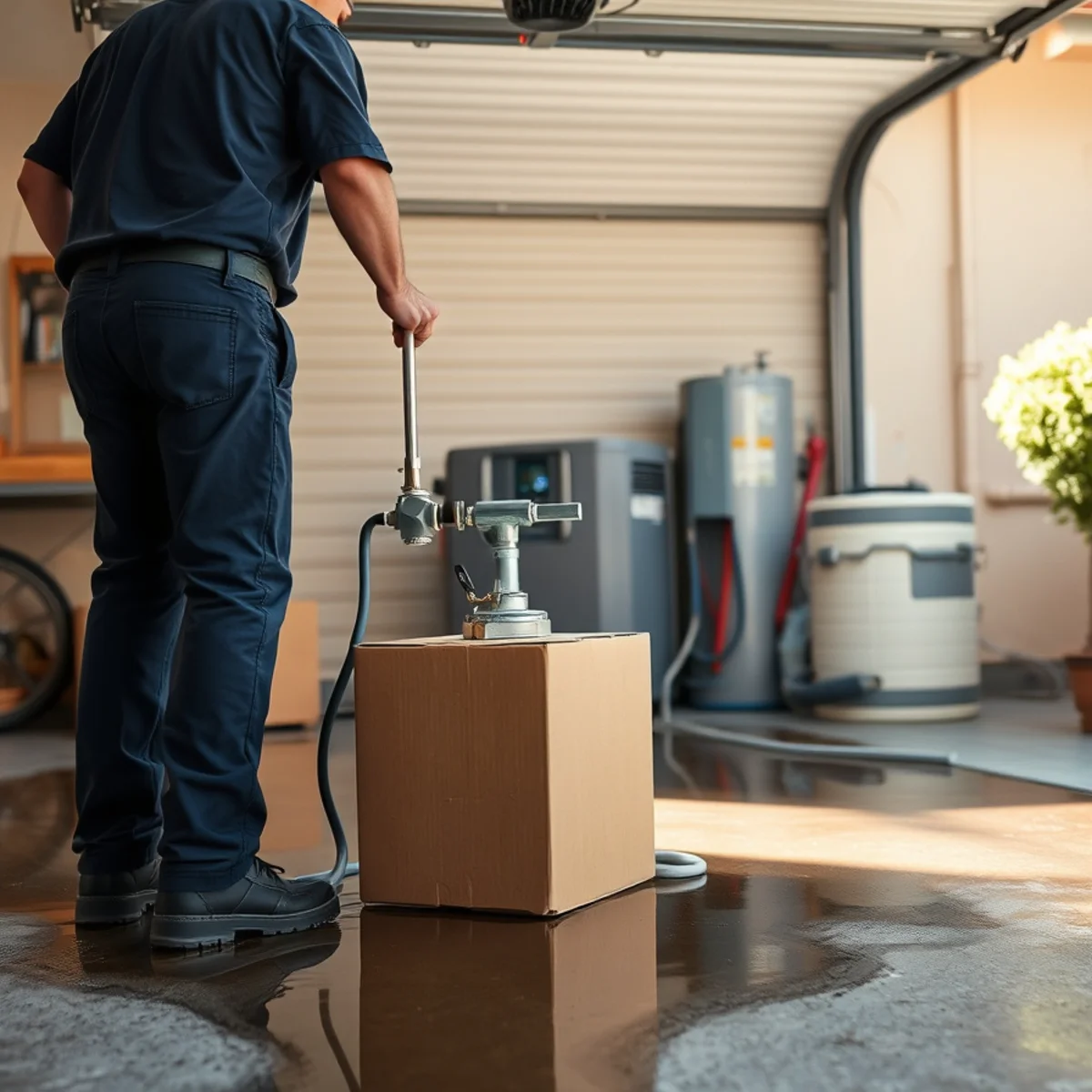
Close the cold water supply valve on top of the tank, then kill the gas or the breaker feeding it. Dam the threshold into the house with towels so the water stops migrating, lift contents off the slab, photograph everything, and call for extraction. A forty-gallon tank on a garage slab reaches interior drywall within minutes.
When a tank water heater fails, it does not usually drip. The bottom corrodes through and the whole contents — forty to eighty gallons — ends up on the garage slab in a few minutes. And because the cold supply is still connected, it keeps refilling and keeps emptying.
In an Irvine garage the slab typically sits an inch or two below the interior finished floor, which means the water is heading for the door into the house. Everything below is about stopping it before it gets there.
Step 1: Close the Cold Water Supply on Top of the Heater
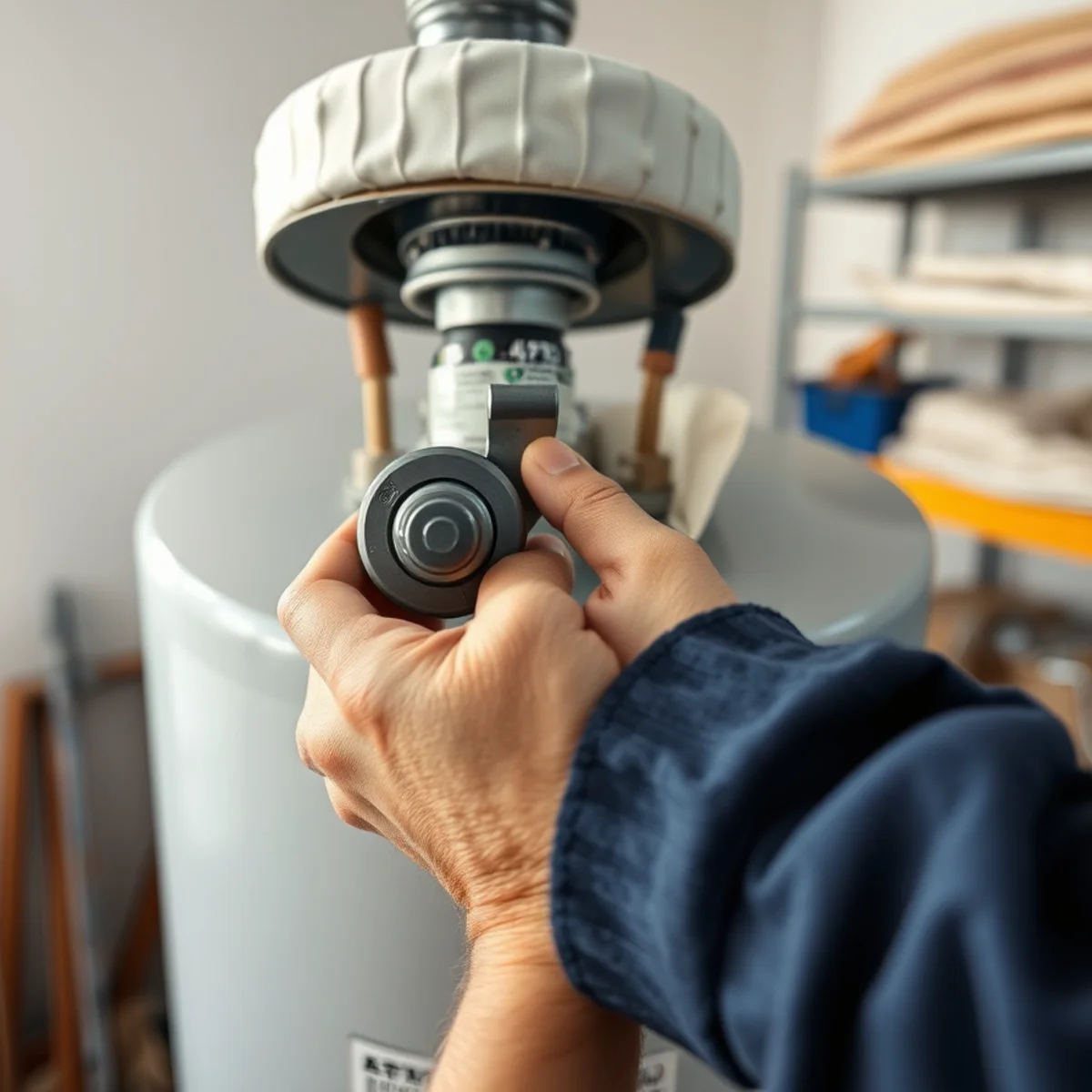
There is a valve on the cold inlet pipe at the top of the tank — usually a lever or a round handle on the right-hand pipe as you face the unit. Close it. That stops the refill.
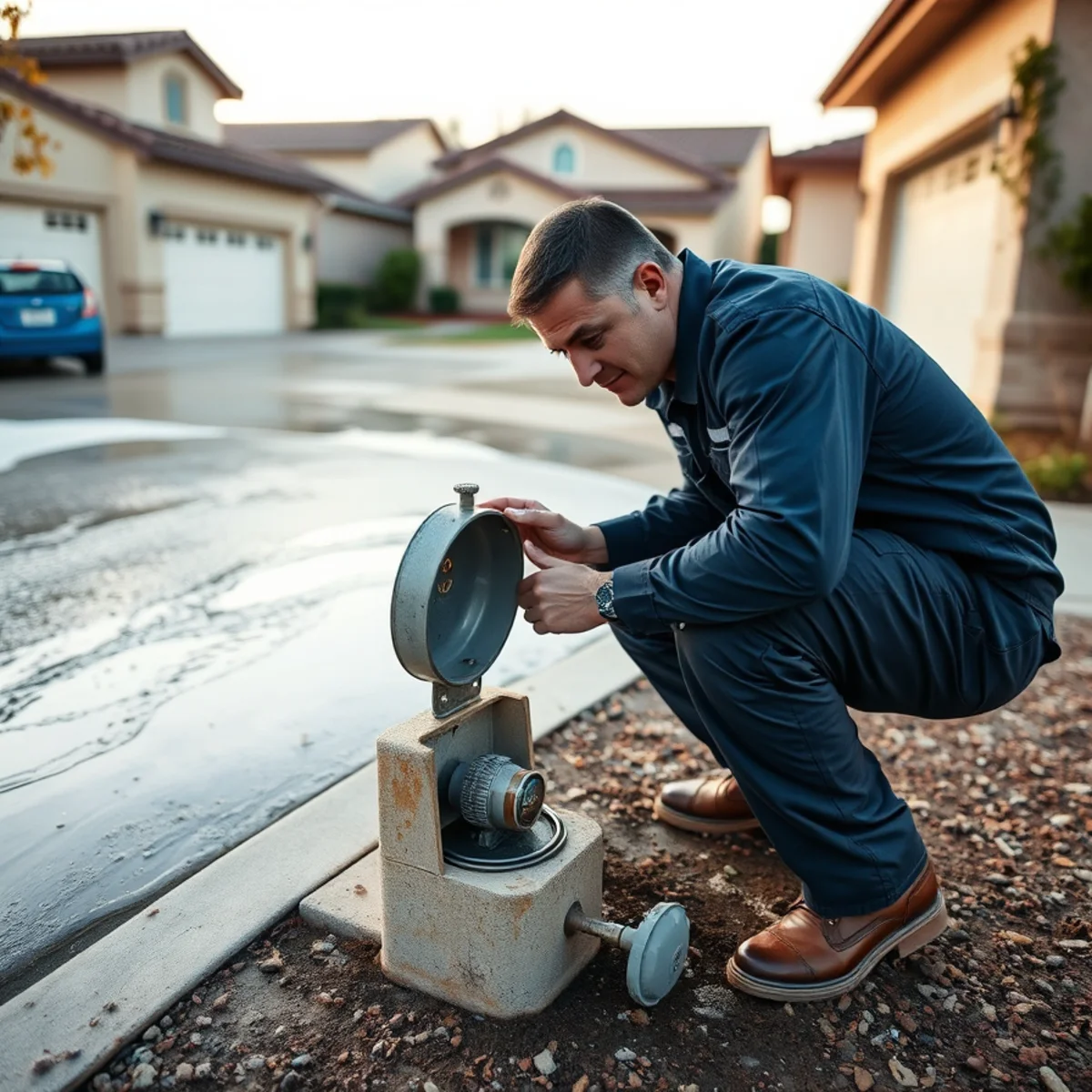
If that valve will not turn, or if you cannot identify it, go to the main house shut-off instead: a concrete meter box at the curb, or a valve on the exterior wall near the front hose bib. Turn clockwise until it stops.
Do not skip to trying to drain the tank. Stopping the supply is what ends the flood; draining is a later step and it can wait.
Step 2: Kill the Energy Source
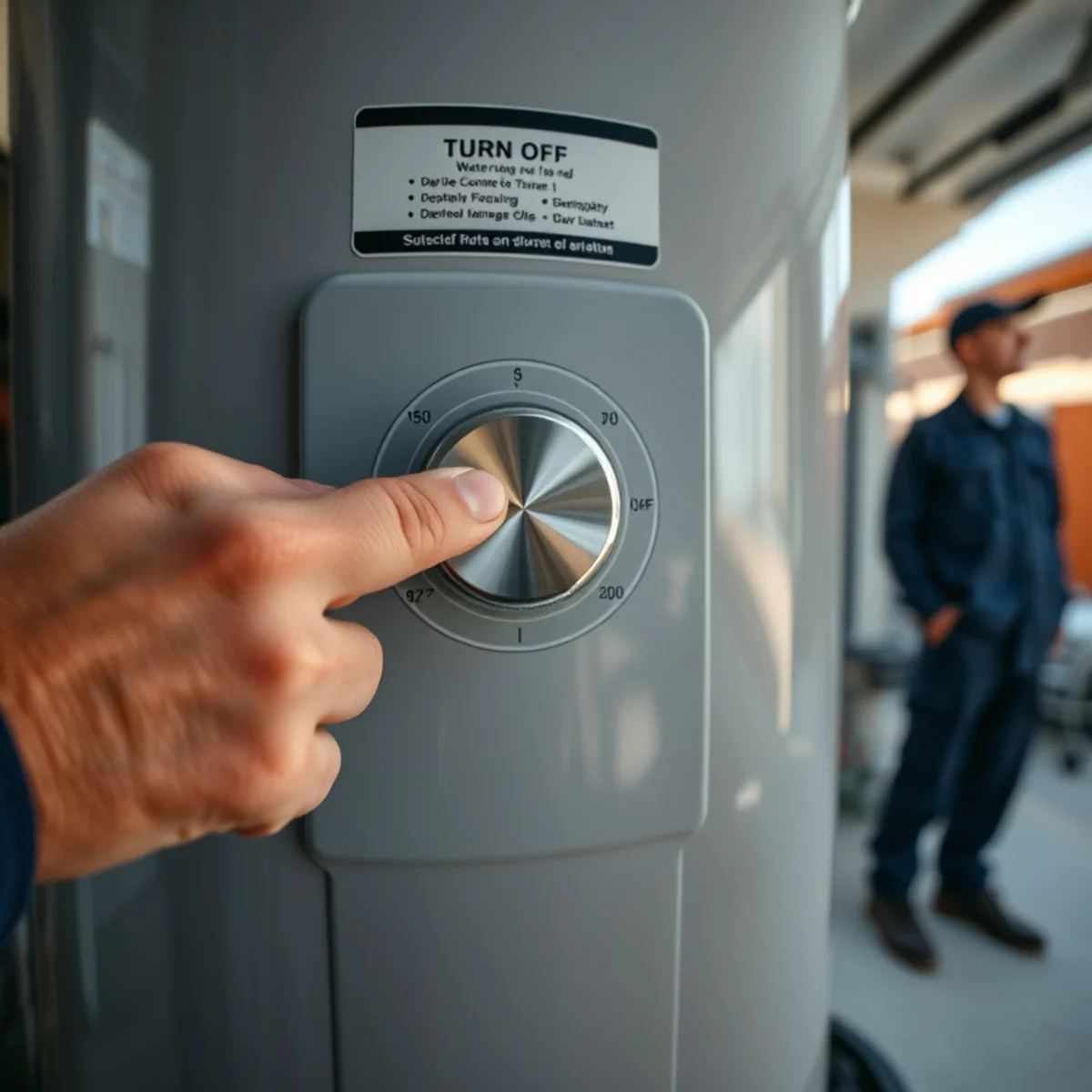
This step is about safety, not water. A gas water heater has a control dial on the front — turn it to OFF. An electric water heater has a dedicated breaker in your panel — switch it off.
The reason matters: an electric heating element that fires in a drained or partially drained tank burns out almost immediately and can create a fire risk. A gas burner in a compromised tank is its own hazard.
Do not relight or restart a water heater that has been leaking, under any circumstances, until a licensed plumber has evaluated it.
Standing water right now? Call us before you do anything else.
We are on site within 60 minutes anywhere in Irvine, 24 hours a day.
Step 3: Stop It Reaching the House
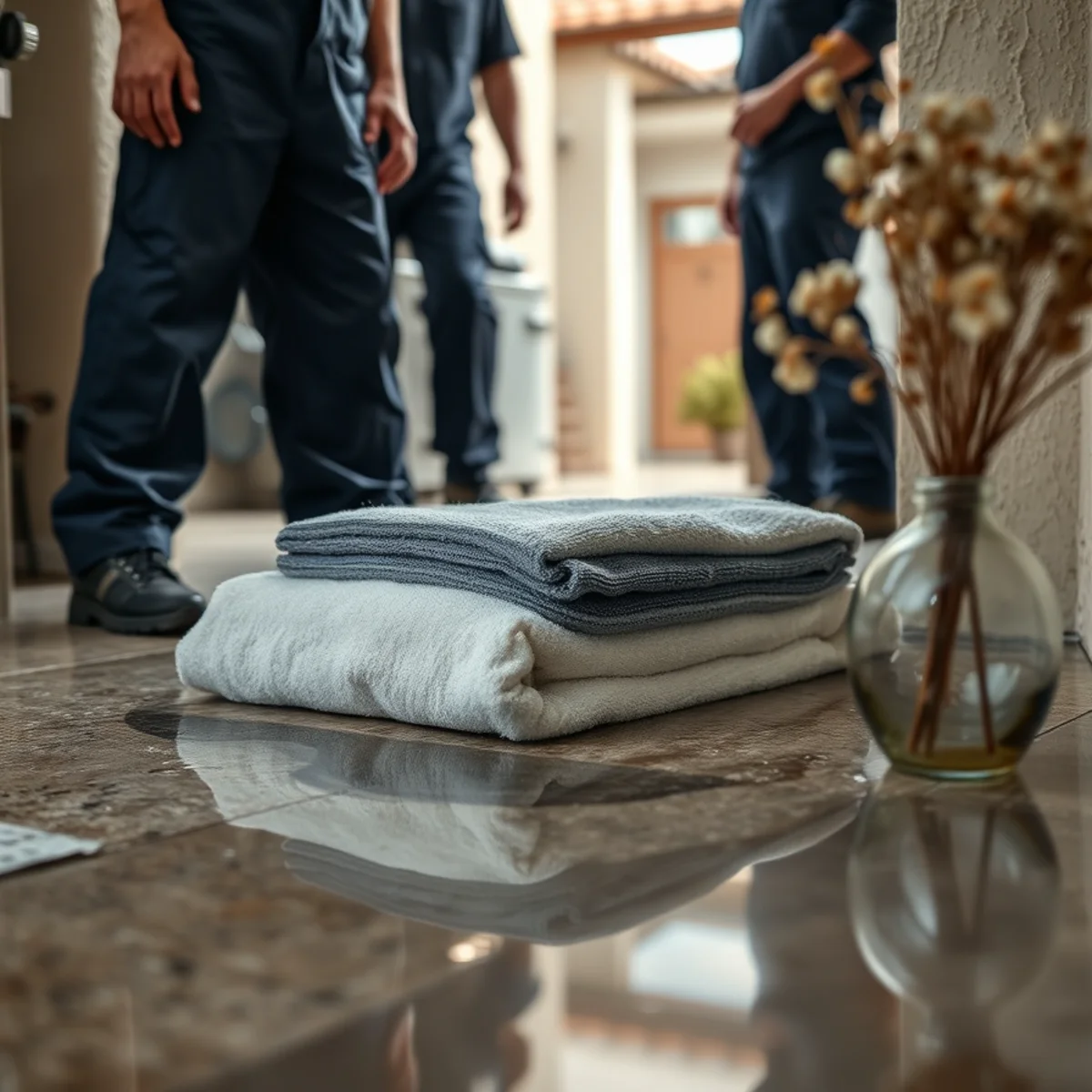
The threshold between your garage and the house is the whole game. If you can safely place towels, a rolled blanket or anything absorbent along that threshold, do it — it will not stop a large volume but it buys minutes, and minutes here are the difference between a garage dry-out and an interior restoration.
If your garage has a floor drain or a slight slope toward the garage door, and it is safe to open the door, opening it lets water leave rather than pool. Check first that water is not near the door opener, outlets or the electrical panel.
Do not stand in standing water in a garage. Garage panels, outlets, freezers and washers are all sitting in it.
Step 4: Get Contents Off the Floor
Garages are where households store things in cardboard, and cardboard on a wet slab collapses within an hour. Lift what you can reach safely: boxes, holiday storage, tools, sports equipment, anything with a particleboard base.
Pay particular attention to anything irreplaceable — photographs, documents, keepsakes. Those are frequently the highest-value items in a garage and the ones stored lowest.
Photograph everything before you move it if you can. Contents claims are supported by evidence, and a photo of a soaked box in place is worth more than the same box in the driveway.

Step 5: Document, Then Call
Wide shots of the garage, close-ups of the heater and the failure point, the water line on the wall if there is one, and every wet item. Video with narration is better still.
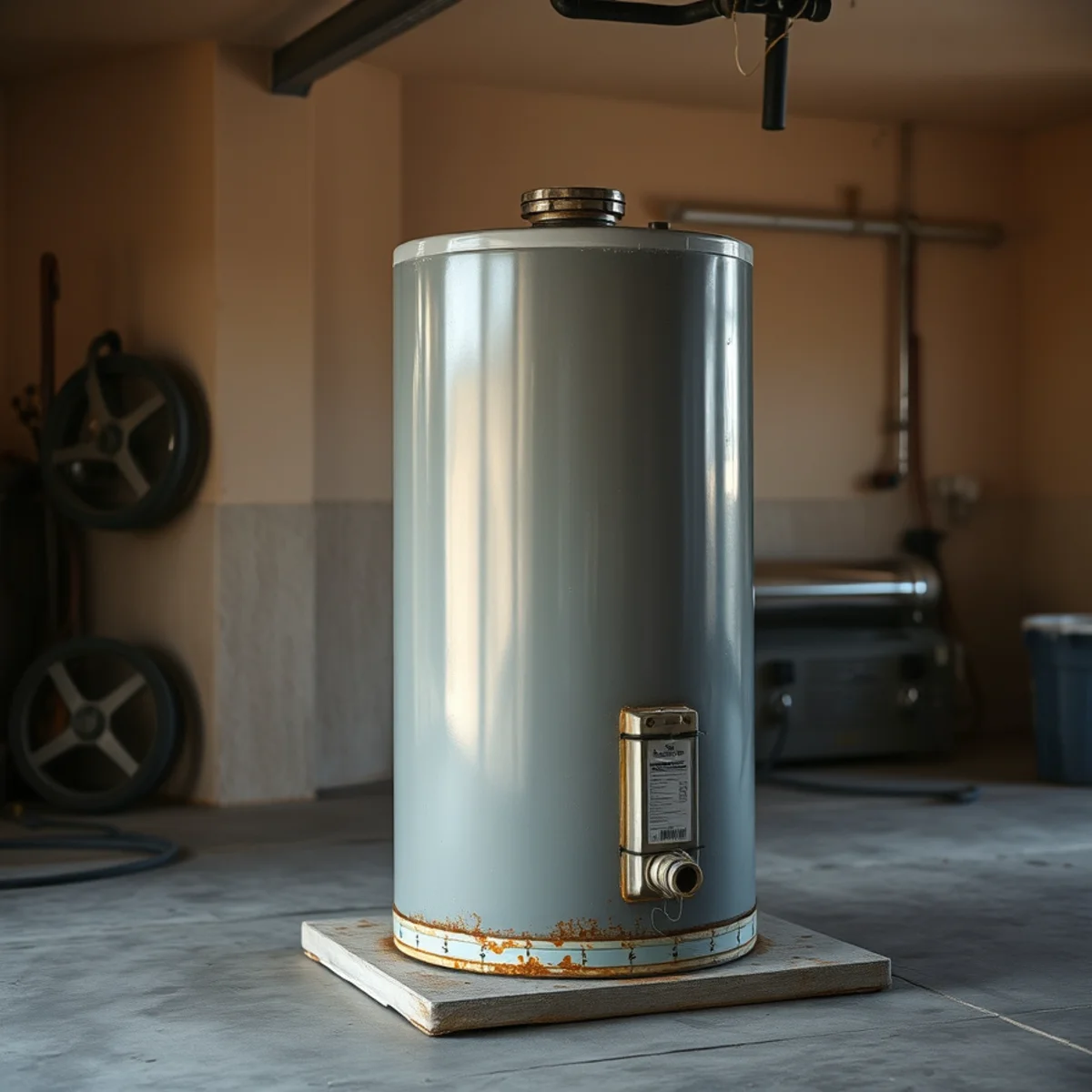
Keep the old water heater. Do not let anyone haul it away before your adjuster has seen it — the corrosion pattern on the tank is what demonstrates that this was a sudden failure rather than a slow leak someone ignored for months. That distinction affects coverage.
Then call for extraction. Garage water is usually clean at the source, which means the most material can be saved if the response is fast.
Why Garage Drywall Takes Longer to Dry Than You Expect
Garage walls in Irvine homes are typically fire-rated Type X drywall. It is denser than standard board and it gives up moisture more slowly, and it frequently will not dry from the room side alone.
That is why a competent restoration crew will remove the base and make small vents low on the wall so air can move through the cavity rather than just across its face. A garage that looks dry on the surface at day two can still be holding water at the bottom of the wall at day four.
The same applies to the sill plate where the framing meets the slab. It sat in the water, and it needs airflow to release it.
How to Not Have This Happen Again
Tank water heaters are rated for eight to twelve years, and hard Orange County water pushes most units toward the low end. Check the manufacture date encoded in the serial number on the label. If yours is past ten, replace it on your schedule rather than letting it pick one.
When you replace it, install a drain pan piped to an approved discharge point. A pan turns a catastrophic garage flood into a puddle beside a drain. It is inexpensive and almost nobody has one.
Confirm the seismic strapping meets California requirements — two straps anchored into structure, upper third and lower third of the tank. An unrestrained tank that tips in an earthquake shears both the water and the gas connections at once.
And flush the tank annually. Sediment on the tank floor insulates the burner from the water, stresses the steel and is the main reason heaters fail early in this market.
From the field
Why garage drywall is the part that costs you
Homeowners look at a flooded garage and see a concrete floor that will dry on its own. Concrete mostly will. The problem is the twelve to eighteen inches of drywall above it and the wall assembly behind that, because a garage wall shared with the house is usually a fire-rated assembly — five-eighths type X drywall, sometimes doubled, frequently with insulation in the cavity. That is a dense, slow-drying sandwich that holds water long after the slab looks dry.
It is also the wall that separates a garage from a bedroom or a hallway, so the moisture that stays in it sits directly against finished living space. We routinely find garages where the owner squeegeed the water out three days earlier and the shared wall is still reading well above dry standard at the base, with the interior side of that same wall starting to smell.
The honest tradeoff on repair: cutting a flood cut at twelve to twenty-four inches and drying the open cavity is faster, cheaper and more certain than trying to dry a closed fire-rated assembly in place. Drying it closed can be done with cavity injection, but it takes longer and it needs daily readings to prove it worked. We will do either; we will not pretend the closed method is quicker.
Check the manufacture date, not the install date
It is encoded in the serial number on the tank label. Past ten years in Orange County's hard water, you are on borrowed time regardless of how it looks.
A drain pan without a piped drain does very little
A pan holds a couple of gallons. Piping it to a floor drain or the exterior is what makes it useful, and a sensor in the pan is what makes it a non-event.
Frequently Asked Questions
How much water is in a water heater?
Typically forty to eighty gallons depending on the tank size, and that is just the stored volume. Because the cold supply keeps feeding it, a failed tank that is not isolated will keep delivering water indefinitely — which is why closing the cold inlet valve is the first step.
Can I still use my water while the heater is isolated?
If you closed only the heater's cold inlet valve, yes — you will have cold water throughout the house and no hot water. If you had to close the main, the whole house is off until the heater is isolated or replaced.
Does insurance cover a failed water heater?
The water damage it caused is usually covered as sudden and accidental. The heater itself usually is not — most policies exclude the failed appliance while covering what it damaged. Keep the old tank for the adjuster; the corrosion pattern is what supports a sudden-failure finding.
Need help with this in Irvine?
We handle this work every week across Irvine and Orange County. A live dispatcher answers 24/7, gives you an arrival window, and tells you what to do while you wait. Free on-site assessment and written scope before any demolition.
Related services