Problem Solving · 5 min read
Hidden Leak Symptoms: Warm Floor Spots, High Water Bills, and the Sound of Running Water
A pinhole under a slab makes no puddle. It announces itself indirectly, and every one of these signs is worth ten minutes of your attention.
Short answer
The most specific signs are a warm patch of floor with no appliance or sunlight to explain it, a water bill that jumped with no change in use, and the sound of running water with every fixture off. Less specific but still worth acting on: damp flooring in a room with no plumbing.
The expensive water damage is rarely the dramatic kind. A burst pipe at least tells you where it is and when it happened. A pinhole under a slab runs continuously for weeks, saturating subgrade and wicking up into walls, and never makes a puddle at all.
Here is what it does instead, and the test that settles it in ten minutes.
The Signs, Ranked by How Specific They Are
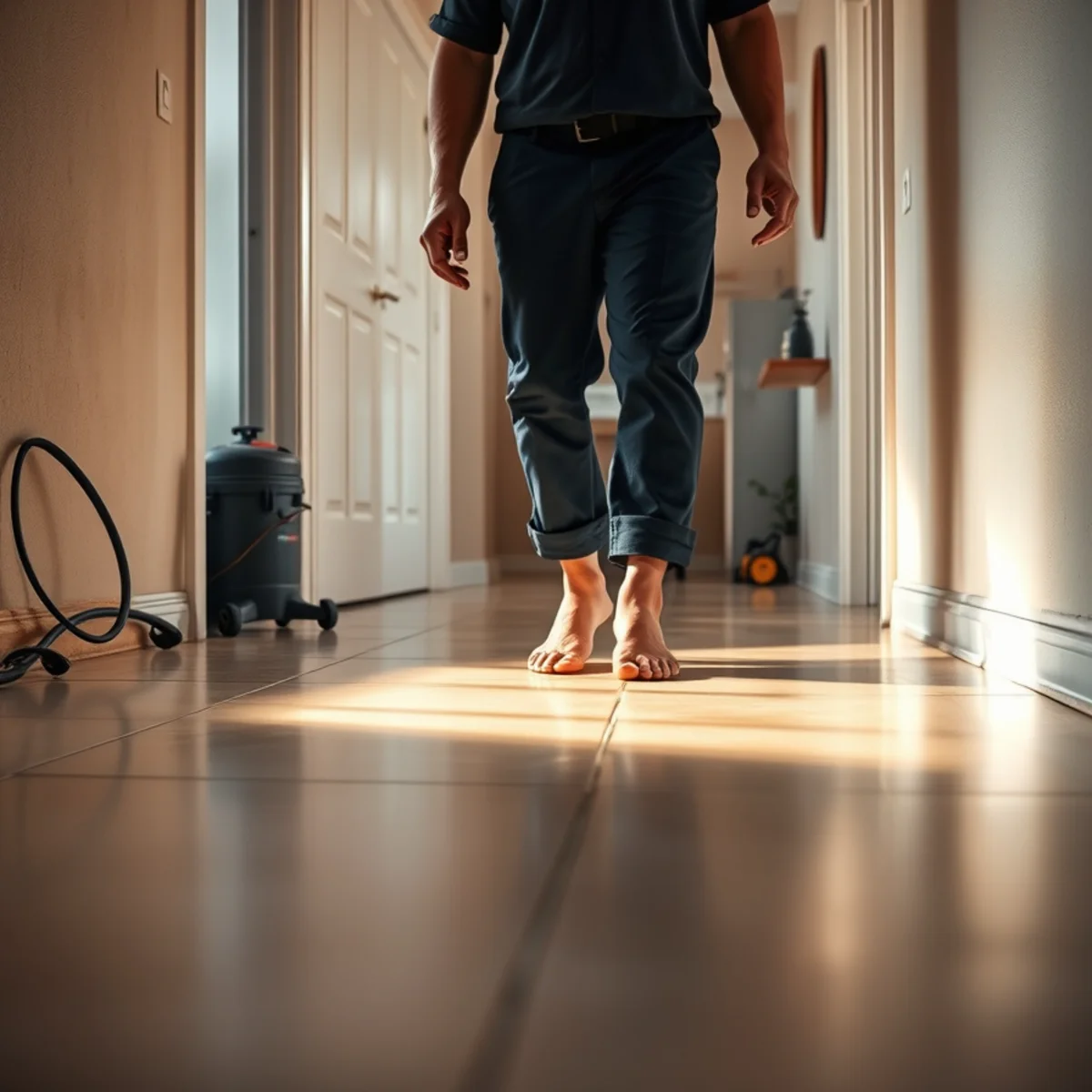
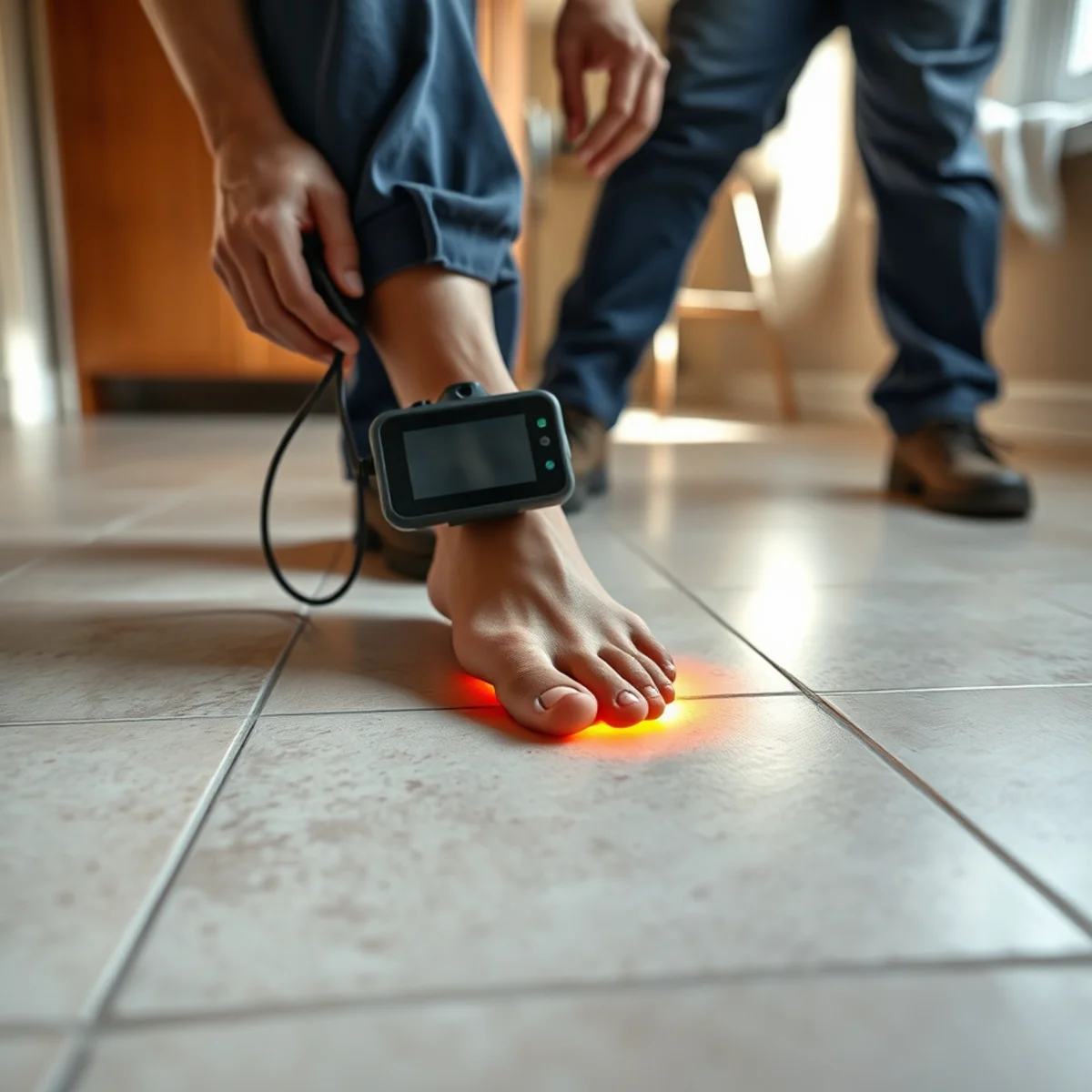
A warm spot on the floor is the most specific single indicator there is. A patch of tile or laminate noticeably warmer than the floor around it, with no appliance, no sunlight and no radiant heating to explain it, means a hot-water line is leaking beneath it. Walk your house barefoot in the morning.
The sound of running water with every fixture off. Stand in a quiet hallway at night with everything closed. A faint continuous hiss or rush means water is escaping a pressurized line somewhere.
A water bill that jumped with no change in household use. Irvine Ranch Water District bills are consistent enough month to month that a sustained 30 to 40 percent increase with no explanation is a real signal.
Damp or lifting flooring in a room with no plumbing fixtures. Water spreads laterally along the top of a slab, so the wet spot in a bedroom often originates at a bathroom two rooms away.
A musty smell with no visible water, which means something in an enclosed assembly is damp enough to grow.
Reduced water pressure that developed gradually, meaning water is escaping before it reaches your fixtures.
The Ten-Minute Meter Test
This is the most useful thing in this article and it costs nothing.
Turn off every fixture in the house — taps, toilets not running, dishwasher and washing machine off, ice maker off if you can. Go out to your water meter at the curb.
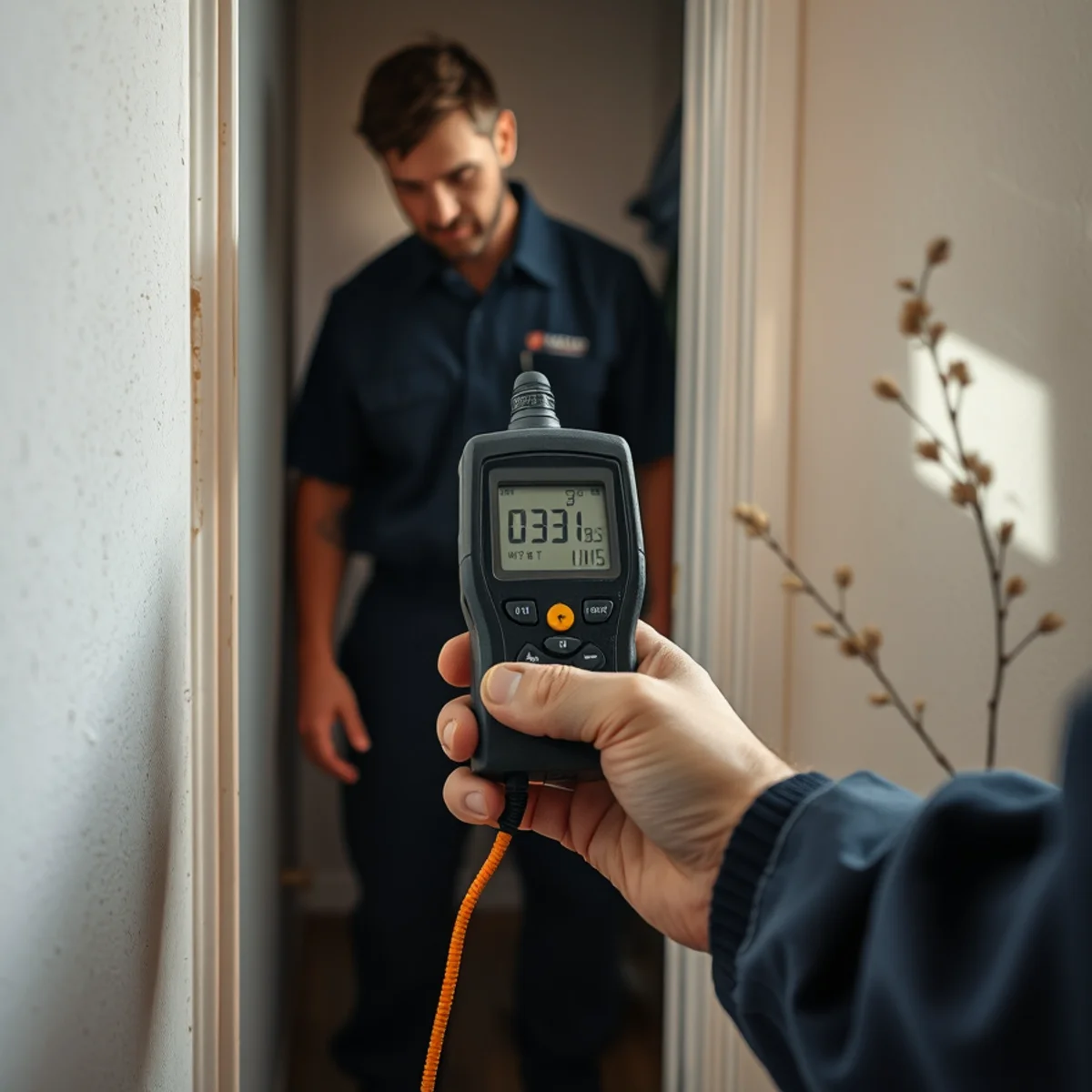
Most meters have a small triangular or star-shaped low-flow indicator that spins with even minimal flow. Note its position, or note the meter reading, and wait fifteen minutes without anyone using water.
If it has moved, water is leaving your supply system somewhere. That is a leak, and now you know it exists before you have paid anyone to look for one.
Run it a second time with the irrigation system isolated separately, which tells you whether the loss is on the domestic side or the irrigation side. On larger lots that distinction saves a lot of searching.

Standing water right now? Call us before you do anything else.
We are on site within 60 minutes anywhere in Irvine, 24 hours a day.
Hot Side or Cold Side
If the meter confirms a leak, the next question narrows it further. Close the cold-water shut-off valve on top of your water heater. That isolates the entire hot-water system.
Check the meter again. If it stops moving, the leak is on the hot side. If it keeps moving, it is on the cold side.
This is genuinely useful information to hand a detection technician, and it takes two minutes. A warm floor spot plus a confirmed hot-side loss is close to diagnostic for a hot-water slab leak.
Why Irvine Gets So Many of These
Two conditions overlap here in a way that is unusually consistent because the city was built in planned phases.
Nearly every home is slab-on-grade, and the tracts built from the early 1970s through the late 1980s — Woodbridge, University Park, Northwood, Deerfield, El Camino Real, Walnut, Turtle Rock, Rancho San Joaquin — ran copper supply lines through or beneath that concrete. Those lines are now forty to fifty-plus years old.
And Orange County's water is hard and mineral-heavy, scaling the inside of the pipe, while alkaline soil chemistry around the slab attacks the outside. The result is the pinhole: a weep too small to trip anything, running for weeks.
It is not bad luck. In the older villages it is a maintenance reality, which is why we push detection as a routine check rather than an emergency call.
What Detection Actually Involves
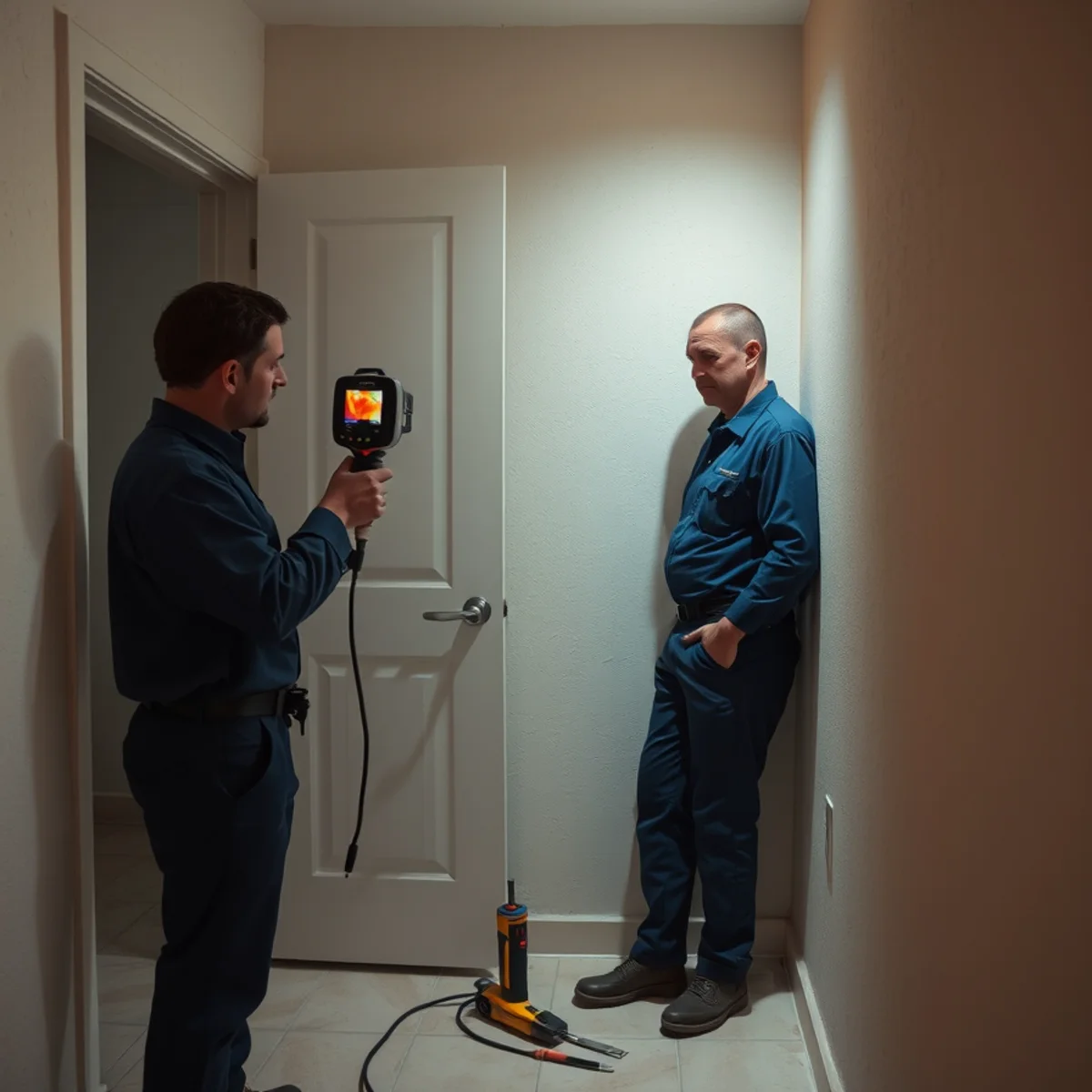
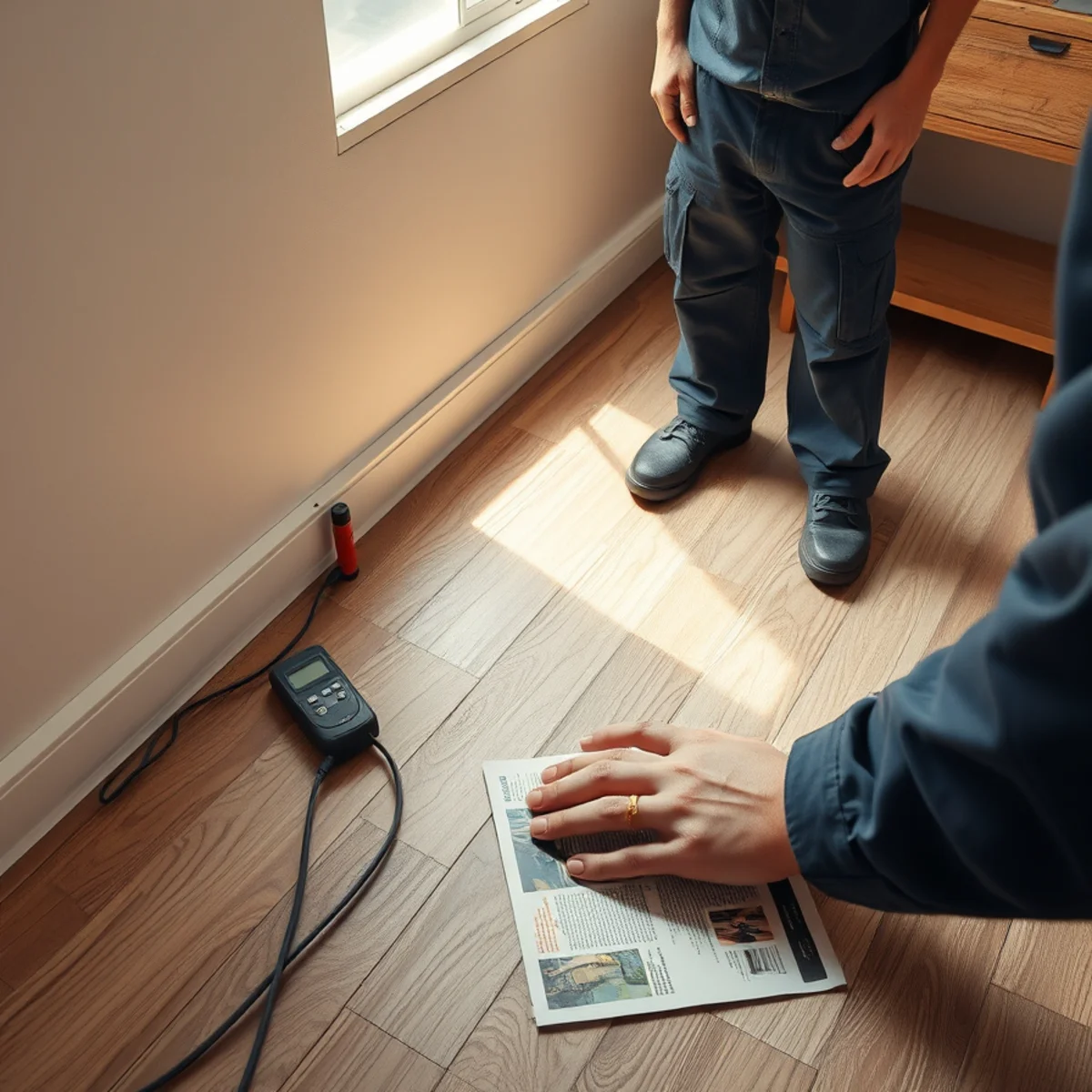
Non-invasive, in almost every case. Thermal imaging reads surface temperature differentials through tile and drywall — a hot-water leak shows as a bright plume. Moisture mapping with pin and pinless meters confirms and bounds the wet area. Acoustic listening picks up the specific frequency of pressurized water escaping a pipe, which under concrete is often what converts a general area into a precise point.
Tracer gas is the fallback for very small or ambiguous leaks: the line is drained and charged with an inert hydrogen-nitrogen mix that migrates up through the slab to a sensitive surface detector.
Concrete only gets opened at the confirmed point, by the licensed plumber doing the repair. Exploratory demolition to find a leak should be a last resort, not a first step.
At a glance


From the field
The ten-minute meter test, and what it actually rules out
Before anyone opens a floor, do this. Turn off every fixture and appliance that uses water. Go to the meter and find the low-flow indicator — a small triangle, star or dial that spins on very low flow. If it is moving with the house idle, water is leaving the system somewhere. Note the meter reading, wait thirty minutes with nothing running, and read it again.
Then isolate. Close the house shut-off valve and repeat: if the meter still moves, the loss is between the meter and that valve, which usually means the service line or irrigation rather than the house. If it stops, the loss is inside. That one distinction has saved homeowners the cost of exploratory floor work more times than we can count, particularly in hillside and large-lot areas where a broken irrigation lateral mimics a slab leak perfectly.
The honest limitation: a meter test finds pressurised losses. It will not detect a drain line failure, because drains are not under pressure — those announce themselves with odour rather than a spinning meter. So a clean meter test plus a persistent sewer smell is not a contradiction; it is a fairly specific indication that you are looking at the drain side.
Warm floor spots mean the hot side
Hot water lines run to fixtures on the hot side of the system, and a hot-side slab leak heats the concrete above it. That narrows the search considerably before anyone starts listening.
Compare bills year over year, not month to month
Seasonal irrigation swings hide a lot. The same month last year is the honest comparison, and most utilities show it on the statement.
Frequently Asked Questions
How do I check for a hidden water leak?
Shut off every fixture in the house, then watch your water meter's low-flow indicator for fifteen minutes. If it moves, water is leaving your supply system. Repeat with the irrigation isolated separately to determine which side is losing. The whole test takes ten minutes and costs nothing.
What does a warm spot on the floor mean?
It is the classic signature of a hot-water slab leak — a supply line beneath the concrete is leaking and heating the slab above it. If there is no appliance, sunlight or radiant heating to explain the warmth, treat it as a slab leak until a meter test and thermal imaging prove otherwise.
Can a leak be found without breaking my floor?
In the large majority of cases, yes. Thermal imaging, moisture mapping, acoustic listening and tracer gas are all non-invasive and between them usually mark a leak within a foot or two. Concrete only gets opened at the confirmed point, by the plumber doing the repair.
Need help with this in Irvine?
We handle this work every week across Irvine and Orange County. A live dispatcher answers 24/7, gives you an arrival window, and tells you what to do while you wait. Free on-site assessment and written scope before any demolition.
Related services