Local Irvine & Orange County · 5 min read
California's Water Heater Strapping Law (HSC §19211): The Earthquake Leak Risk Hiding in Your Garage
An unrestrained tank that tips shears the water line and the gas line at once, in the room where your electrical panel usually lives. Checking yours takes two minutes.
Short answer
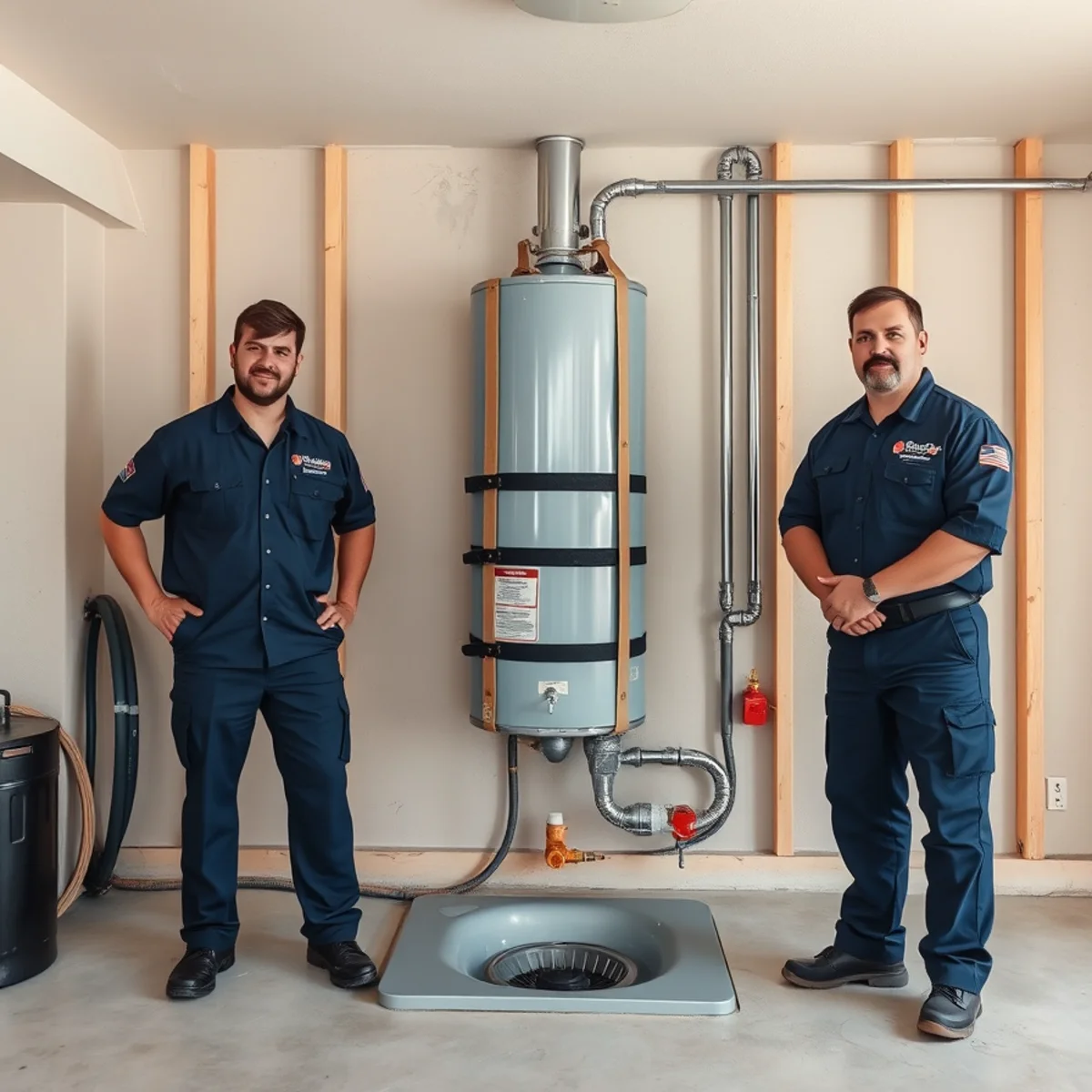
California Health and Safety Code section 19211 requires water heaters to be braced, anchored or strapped to resist horizontal displacement from earthquake motion. In practice that means two straps — one in the upper third of the tank, one in the lower third and at least four inches above the controls — anchored into structure, not just drywall.
California Health and Safety Code section 19211 requires water heaters to be braced, anchored or strapped to resist horizontal displacement from earthquake motion. It applies to new installations and replacements, and sellers are required to certify compliance when a property transfers.
A great many Orange County garages do not comply, and the homeowners have no idea. It takes two minutes to check.
What Compliance Actually Looks Like
Two straps, not one. One in the upper third of the tank and one in the lower third, with the lower strap at least four inches above the controls so it does not interfere with them.
Anchored into structure — studs or masonry — not into drywall. A lag screw driven into gypsum board is decorative. This is the single most common failure we see: straps present, fasteners into nothing.
Strapping material rated for the purpose, wrapped around the tank and secured at both ends, with the tank held tight against the wall or blocked so it cannot rock.
Flexible water and gas connectors, which allow movement without shearing. Rigid galvanized nipples are what snap.
Two straps
Upper third and lower third of the tank. One strap does not satisfy the requirement.
Into structure
Studs or masonry, not drywall. Check by feel — a solid anchor does not flex.
Four inches above controls
The lower strap must clear the gas control or the electrical access.
Flexible connectors
Water and gas both. Rigid connections shear when a tank moves.
Why It Matters Beyond Earthquakes
The obvious scenario is a tank tipping in significant shaking. What is less obvious is what tipping does: it shears the water supply connection and the gas line simultaneously.
So you get forty to eighty gallons on the floor plus a gas leak, in the room where your electrical panel usually lives, at a moment when emergency services across the region are fully occupied. That combination is the reason the law exists.
There is also a mundane version. A tank that can rock — even slightly, from normal thermal cycling and floor vibration — stresses its connections over years. Several of the water heater failures we respond to have connection-side leaks rather than tank-side ones.
Standing water right now? Call us before you do anything else.
We are on site within 60 minutes anywhere in Irvine, 24 hours a day.
How to Check Yours in Two Minutes
Go to the garage. Count the straps. If there is one, or none, you do not comply.
Look at where the straps attach. Are the fasteners going into a stud or into drywall? Push on the strap — if the anchor point flexes, it is in gypsum.
Check the lower strap position relative to the controls.
Look at the water and gas connections. Flexible braided or corrugated connectors, or rigid pipe?
That is the whole inspection. If any of it fails, a plumber can bring it into compliance quickly and inexpensively, and it is worth doing on the same visit as anything else you are having done.
The Related Items Worth Doing at the Same Time
A drain pan under the tank, piped to an approved discharge point. This converts a catastrophic garage flood into a puddle beside a drain. It is inexpensive, it is required for new installations in many circumstances, and almost no older installation has one.
An expansion tank where the system is closed — which is increasingly common with pressure regulators and backflow preventers. Without one, thermal expansion has nowhere to go and it stresses the tank and every fixture in the house.
A pan-level leak sensor. A few dollars, texts you in a minute, and catches the slow failures before they become fast ones.
And check the manufacture date encoded in the serial number. If the unit is past ten years, plan its replacement rather than waiting — a planned swap costs a fraction of an unplanned flood plus a swap.
The Seller Disclosure Angle
California requires sellers to certify water heater bracing compliance on transfer. In practice this gets handled at the last minute, and it is one of the more common items that surfaces during escrow.
If you are buying, look at it yourself rather than relying on the certification alone — check the strap count, the anchor points and the connector type during your inspection walkthrough. If you are selling, handle it early rather than under time pressure.
Either way it is a small item that costs very little to get right and is genuinely consequential when it matters.
From the field
Why it matters far beyond earthquakes
The law is written for seismic displacement, and that is a real risk: a full forty-gallon tank weighs several hundred pounds, and a tank that walks off its stand tears the gas line or the electrical connection along with the water connections. But the reason we bring it up on ordinary jobs is more mundane. An unstrapped tank is a tank nobody has looked at, and the inspection that gets you compliant is the inspection that catches the things that actually flood garages.
When we look at a heater we are reading the manufacture date in the serial number, checking whether the T&P relief valve has a discharge pipe that runs to a safe termination, looking at the pan and whether it is piped anywhere, checking the flue for corrosion and correct rise, and looking at the flex connectors for the green corrosion that says a slow leak has been weeping for months. Any of those found in October is a small job. Found in February, on a garage slab, it is a claim.
The honest tradeoff: strapping is cheap and quick, and it is frequently done badly — straps anchored into drywall rather than framing, or a single strap, or slack in the strap. A correctly done job uses heavy-gauge strapping bolted into studs with the tank pulled tight to the wall. It is worth paying a plumber for an hour rather than doing it approximately, because approximately strapped is not compliant and not effective.
This shows up in a seller disclosure
Water heater bracing is a standard item on California transfer disclosures. It is much cheaper to fix in advance than to negotiate during escrow.
Add a pan, a piped drain and a sensor while you are there
The three together turn a tank failure from a flooded garage into a puddle in a pan and a text message.
Frequently Asked Questions
Is water heater strapping required in California?
Yes. Health and Safety Code section 19211 requires water heaters to be braced, anchored or strapped against earthquake displacement, and sellers must certify compliance when a property transfers. The standard is two straps anchored into structure — upper third and lower third of the tank, with the lower strap at least four inches above the controls.
How do I know if my water heater is properly strapped?
Count the straps — two, not one. Check whether the fasteners go into studs or masonry rather than drywall by pushing on the strap and seeing if the anchor flexes. Confirm the lower strap clears the controls by at least four inches. And check that the water and gas connections are flexible rather than rigid pipe.
What else should I add while I am at it?
A drain pan piped to an approved discharge point, which turns a catastrophic garage flood into a puddle beside a drain. An expansion tank if your system is closed. And a leak sensor in the pan. All three are inexpensive and together they cover most of the ways a water heater ruins a weekend.
Need help with this in Irvine?
We handle this work every week across Irvine and Orange County. A live dispatcher answers 24/7, gives you an arrival window, and tells you what to do while you wait. Free on-site assessment and written scope before any demolition.
Related services