Local Irvine & Orange County · 5 min read
Spike in Your Irvine Ranch Water District Bill? You Might Have a Hidden Leak
Your bill is a leak detector you already pay for. Here is how to read it, and the fifteen-minute test that confirms what it is telling you.
Short answer
Rule out the boring explanations first — a changed irrigation schedule, house guests, a filling pool, a rate change. If none apply, run a meter test with everything off. A meter that moves with the house idle means water is leaving the system, and in an older Irvine home that usually means a slab leak.
Irvine Ranch Water District bills are steady enough month to month that a genuine anomaly stands out. A sustained thirty to forty percent increase with no change in household size, no new appliance and no change in irrigation schedule is a real signal, not noise.
It is also one of the earliest signals available for a slab leak, which is a failure mode that otherwise runs silently for weeks.
First, Rule Out the Boring Explanations
Seasonal irrigation changes. If your controller runs a summer schedule, usage rises predictably. Compare against the same month last year rather than against last month.
A running toilet. A flapper that does not seat is the single most common cause of an unexplained bill increase, and it is often silent. Put a few drops of food coloring in the tank, wait fifteen minutes without flushing, and check the bowl. Color in the bowl means the flapper is leaking.
Household changes — guests, a new dishwasher used more often, a pool topped up, a new landscape installation being established.
Tiered rate structures. IRWD uses allocation-based tiers, so exceeding your allocation raises the per-unit price as well as the volume. A modest usage increase can produce a disproportionate bill increase.
The Fifteen-Minute Meter Test
Turn off every fixture in the house. No taps, no toilets refilling, dishwasher and washing machine off, ice maker off if you can.
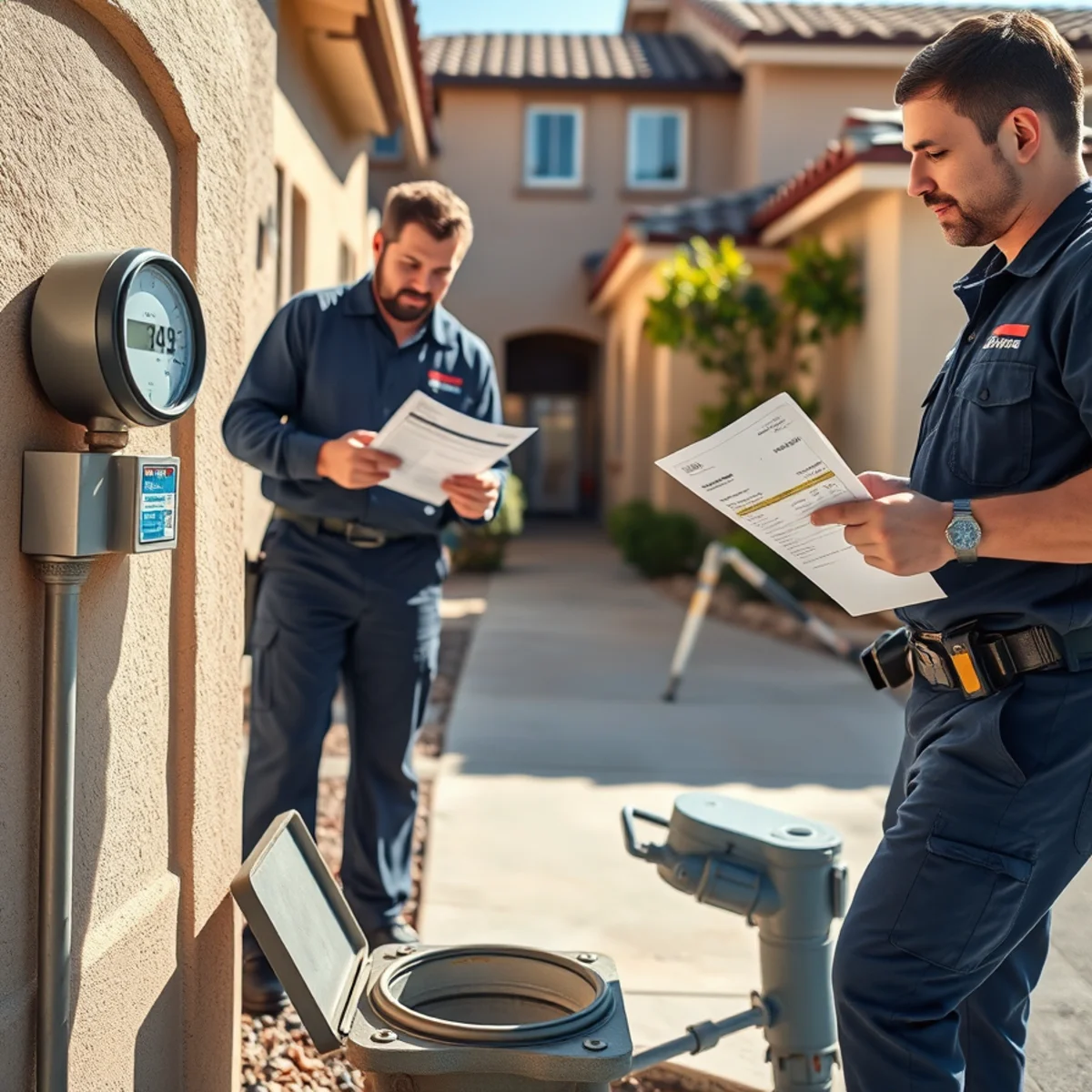
Go to the meter at the curb. Most have a small triangular or star-shaped low-flow indicator that spins with even minimal flow. Note its position, or write down the full meter reading.
Wait fifteen minutes with nobody using water, then check again. Any movement means water is leaving your supply system.
That is a leak, confirmed, and you now know it exists before paying anyone to look.
Standing water right now? Call us before you do anything else.
We are on site within 60 minutes anywhere in Irvine, 24 hours a day.
Separate Irrigation From Domestic
Many Irvine properties have irrigation on the same meter as the house. Run the test a second time with the irrigation system fully isolated at its valve, and compare.
If the meter stops moving when irrigation is isolated, your leak is on the irrigation side. That is good news — irrigation leaks are far less likely to damage the structure, though a break close to a foundation can migrate to the house.
If it keeps moving, the loss is on the domestic supply, which is where a slab leak lives.
Then narrow further: close the cold-water shut-off on top of the water heater to isolate the entire hot side. If the meter stops, the leak is on the hot line — which, combined with a warm floor spot, is close to diagnostic for a hot-water slab leak.
What Else to Look For
A warm spot on the floor with no appliance, sunlight or radiant heating to explain it. Walk your house barefoot in the morning.
The sound of running water in a quiet hallway at night with every fixture off.
Damp or lifting flooring in a room with no plumbing, because water spreads laterally along a slab from wherever the leak is.
A greener or soggier patch of lawn, which points at an irrigation lateral or the service line between the meter and the house.
A musty smell with no visible water, meaning something in an enclosed assembly is damp enough to grow.
If It Is a Slab Leak, Report It the Day You Suspect It
This matters financially and not just practically. Most California policies cover the cost of accessing a leak and the resulting water damage while excluding the pipe itself. But coverage also depends on timing — a leak reported promptly is treated as sudden, while one a carrier can show ran for months may be denied as gradual damage.
A dated detection report with thermal captures and moisture readings is what supports a sudden-loss finding. That is why the bill spike is genuinely valuable: it gives you a documented date on which you first had reason to suspect a problem.
Keep the bill. It is evidence.
From the field
Separating irrigation from domestic, which is where most of these end
The single most useful step on a bill spike is isolating the two sides of the property, and most homeowners never do it. Close the house shut-off valve — the one at the exterior wall or in the meter box serving the building — and watch the meter. If it keeps moving with the house isolated, the loss is on the service line or the irrigation system, not inside the house. If it stops, it is domestic.
That distinction is worth real money because it decides whether anyone opens concrete. Irrigation laterals are shallow, cheap to repair and frequently break with no surface evidence at all — the water simply saturates soil. On large lots, hillside properties and homes backing common landscaping, an irrigation break also mimics a slab leak indoors, because saturated soil against a foundation shows up as a damp wall with no plumbing behind it.
The honest tradeoff on reporting timing: if it does look like a slab leak, tell your carrier the day you suspect it rather than the day it is confirmed. You can report a possible loss without a diagnosis, and prompt notice is a policy condition. Delayed reporting is one of the most common reasons a covered slab leak gets argued as gradual damage — and a bill that climbed over three months is documentary evidence of duration that you cannot un-send.
Compare the same month last year
Seasonal irrigation swings hide a lot month to month. Most utility statements show the prior year alongside, and that is the honest comparison.
Zone-by-zone isolation finds irrigation breaks
With the house isolated, run zones one at a time and watch the meter. A zone that keeps the meter spinning after it shuts off is the one with the break.
Frequently Asked Questions
How much can a slab leak add to a water bill?
A pinhole running continuously can waste a substantial volume over a billing cycle — enough to produce a noticeable increase, and more than that under a tiered rate structure where exceeding an allocation raises the per-unit price too. A sustained thirty to forty percent jump with no lifestyle change is worth investigating.
How do I check for a leak myself?
Shut off every fixture in the house, then watch your meter's low-flow indicator for fifteen minutes. If it moves, water is leaving your supply system. Repeat with irrigation isolated separately to determine which side is losing, and again with the water heater's cold inlet closed to isolate the hot side.
Will IRWD adjust my bill if I had a leak?
Many water agencies have a leak adjustment policy for customers who repair a documented leak promptly, typically with limits on frequency. Contact IRWD directly, ask about their current leak adjustment process, and keep your repair invoice and any detection report — those are what support the request.
Need help with this in Irvine?
We handle this work every week across Irvine and Orange County. A live dispatcher answers 24/7, gives you an arrival window, and tells you what to do while you wait. Free on-site assessment and written scope before any demolition.
Related services